The Cell BriefBasics
Five Peptides Your Body Makes Every Day
Insulin, oxytocin, GLP-1, ghrelin and beta-endorphin are all peptides. Here is where each one is made and what message it carries.
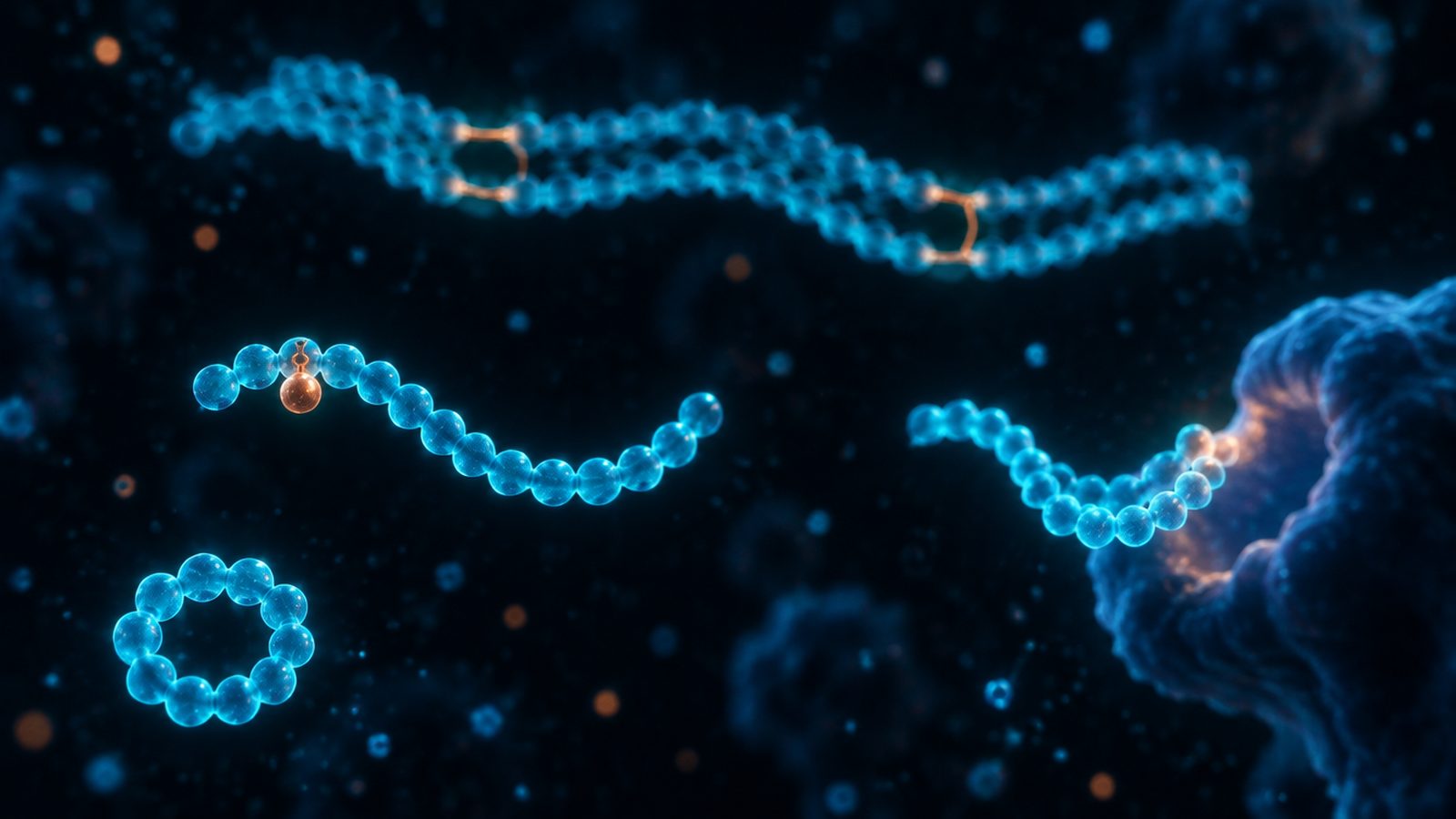
You have been running on peptides your whole life. Before a meal, a peptide from your stomach rises. After you eat, others tell your body what to do with the food.
If you went for a hard run or hugged someone today, peptides may have been part of that too. Here are five your body makes: insulin, oxytocin, GLP-1, ghrelin and beta-endorphin.
What it is
A peptide is a short chain of amino acids. If amino acids are letters, a peptide is a short word. Our brief on what a peptide is explains the basics.
All five are peptide hormones. A hormone is a messenger. It is sent from one place and acts somewhere else.
They are built from the same 20 letters. What sets them apart is length and spelling, the order of the letters.
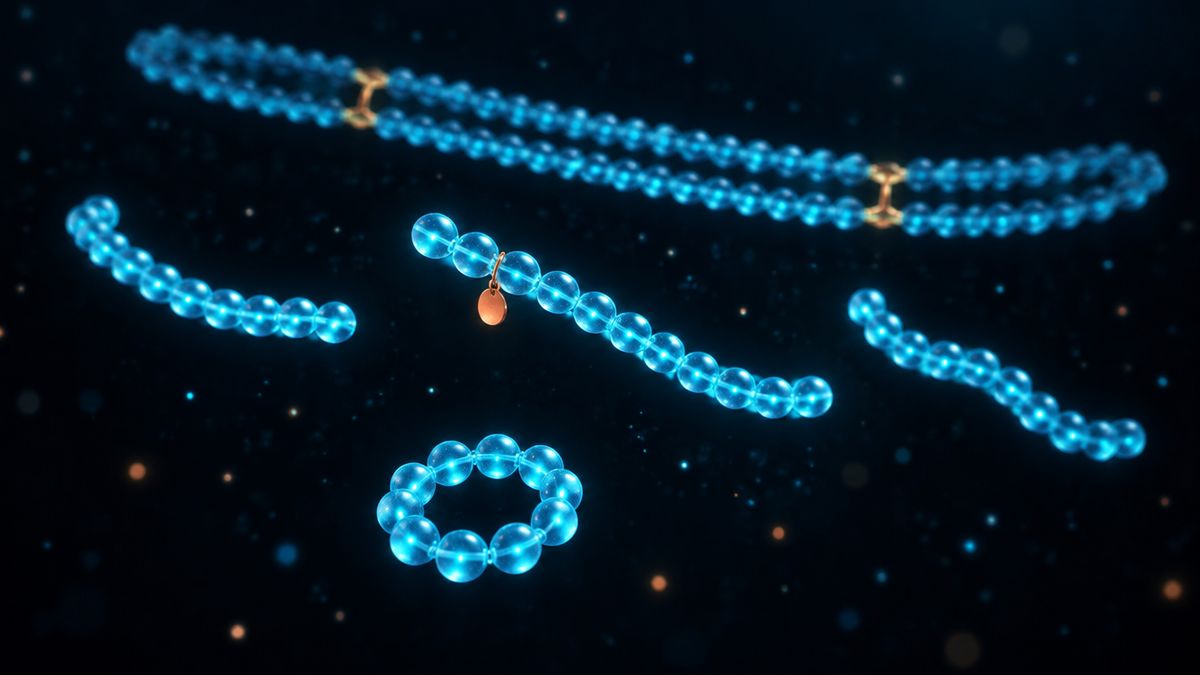
- Oxytocin: 9 amino acids.
- Ghrelin: 28 amino acids, with a small fatty tag on the third one.
- GLP-1: 30 amino acids.
- Beta-endorphin: 31 amino acids. It is the body's own opioid, which means it acts on the same target as morphine.
- Insulin: 51 amino acids, in two chains tied together.
Change the spelling and you change the meaning.
What it does in the body
Each peptide docks on its own receptor. A receptor sits on or inside a cell. Think of it as a lock, with the peptide as the key. Each key fits its own lock, so each message lands where it should.
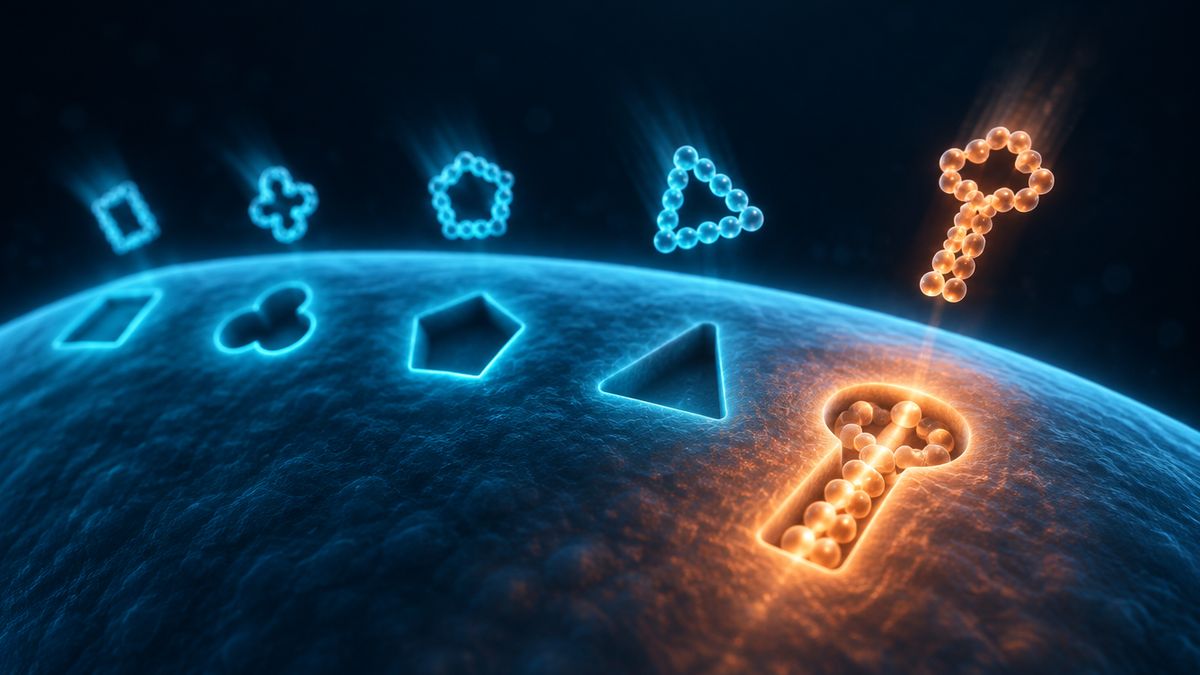
Insulin is made in the pancreas. When blood sugar rises after a meal, insulin is released. It tells cells to take sugar out of the blood.
Oxytocin is made by nerve cells deep in the brain. A gland at the base of the brain releases it into the blood. It triggers contractions during labor and milk release during nursing.
GLP-1 is released by cells in the gut lining after a meal. It helps the pancreas release insulin and slows food moving through the gut. It also seems to help control appetite. An enzyme, a tiny pair of scissors, cuts it up within minutes.
Ghrelin is made mostly in the stomach. It is often called the hunger hormone.
Beta-endorphin is made mainly in that same gland and in the brain. It is released during pain or stress, and it turns down pain signals.
What scientists have found
In cells: Insulin is not built in one go. The cell first makes a longer chain of 110 amino acids, then trims it down. When ghrelin was found in 1999, it made cells release growth hormone. Its fatty tag turned out to be essential for it to work.
In animals: Ghrelin was first found in rat stomachs. It was named after an old root word for "grow," because it also triggered growth hormone release in living animals. Rodents given large amounts of ghrelin ate more. In animals, oxytocin is linked to social memory, attachment and caring for young. In one study, beta-endorphin levels were higher after exercise in animals. That is one thread of the "runner's high" idea, which is still an open question.
In people: In a 2001 study, researchers took blood 38 times over a day from 10 healthy adults on set mealtimes. Ghrelin nearly doubled right before each meal. It dropped to its lowest within an hour of eating. In people, oxytocin has been tied to bonding and trust.
Where it stands
Two of the five have medicine versions. Insulin has been used as a medicine for more than 100 years. Semaglutide, the drug in Ozempic and Wegovy, is a lab-made copy of GLP-1 edited to last about a week. The FDA approved it in 2017 for type 2 diabetes and in 2021 for weight management in some adults.
The other three are studied mainly as the body's own signals. Ghrelin research is only about 25 years old and is still mapping what the hormone does beyond meals. Beta-endorphin is at the center of questions about pain, stress and mood. For all three, studies in people are where the next chapters will be written.
The bottom line
- Insulin, oxytocin, GLP-1, ghrelin and beta-endorphin are peptides your body makes every day.
- They use the same 20 building blocks. A different order makes a different key for a different lock.
- Insulin and GLP-1 have approved medicine versions. The other three are active areas of research.
FAQ
Questions people ask
- What peptides does the human body make naturally?
- Thousands. Five well-known ones are insulin, oxytocin, GLP-1, ghrelin and beta-endorphin, and each one carries a message between cells.
- Is GLP-1 the same thing as Ozempic?
- No. GLP-1 is a hormone your gut makes, and it is cut up within minutes. Semaglutide, the drug in Ozempic, is a lab-made copy edited to last about a week, and it is FDA-approved.
- Why is ghrelin called the hunger hormone?
- In a 2001 study of 10 healthy adults, ghrelin nearly doubled right before each meal and dropped within an hour of eating. In rodents, large amounts of it made them eat more.
- Are endorphins peptides?
- Yes. Beta-endorphin is a chain of 31 amino acids made mainly in the pituitary gland and the brain. It acts on the same receptor as morphine and is released during pain and stress.
Sources8
- Regulation of Insulin Synthesis and Secretion and Pancreatic Beta-Cell Dysfunction in Diabetes · Current Diabetes Reviews, 2013
- Oxytocin: the great facilitator of life · Progress in Neurobiology, 2009 · DOI 10.1016/j.pneurobio.2009.04.001
- The physiology of glucagon-like peptide 1 · Physiological Reviews, 2007 · DOI 10.1152/physrev.00034.2006
- OZEMPIC (semaglutide) injection, Prescribing Information (initial US approval 2017) · US Food and Drug Administration, 2017
- WEGOVY (semaglutide) injection, Prescribing Information (original 2021 label) · US Food and Drug Administration, 2021
- Ghrelin is a growth-hormone-releasing acylated peptide from stomach · Nature, 1999 · DOI 10.1038/45230
- A preprandial rise in plasma ghrelin levels suggests a role in meal initiation in humans · Diabetes, 2001 · DOI 10.2337/diabetes.50.8.1714
- Roles of β-Endorphin in Stress, Behavior, Neuroinflammation, and Brain Energy Metabolism · International Journal of Molecular Sciences, 2021 · DOI 10.3390/ijms22010338
Education only. Not medical advice. The Cell Brief summarises published research for general education. It is not medical advice, and nothing here is a recommendation to use any compound.
One brief a week
One brief per compound. Unsubscribe anytime.