The Cell BriefBasics
What Is a Peptide? Letters, Words and Books
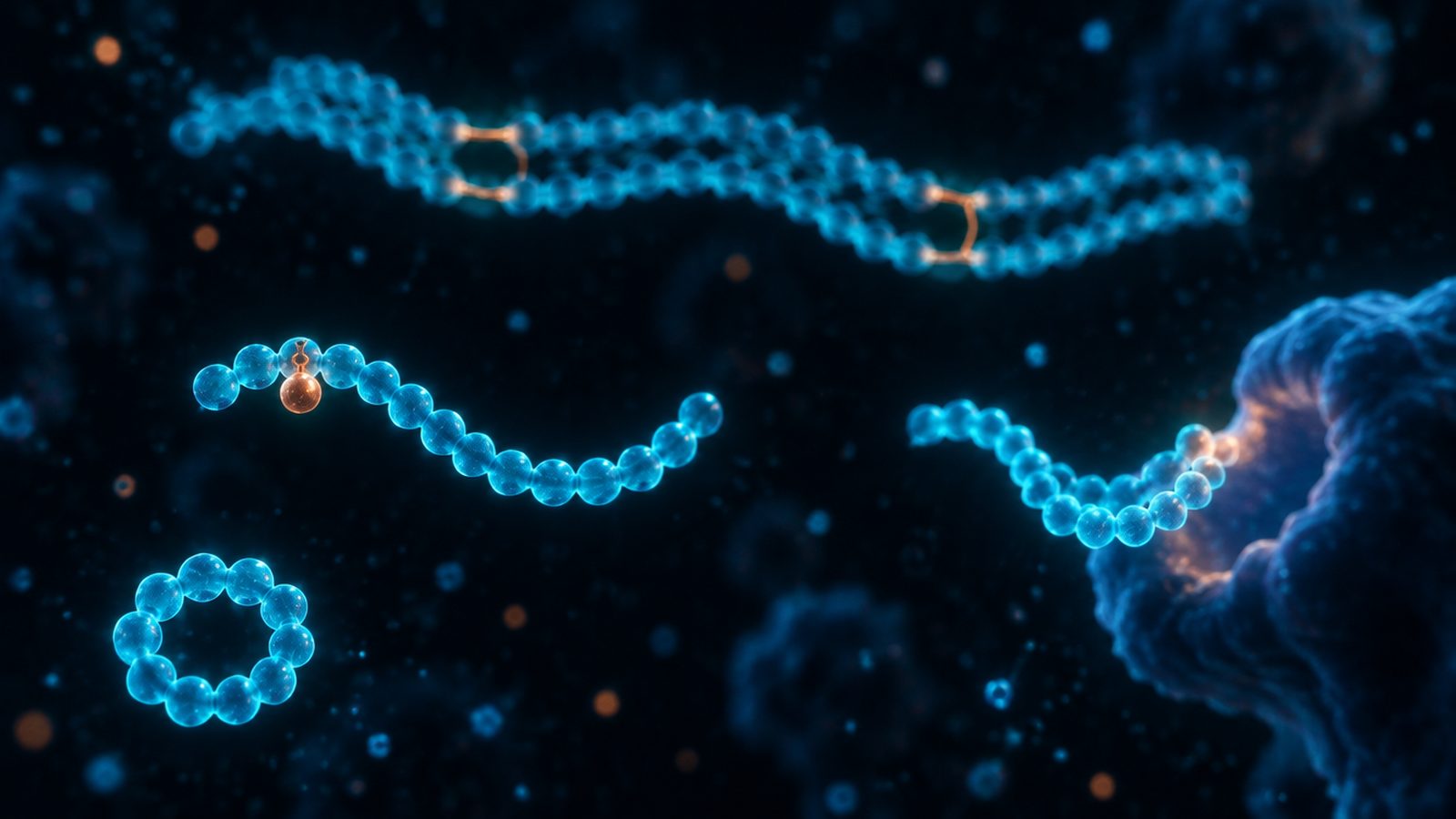
Amino acids are letters, peptides are short words and proteins are books. Here is what a peptide is and why it makes such a good messenger.
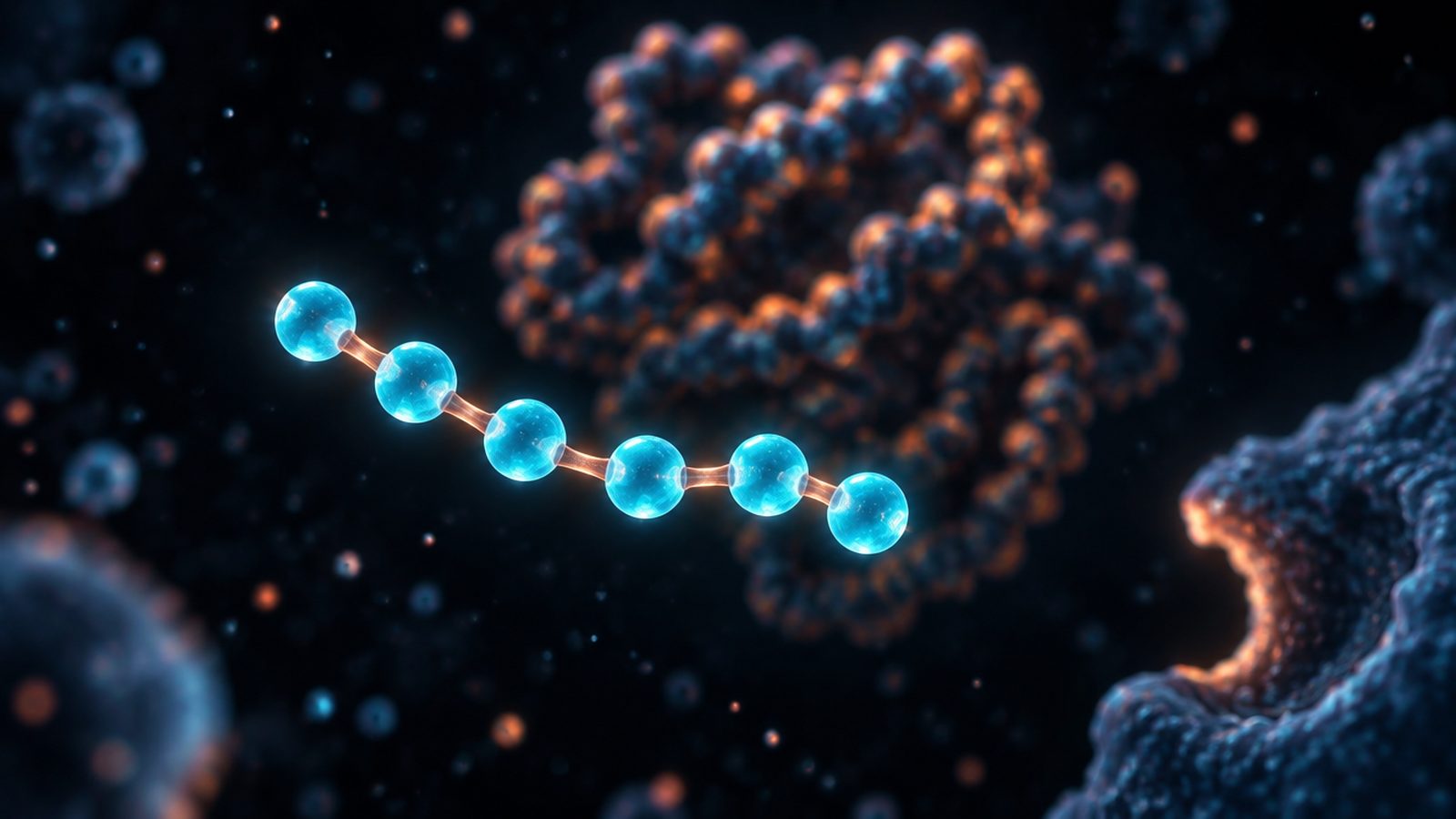
Every cell in your body is listening. All day long, signals tell cells when to grow, when to rest and when to stop. A lot of those signals are peptides.
You already know some by name. Insulin, oxytocin and the gut hormone GLP-1 are all peptides. So is semaglutide, the drug in Ozempic built to copy GLP-1.
What it is
A peptide is a short chain of amino acids.
Amino acids are small building blocks. Think of them as letters. There are 20 different kinds.
Join a few letters and you get a word. That is a peptide. Join many and you get a whole book. That is a protein.
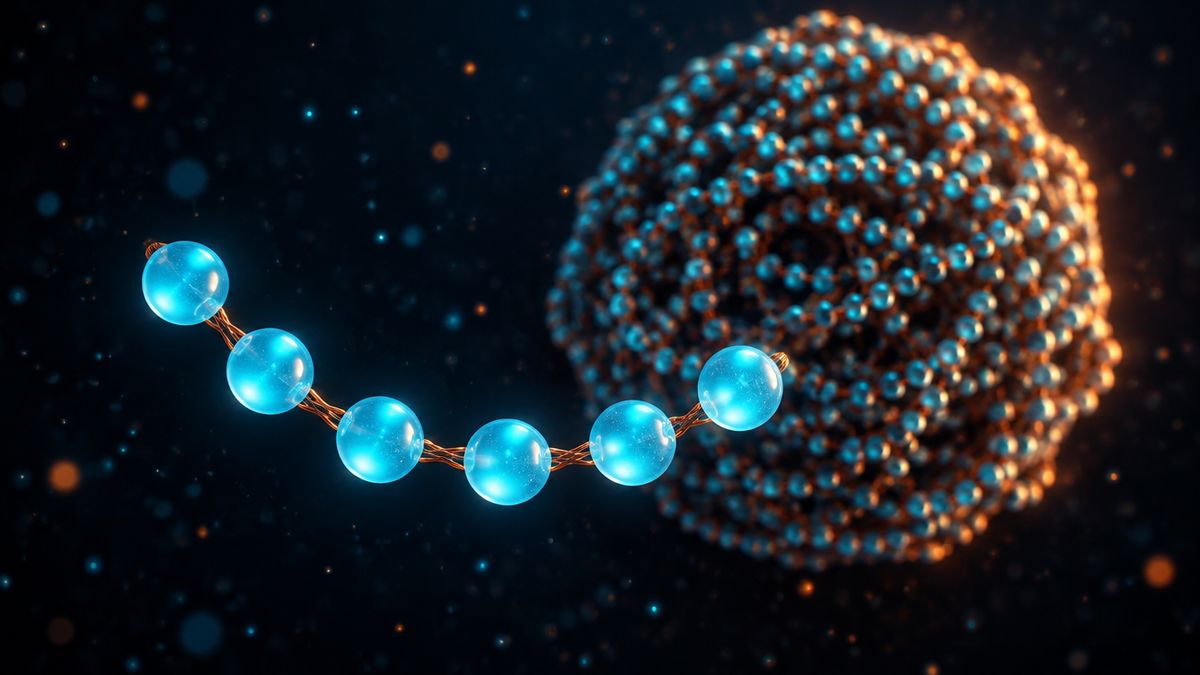
The link between two amino acids is called a peptide bond. It gives the chain a clear direction, like a sentence read from left to right.
So where does a word end and a book begin? Nature has no sharp line, and scientists have never agreed on a number.
In 2020, the US Food and Drug Administration (FDA) drew a line for its rules. More than 40 amino acids is a protein. Forty or fewer is a peptide.
Insulin has 51 amino acids in two linked chains. So the FDA calls it a protein, even though it is often called a peptide. The labels overlap.
What it does in the body
Your body makes lots of its own peptides. Many work as hormones. A hormone is a messenger sent from one place to act somewhere else.
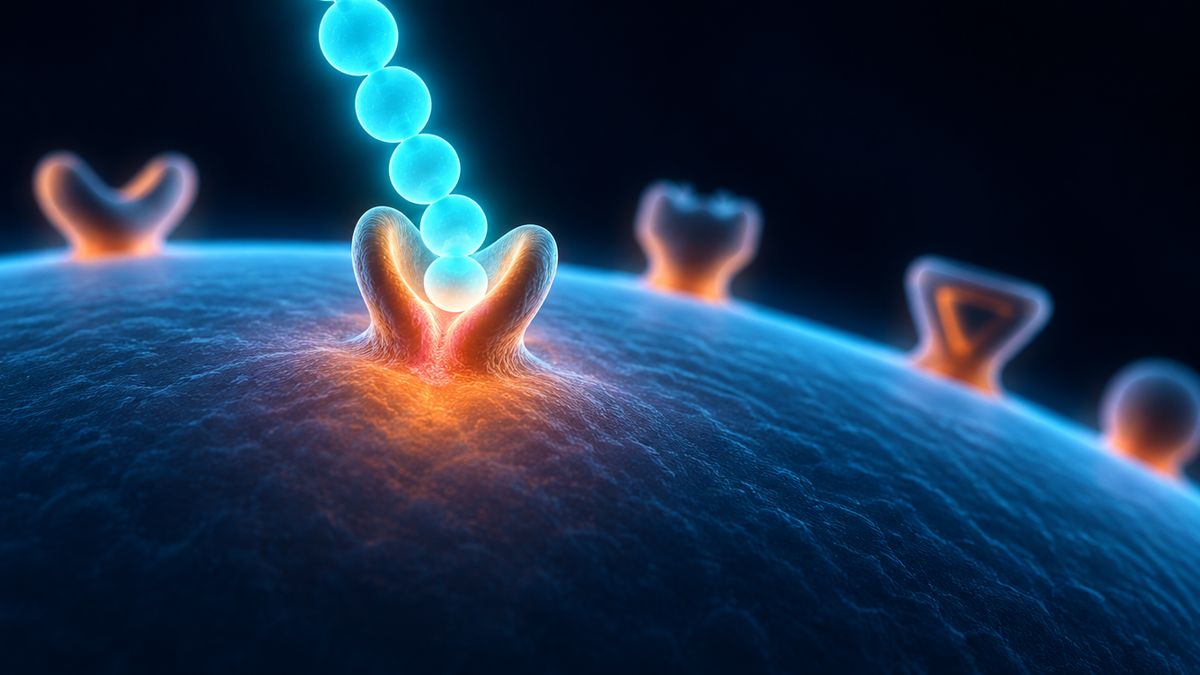
To deliver its message, a peptide docks on a receptor. A receptor sits on or inside a cell. Think of it as a lock, with the peptide as the key. When the right key fits, the cell responds.
- Insulin comes from the pancreas after a meal. It tells cells to take sugar out of the blood.
- Oxytocin is just nine amino acids long. It is made by nerve cells in the brain. It triggers contractions during labor and milk release during nursing.
- GLP-1 is 30 amino acids long. Cells in the gut release it after a meal. It tells the pancreas to release insulin and slows food moving through the gut. It also seems to help control appetite.
Peptide messages are fast on, fast off. Once the job is done, enzymes cut them apart. An enzyme is like a tiny pair of scissors. One called DPP-4 cuts up GLP-1 very fast, often before it even leaves the gut.
For a message that must switch off quickly, that is handy. For a medicine, it is a puzzle to solve.
What scientists have found
Here is how scientists study a peptide, with semaglutide as the example.
In cells: The first test is how well a peptide fits its lock. In a 2015 lab paper, semaglutide gripped the GLP-1 receptor about three times less tightly than an older drug. But it held on much more tightly to albumin, a carrier protein in the blood. That was the plan.
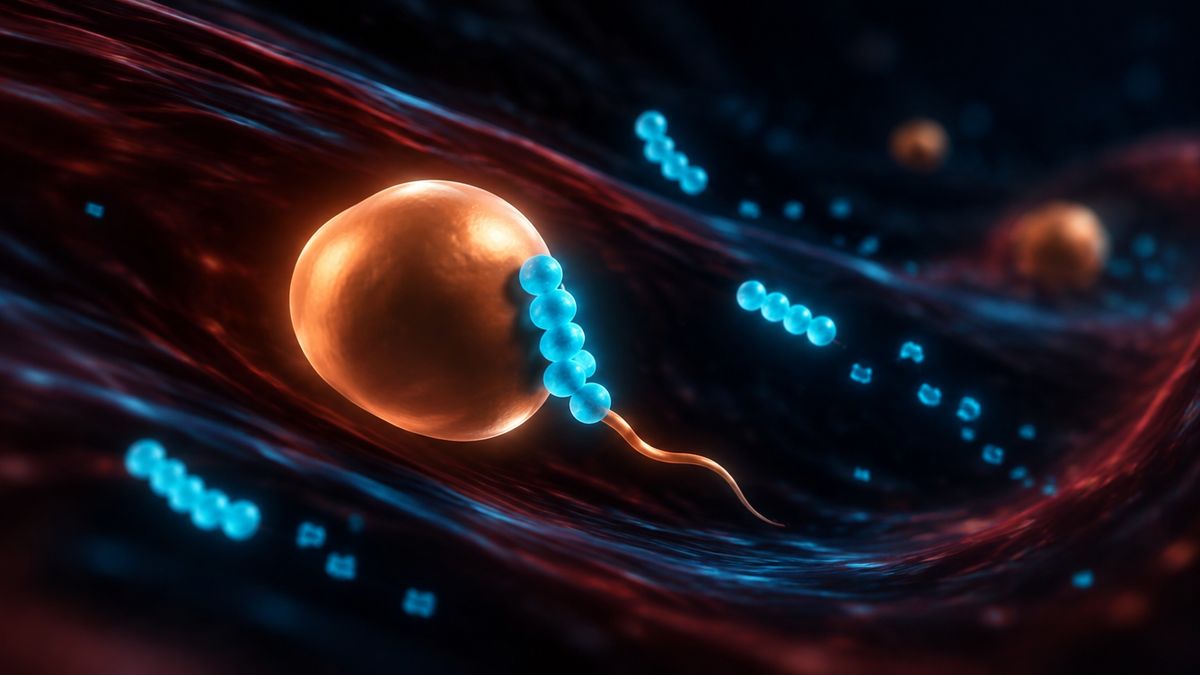
In animals: The next test is how long it lasts. Half-life is the time it takes for half of something to leave the blood. In mini-pigs, semaglutide's half-life was about 46 hours. Natural GLP-1 is cut up almost as soon as it is released.
In people: In January 1922, a team in Toronto gave an extract with insulin to a patient with diabetes. Their report described blood sugar falling. In 1953, scientists worked out the order of oxytocin's nine amino acids, and a lab built it from scratch soon after.
Since insulin, more than 80 peptide drugs have reached the market. Semaglutide was built to ride on albumin. In people, its half-life is about a week.
Where it stands
Semaglutide was approved by the FDA in 2017 for type 2 diabetes.
Many peptides you hear about are at an earlier stage. Some, like BPC-157, have been studied mostly in cells and animals.
For each one, researchers ask the same questions. Which lock does it fit? How long does it last? What has been seen in cells, in animals and in people? For many of them, the exciting next step is studies in people.
Next, meet five peptides your body makes.
The bottom line
- A peptide is a short chain of amino acids. Amino acids are letters, peptides are words, proteins are books.
- Peptides are messengers. They fit receptors like keys fit locks, and they switch off fast.
- Insulin, oxytocin and GLP-1 are peptides you already know. More than 80 peptide drugs have reached the market.
FAQ
Questions people ask
- What is the difference between a peptide and a protein?
- Both are chains of amino acids, and the main difference is length. Nature has no sharp line, but the FDA calls a chain of more than 40 amino acids a protein.
- Is insulin a peptide or a protein?
- Insulin has 51 amino acids in two linked chains, so under the FDA's rule it counts as a protein. It is still often called a peptide hormone, and both labels are used.
- Are peptides the same as amino acids?
- No. Amino acids are the single building blocks, like letters. A peptide is a short chain of them joined together, like a word.
- Is Ozempic a peptide?
- Yes. Semaglutide, the drug in Ozempic, is a peptide built to copy the gut hormone GLP-1, with small edits that help it last about a week in the body. The FDA approved it in 2017 for type 2 diabetes.
Sources8
- Amino Acids (Talking Glossary of Genomic and Genetic Terms) · National Human Genome Research Institute (NIH), 2026
- Definition of the Term "Biological Product" (Final Rule, 85 FR 10057) · US Food and Drug Administration, Federal Register, 2020
- Pancreatic Extracts in the Treatment of Diabetes Mellitus · Canadian Medical Association Journal, 1922
- Oxytocin: the great facilitator of life · Progress in Neurobiology, 2009 · DOI 10.1016/j.pneurobio.2009.04.001
- The physiology of glucagon-like peptide 1 · Physiological Reviews, 2007 · DOI 10.1152/physrev.00034.2006
- Discovery of the Once-Weekly Glucagon-Like Peptide-1 (GLP-1) Analogue Semaglutide · Journal of Medicinal Chemistry, 2015 · DOI 10.1021/acs.jmedchem.5b00726
- Trends in peptide drug discovery · Nature Reviews Drug Discovery, 2021 · DOI 10.1038/s41573-020-00135-8
- OZEMPIC (semaglutide) injection, prescribing information (original approval label) · US Food and Drug Administration (Drugs@FDA), 2017
Education only. Not medical advice. The Cell Brief summarises published research for general education. It is not medical advice, and nothing here is a recommendation to use any compound.
One brief a week
One brief per compound. Unsubscribe anytime.