
The Cell BriefRecovery
BPC-157: The Peptide Copied From Human Stomach Juice
A tiny peptide copied from a protein in human stomach juice. Here is what studies in cells, rats and people have found so far.
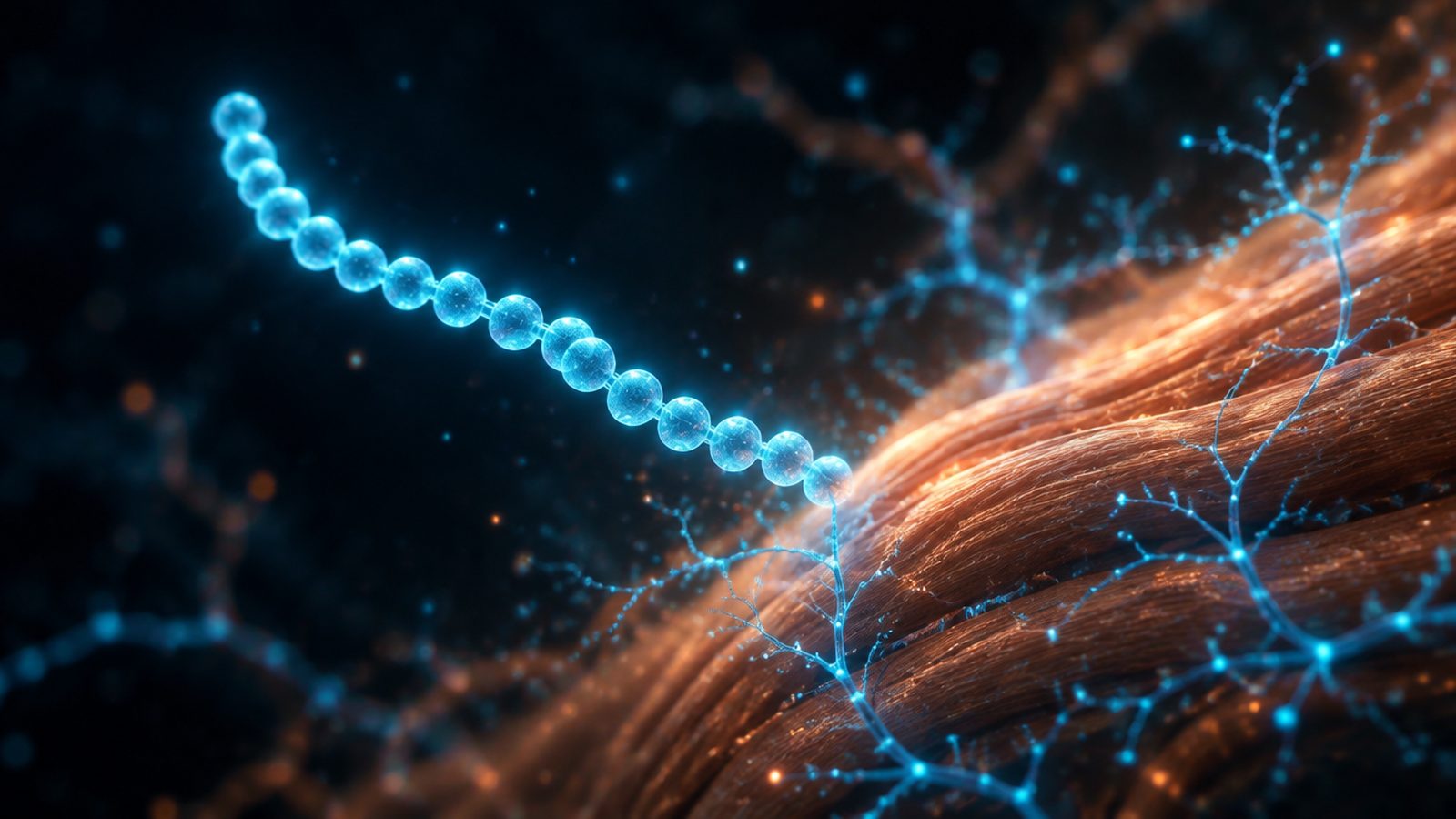
Tendons are tough cords that link muscle to bone. They carry huge loads every time you move. Yet they get only a small blood supply.
That detail is the heart of this story. One peptide keeps turning up in studies of new blood vessels, mostly in animals and lab dishes. Its name is BPC-157.
What it is
BPC-157 is a peptide, a short chain of amino acids. Think of amino acids as beads. A peptide is a short bead bracelet, and BPC-157 has just 15 beads. New to peptides? Start with what a peptide is.
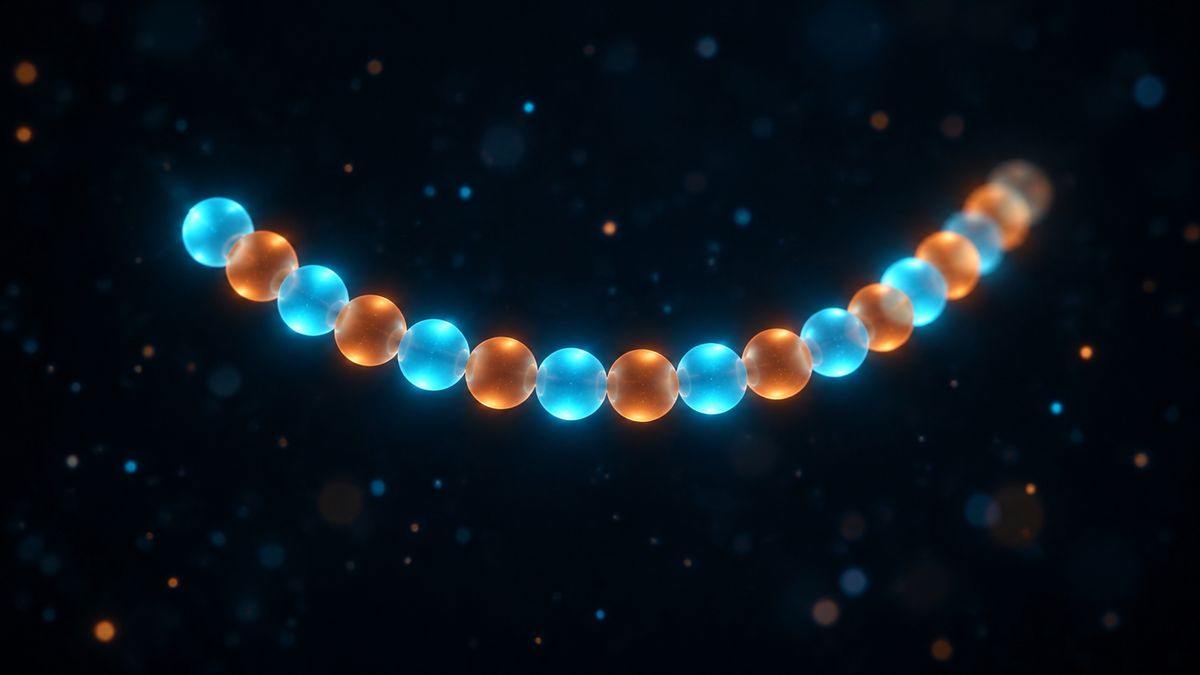
The letters BPC stand for "body protection compound." That is a bigger protein that scientists found in human stomach juice. BPC-157 copies one short piece of it. The version used in research is made in the lab.
Scientists have studied it for about 30 years. Much of the work comes from one team in Croatia. Other groups, including a team in Taiwan, later joined in.
What it does in the body
The big parent protein belongs to the stomach. There, researchers link it to keeping the inner lining of the stomach whole. That lining is like a soft, wet coat on the inside of the gut.
Scientists then tested the lab-made piece far from the stomach. They tried it on tendons, muscle, bone, the gut and blood vessels.
Three themes keep coming back. Cells move into a hurt area. Cells survive stress. New blood vessels form.
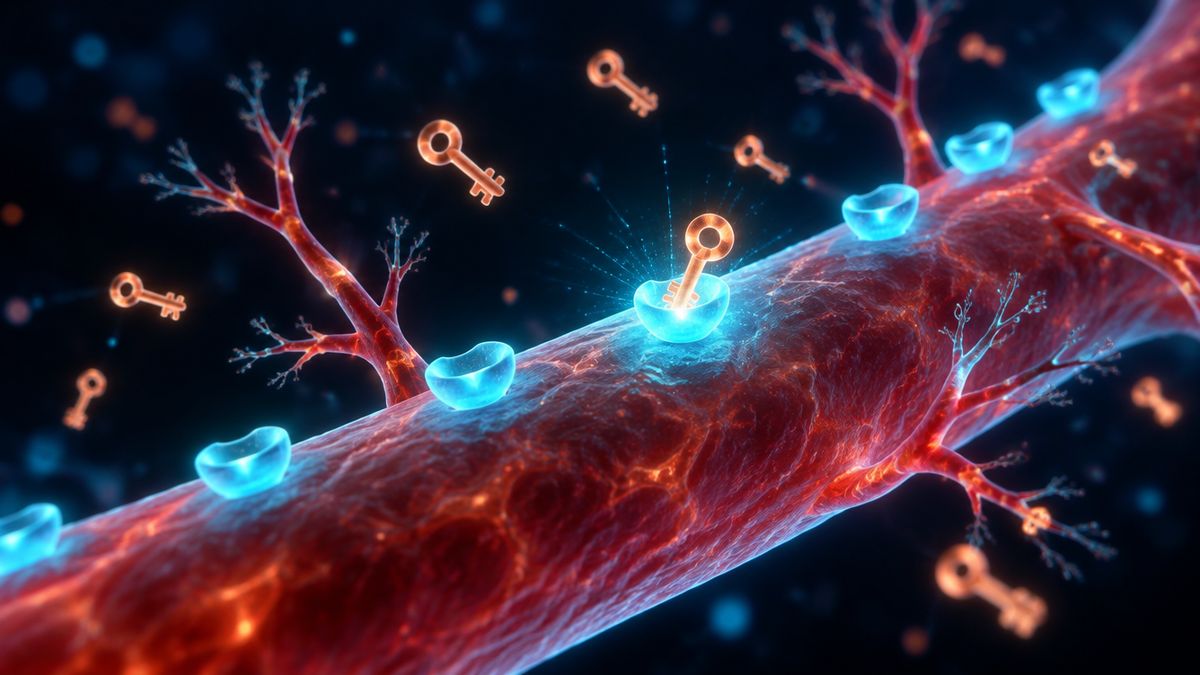
Blood vessels are the body's delivery roads. To grow new ones, cells need to catch a "grow" signal. They catch it with a receptor on their surface. A receptor is like a lock, and the signal is the key. One of these locks is called VEGFR2.
What scientists have found
In cells: In 2011, a team in Taiwan grew tendon cells from rats. These cells are called fibroblasts. They are builder cells that make collagen, the body's scaffolding.
With BPC-157, the builder cells crawled out of small tendon pieces faster. They did not multiply faster. Instead, they moved more, spread out more and survived stress better.
In 2017, the same research network tested human cells that line blood vessels. With BPC-157, these cells linked up into more tube networks, like tiny pipes. They also made more VEGFR2 locks.
In animals: In a 2003 rat study, scientists cut through the Achilles tendon, the big tendon above the heel. Rats given BPC-157 healed better on every measure. Their tendons were stronger and stiffer, and the rats walked better.
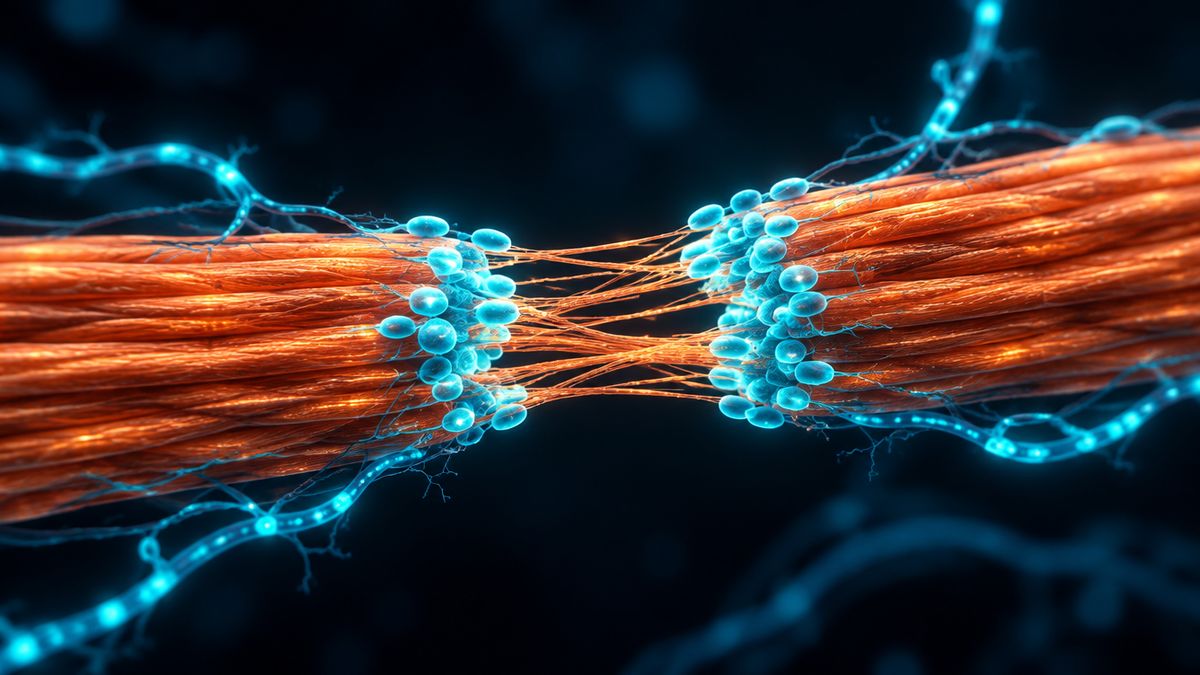
Another rat study blocked the blood supply to a leg muscle. With BPC-157, blood flow came back faster. The muscle also had more blood vessels.
In 2008, rats had a stubborn tunnel between the colon, part of the gut, and the skin. With BPC-157, the tunnel healed faster and closed.
A 2025 review gathered 36 studies. All but one were in cells or animals. In those animal and lab studies, BPC-157 helped healing in muscle, tendon, ligament and bone injuries.
In people: Human research is just getting started. In the 2000s, the team in Croatia said it was in trials for inflammatory bowel disease, a group of conditions that inflame the gut.
A 2025 review counted only three small pilot studies in people. One looked at knee pain. One looked at a painful bladder condition. One checked safety. No side effects were reported. But none was a large trial with a comparison group.
Where it stands
BPC-157 is not approved by the FDA. It is also on the World Anti-Doping Agency's banned list, so it is banned in sport at all times.
Researchers now want well-designed human trials. In these, people get either the real thing or a placebo, a look-alike with nothing active in it. Chance decides who gets which.
Big questions remain. Does the blood vessel effect seen in rats and dishes also happen in human tendons? Will more labs repeat the animal results? It is early days, and BPC-157 is one to watch. For another peptide studied in repair, see our brief on GHK-Cu.
The bottom line
- BPC-157 is a lab-made chain of 15 amino acids, copied from part of a protein in human stomach juice.
- In cells and rats, it helped builder cells move and helped new blood vessels grow. Rats with cut tendons healed better.
- In people, there are only three small early studies so far. Bigger human trials are the exciting next step.
FAQ
Questions people ask
- What is BPC-157?
- BPC-157 is a lab-made chain of 15 amino acids. It copies a short piece of a protein that scientists found in human stomach juice.
- What does BPC stand for?
- BPC stands for "body protection compound." That is the bigger stomach-juice protein that BPC-157 is copied from.
- Has BPC-157 been studied in humans?
- Only a little so far. A 2025 review counted three small pilot studies in people, and none was a large trial with a comparison group.
- Is BPC-157 approved by the FDA?
- No. BPC-157 is not approved by the FDA, and it is on the World Anti-Doping Agency's banned list for sport at all times.
Sources7
- Gastric pentadecapeptide BPC 157 accelerates healing of transected rat Achilles tendon and in vitro stimulates tendocytes growth · Journal of Orthopaedic Research, 2003
- The promoting effect of pentadecapeptide BPC 157 on tendon healing involves tendon outgrowth, cell survival, and cell migration · Journal of Applied Physiology, 2011
- Therapeutic potential of pro-angiogenic BPC157 is associated with VEGFR2 activation and up-regulation · Journal of Molecular Medicine, 2017
- Pentadecapeptide BPC 157, in clinical trials as a therapy for inflammatory bowel disease (PL14736), is effective in the healing of colocutaneous fistulas in rats: role of the nitric oxide-system · Journal of Pharmacological Sciences, 2008
- Emerging Use of BPC-157 in Orthopaedic Sports Medicine: A Systematic Review · HSS Journal, 2025
- Regeneration or Risk? A Narrative Review of BPC-157 for Musculoskeletal Healing · Current Reviews in Musculoskeletal Medicine, 2025
- World Anti-Doping Code International Standard: The 2026 Prohibited List · World Anti-Doping Agency (WADA), 2026
Education only. Not medical advice. The Cell Brief summarises published research for general education. It is not medical advice, and nothing here is a recommendation to use any compound.
One brief a week
One brief per compound. Unsubscribe anytime.