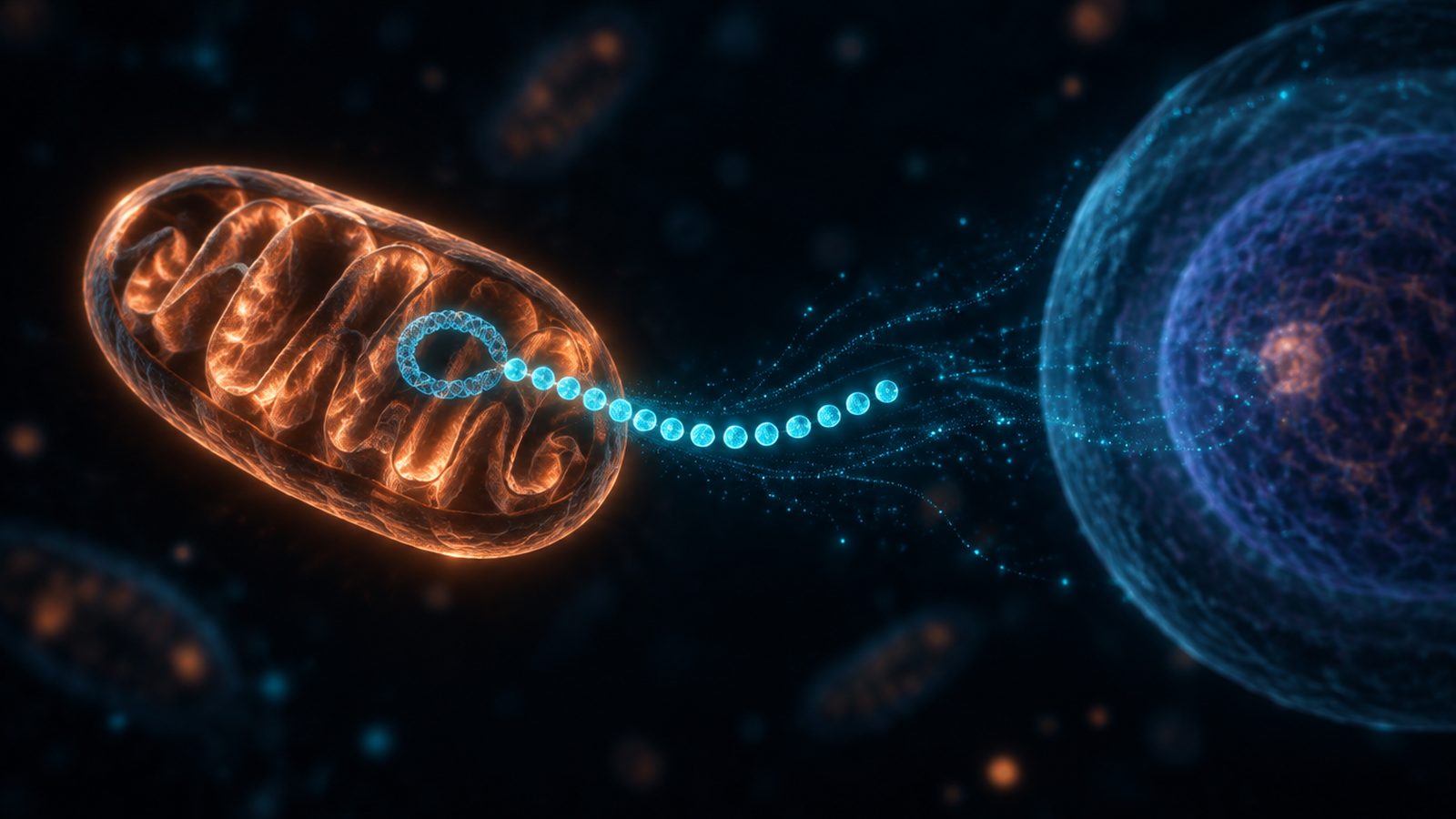
The Cell BriefMetabolism
GLP-1: The Gut Hormone That Became Ozempic
Your gut releases a 30-bead peptide after every meal, and an enzyme cuts it up within minutes. Here is how scientists turned it into a medicine that lasts a week.
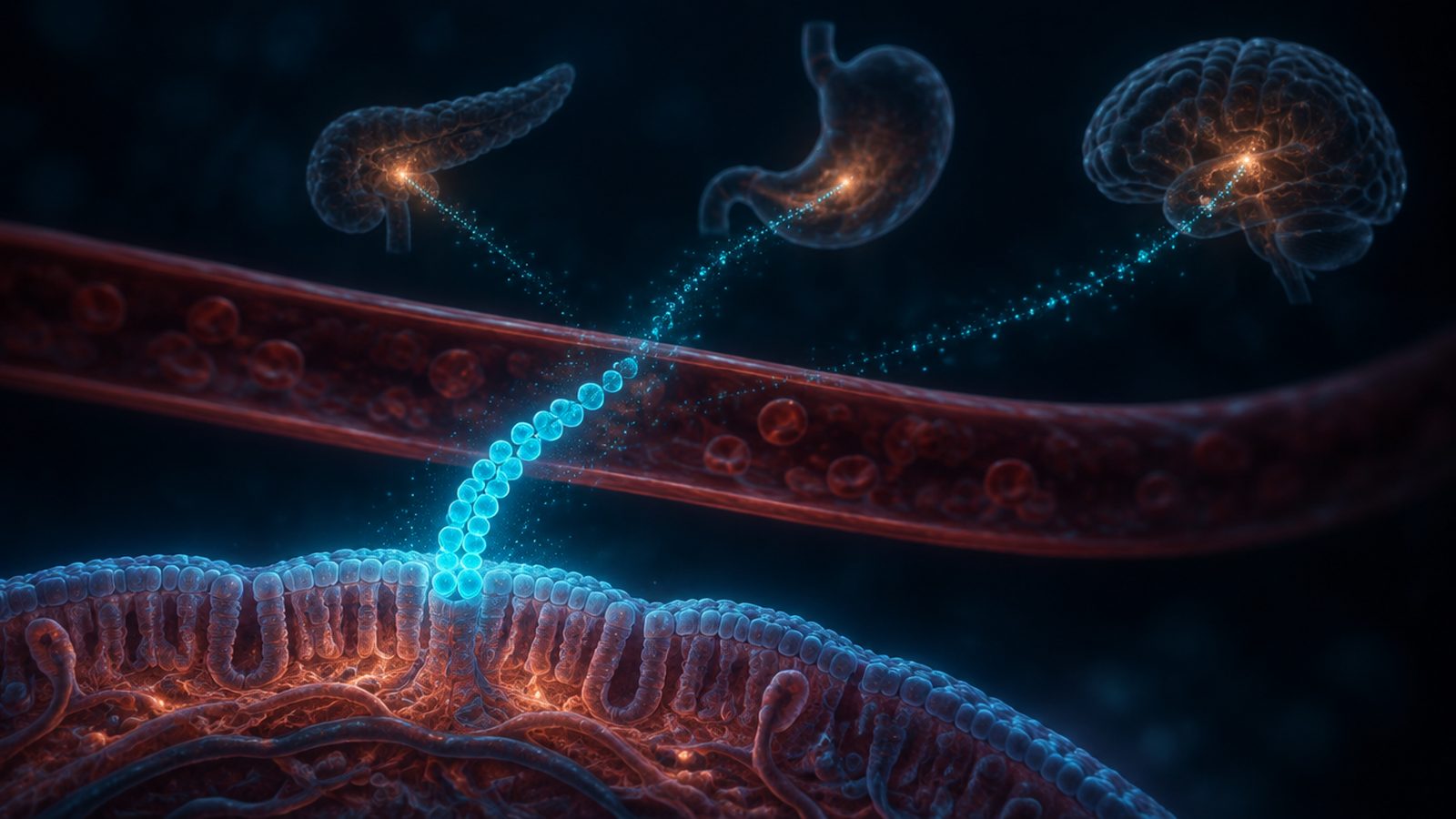
You finish a meal. Within minutes, your gut sends out a message: a tiny peptide called GLP-1.
Medicines like Ozempic copy it. The real thing lasts only minutes in your blood. Here is how scientists made it last a week.
What it is
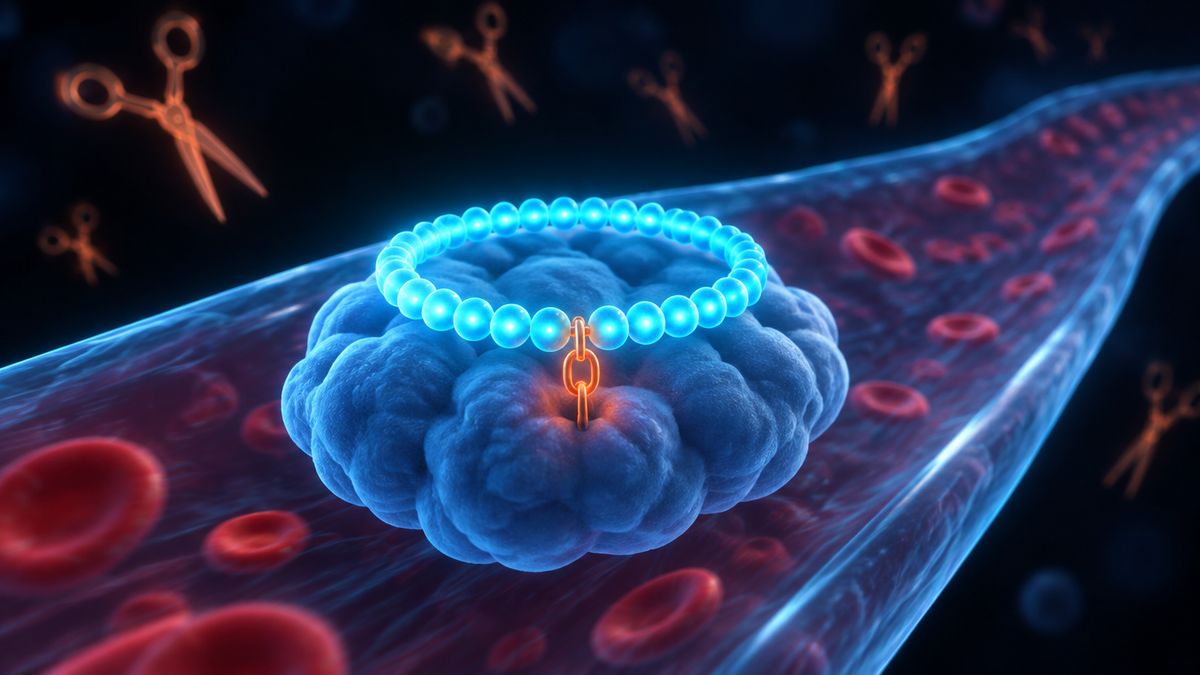
A peptide is a short chain of amino acids. Think of amino acids as beads and a peptide as a short bead bracelet. New to this? Start with what a peptide is.
GLP-1 is a bracelet of 30 beads. Your body snips it out of a longer parent chain. That parent also gives you glucagon, a hormone that raises blood sugar.
Cells in the lining of your gut, called L cells, make it. When food arrives, they release it into the blood.
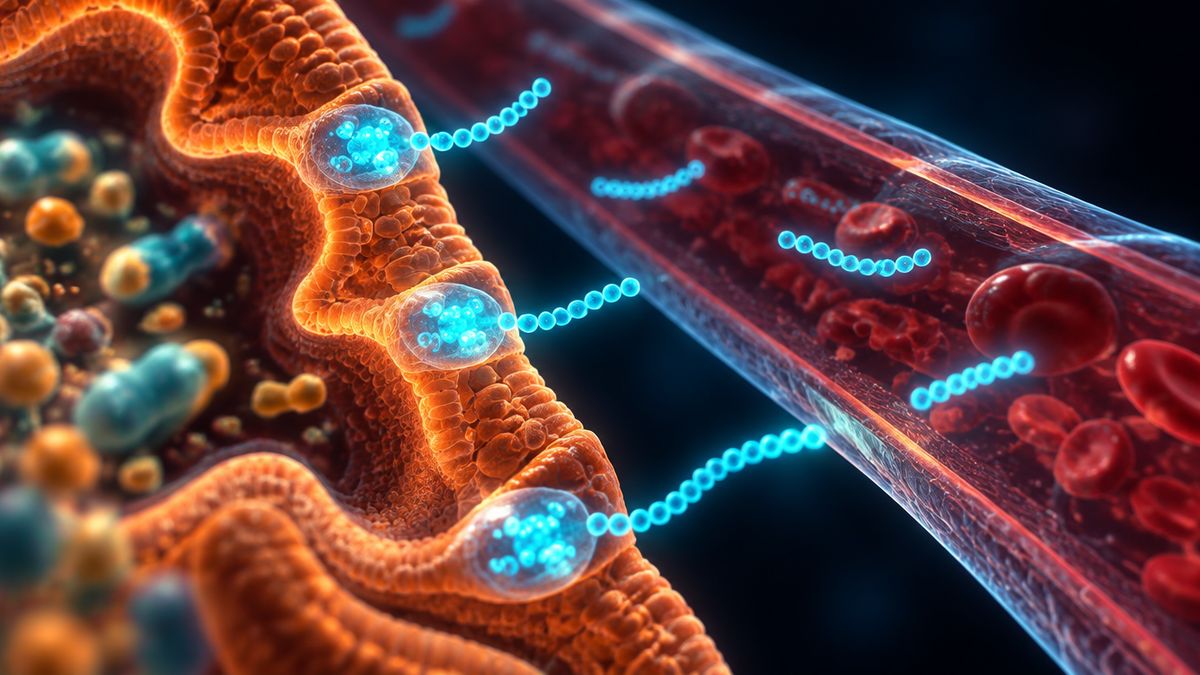
Levels in people rise after a sugary drink or breakfast. See more peptides your body makes.
What it does in the body
GLP-1 works like a text message sent after eating. It says: food is here, get ready.
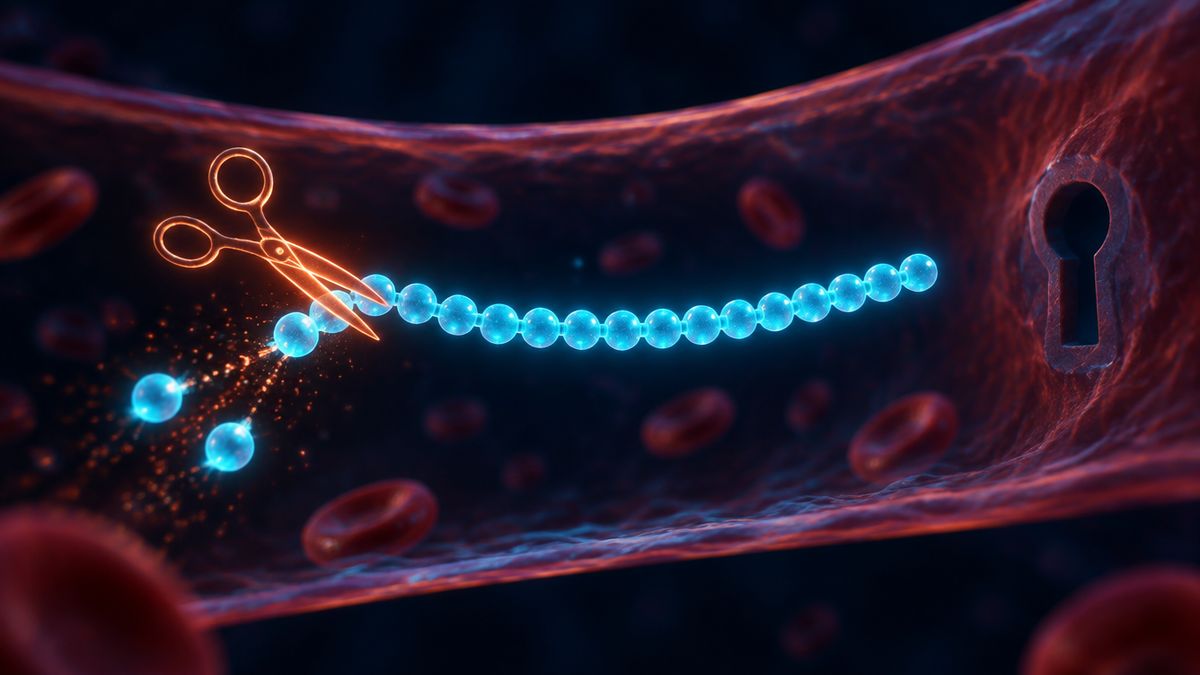
The pancreas. GLP-1 fits a receptor on the cells that make insulin. A receptor is a lock, and the peptide is the key. When the key turns and blood sugar is high, the cells release more insulin and less glucagon.
The stomach. In people, GLP-1 slows how fast the stomach empties.
The brain. Receptors sit in the brain's appetite center. The signal helps you feel full.
Then an enzyme called DPP-4 snips two beads off the bracelet. The shorter bracelet no longer fits the lock. In rats, half of it is gone from the blood in one to five minutes.
What scientists have found
In cells: In rat pancreas cells that make insulin, GLP-1 raised cAMP, a "go" signal inside the cell. The cells also switched on their insulin gene. This is how scientists first showed these cells carry the GLP-1 lock.
In animals: Mice bred with no GLP-1 receptor released less insulin after a sugar drink. Their body weight and food intake were normal.
In rats, GLP-1 placed into the brain cut feeding sharply. A blocker that jams the lock did the opposite: full rats more than doubled their food intake.
In people: In 1987, seven volunteers got a GLP-1 drip. Insulin went up. Blood sugar and glucagon went down.
In 1998, 20 young men got GLP-1 or salt water with breakfast. On GLP-1, they felt fuller and ate 12% less at lunch.
Natural GLP-1 vanishes too fast to be a medicine. So scientists built copies that last.
The first came from the Gila monster, a lizard. A 39-bead peptide in its spit fit the GLP-1 lock, but its second bead was different, so DPP-4 could not snip it. In rats, it lasted far longer than GLP-1. A lab-made copy, exenatide, became an FDA-approved diabetes medicine.
Next came a fat chain clipped onto GLP-1 itself. It grabs albumin, a big protein floating in blood, and rides along out of DPP-4's reach. That is liraglutide, also FDA-approved.
Semaglutide swapped a bead and used a longer fat chain. It lasts about 160 hours in the blood, close to a week.
Big trials followed. In one, 1,961 adults with obesity but no diabetes took semaglutide or a placebo, a dummy look-alike, for 68 weeks. Body weight fell 14.9% on semaglutide and 2.4% on placebo. Nausea and diarrhea were the most common side effects.
Another followed 17,604 people with heart disease and extra weight, but no diabetes, for over three years. Heart attack, stroke or heart death struck 6.5% on semaglutide and 8.0% on placebo.
Where it stands
GLP-1 itself is a natural hormone your body makes. Semaglutide has been FDA-approved since 2017, first for type 2 diabetes as Ozempic. Since 2021, as Wegovy, it is also approved for long-term weight management in adults with obesity, or overweight plus a weight-related condition.
Researchers now ask how much of the effect runs through the brain, and which other gut hormones can team up with GLP-1. That is the exciting next step.
The bottom line
- GLP-1 is a 30-amino-acid gut hormone released after meals. It tells the pancreas, stomach and brain that food has arrived.
- DPP-4 cuts it up within minutes. A lizard peptide and a fat chain showed scientists how to make copies that last.
- Semaglutide, one such copy, has been FDA-approved since 2017. Large trials in people measured body weight and heart events.
FAQ
Questions people ask
- What is GLP-1?
- GLP-1 is a hormone made of 30 amino acids. Cells in the lining of your gut release it into the blood after you eat.
- What does GLP-1 do?
- In people, it raises insulin and lowers glucagon when blood sugar is high, slows stomach emptying, and signals fullness. An enzyme called DPP-4 breaks it down within minutes.
- Is GLP-1 the same as Ozempic?
- No. GLP-1 is the natural hormone. Ozempic is a brand of semaglutide, a lab-made copy with a fat chain attached that lasts about a week in the blood.
- Is semaglutide approved by the FDA?
- Yes. The FDA approved it for type 2 diabetes in 2017, and in 2021 for long-term weight management in adults with obesity, or with overweight plus a weight-related condition.
Sources8
- The physiology of glucagon-like peptide 1 · Physiological Reviews, 2007 · DOI 10.1152/physrev.00034.2006
- Glucagon-like peptide 1 (GLP-1) · Molecular Metabolism, 2019 · DOI 10.1016/j.molmet.2019.09.010
- Glucagon-like peptide-1 7-36: a physiological incretin in man · The Lancet, 1987 · DOI 10.1016/s0140-6736(87)91194-9
- Glucagon-like peptide 1 promotes satiety and suppresses energy intake in humans · Journal of Clinical Investigation, 1998 · DOI 10.1172/JCI990
- A role for glucagon-like peptide-1 in the central regulation of feeding · Nature, 1996 · DOI 10.1038/379069a0
- Once-Weekly Semaglutide in Adults with Overweight or Obesity (STEP 1) · New England Journal of Medicine, 2021 · DOI 10.1056/NEJMoa2032183
- Semaglutide and Cardiovascular Outcomes in Obesity without Diabetes (SELECT) · New England Journal of Medicine, 2023 · DOI 10.1056/NEJMoa2307563
- FDA Approves New Drug Treatment for Chronic Weight Management, First Since 2014 · U.S. Food and Drug Administration news release (reproduced by BioSpace), 2021
Education only. Not medical advice. The Cell Brief summarises published research for general education. It is not medical advice, and nothing here is a recommendation to use any compound.
One brief a week
One brief per compound. Unsubscribe anytime.