The Cell BriefMetabolism
MOTS-c: The Tiny Peptide Hidden in Your Cell's Power Plants
A tiny peptide whose recipe hides in the genes of your cell's power plants. Here is what studies in cells, mice and people have found so far.
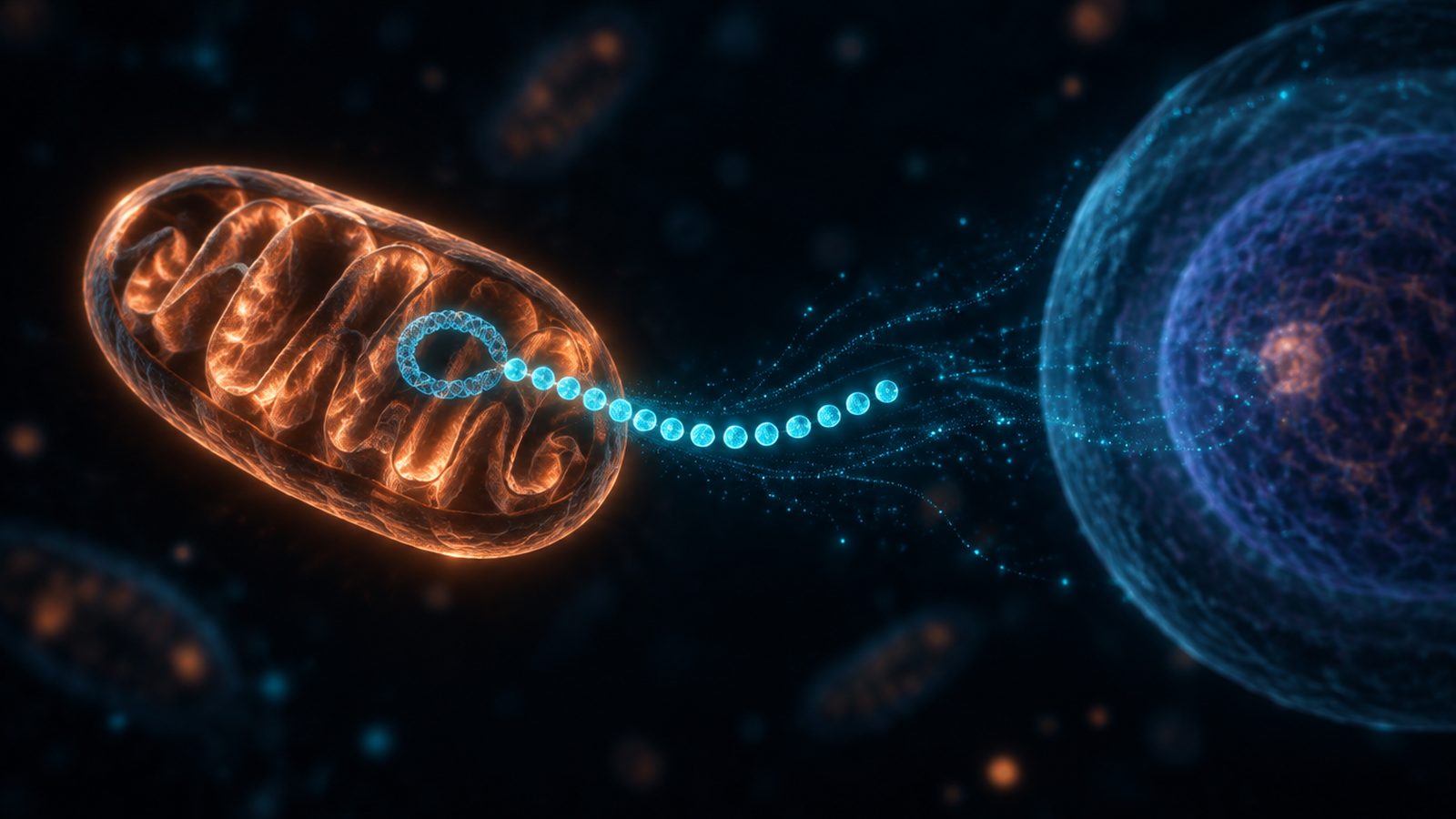
Your cells are packed with tiny power plants called mitochondria. They even carry their own small set of genes. For years, that set was seen as a short parts list for making energy, and little else.
Then, in 2015, a team at the University of Southern California found a hidden message in it. The message was the recipe for a tiny peptide. They named it MOTS-c.
What it is
A peptide is a short chain of amino acids. Think of amino acids as beads and a peptide as a short bead bracelet. New to this? Start with what a peptide is.
MOTS-c is a bracelet of just 16 beads.
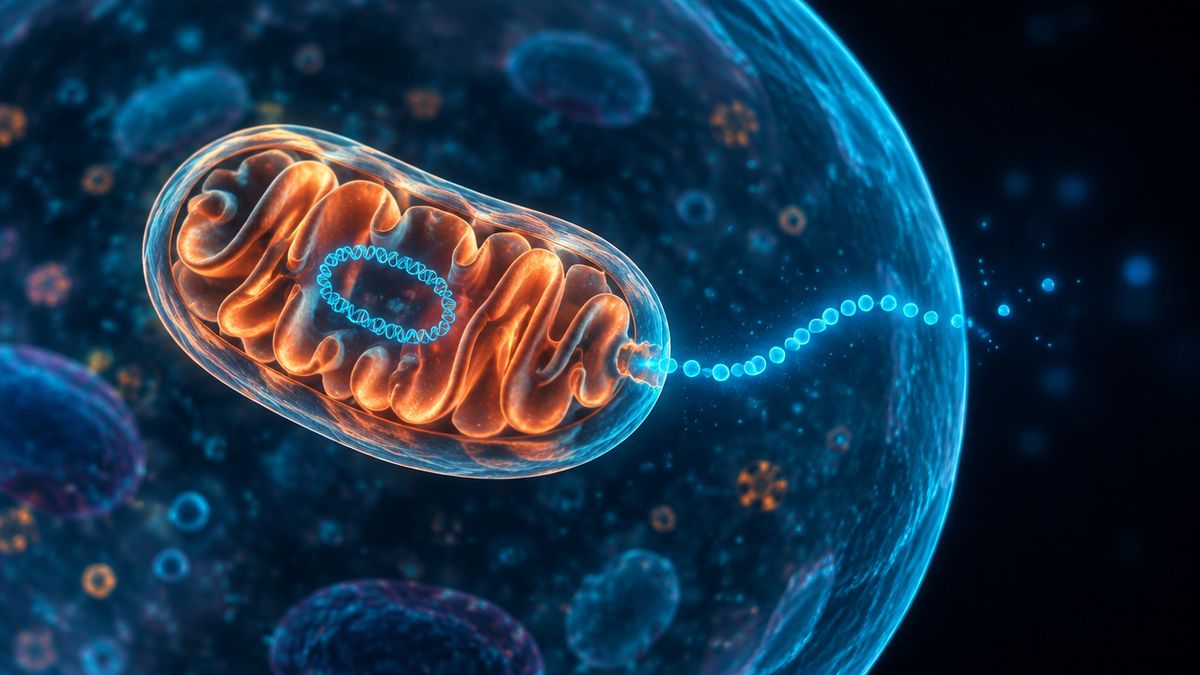
Its recipe hides inside another gene in the mitochondria, like a short word tucked into a longer one.
Here is the twist. Mitochondria read genes with a slightly different dictionary. Read their way, the recipe says "start" and then "stop" right away. So the team concluded it gets built out in the main body of the cell.
What it does in the body
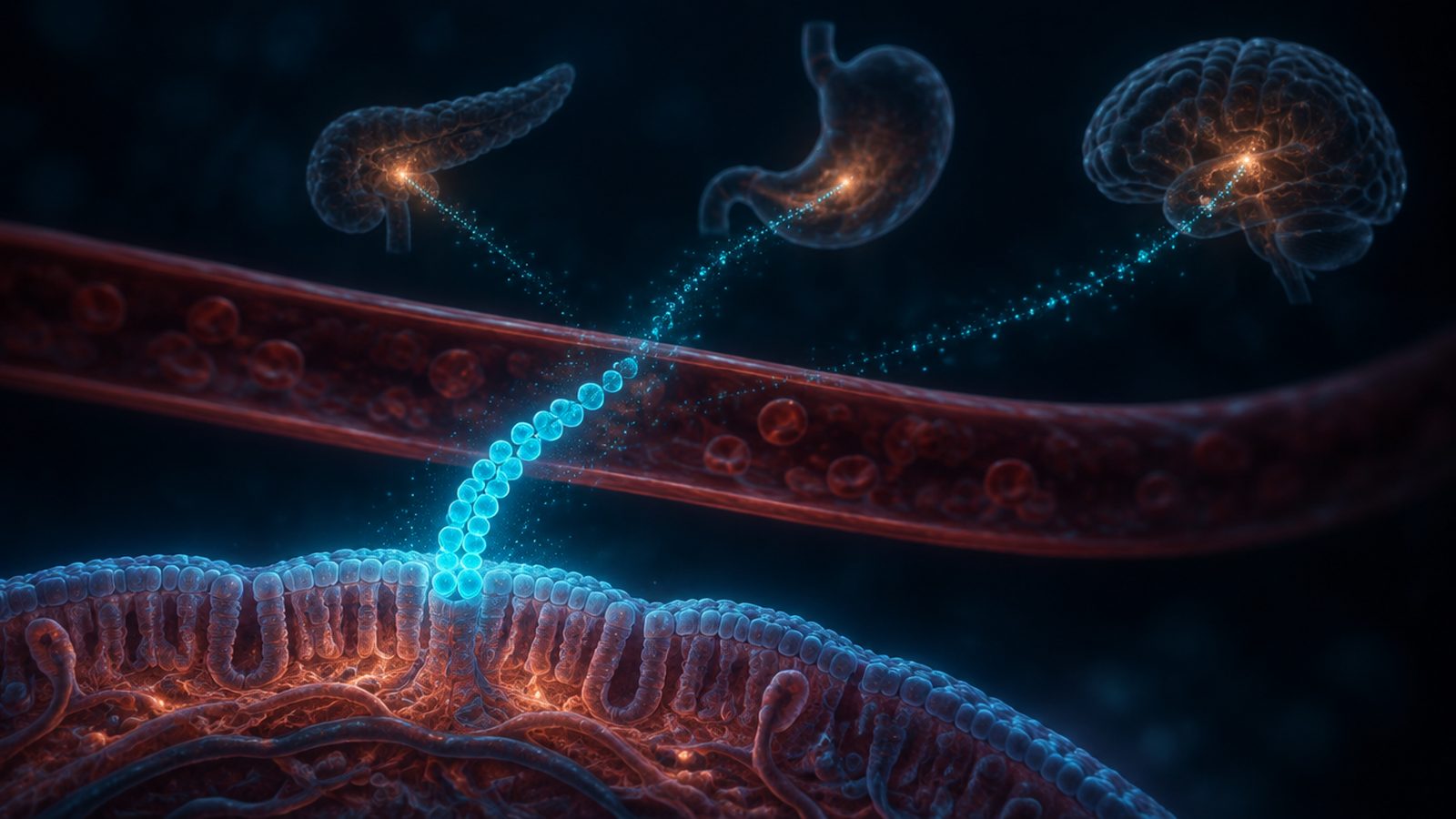
Scientists have found MOTS-c in several tissues of mice and rats. They have also found it in the blood of people and rodents.
A signal in the blood can carry a message from one organ to another. That is why some researchers call MOTS-c a "mitochondrial hormone."
In mice, its main target seemed to be muscle. That matters, because muscle soaks up most of the sugar that insulin clears from the blood.
Insulin is the body's signal to pull sugar out of the blood. Insulin sensitivity is how well cells hear that signal, like how fast someone answers a knock at the door.
In lab cells, MOTS-c switched on AMPK. AMPK works like a fuel gauge. When energy runs low, it tells the cell to burn more sugar and fat.

What scientists have found
In cells: In human cells in a dish, MOTS-c set off a chain of steps that turned on the fuel gauge. The cells burned more sugar.
Under stress, such as low sugar, MOTS-c moved into the nucleus. That is the cell's control room, where most genes live.
Once inside, it teamed up with a protein that switches on the cell's defenses against damage. Cells that made extra MOTS-c survived low sugar better.
In animals: In mice, MOTS-c levels in muscle and blood fell with age. Giving middle-aged mice MOTS-c for a short time brought their muscle's insulin response back to young levels.
Mice on a high-fat diet that got MOTS-c did not gain the weight that untreated mice did. Both groups ate the same amount.
In a 2021 study, old mice given MOTS-c ran about twice as long on a treadmill as untreated old mice.
In people: In that same 2021 study, ten healthy young men who rarely exercised did a hard ride on an exercise bike. MOTS-c inside their thigh muscle rose about 12-fold. In their blood, it rose about 1.5-fold, then went back to normal within four hours.

Genes add a clue. A tiny DNA change, found mainly in East Asian people, swaps one bead in MOTS-c. In a study of 27,527 people, men who carried it had more type 2 diabetes. Women did not.
A man-made cousin of MOTS-c, called CB4211, has gone through an early safety trial in people. Its maker reported no serious side effects.
Where it stands
MOTS-c is not approved by the FDA. The World Anti-Doping Agency bans it in sport at all times.
A trial of MOTS-c itself was registered in 2026 and is recruiting. It is for adults with prediabetes and extra weight. It will compare MOTS-c with a placebo, a dummy look-alike, to see if insulin sensitivity changes.
Researchers also want to know if the mouse results carry over to people.
It is early days, and MOTS-c is one to watch. Another favorite of aging researchers is Epitalon.
The bottom line
- MOTS-c is a 16-amino-acid peptide whose recipe hides in the genes of the cell's power plants.
- In cells and mice, it switched on the cell's fuel gauge. In mice on a high-fat diet, it kept off extra weight.
- In people, a hard workout raises it. A new trial in people, now recruiting, is the exciting next step.
FAQ
Questions people ask
- What is MOTS-c?
- MOTS-c is a peptide, a short chain of 16 amino acids. Its recipe hides in the DNA of mitochondria, the cell's power plants, and it was found in 2015.
- Does exercise raise MOTS-c?
- In a 2021 study of 10 young men, a hard bike ride raised MOTS-c in thigh muscle about 12-fold. Blood levels rose too, then went back to normal within four hours.
- Is MOTS-c approved by the FDA?
- No. MOTS-c is not approved by the FDA, and the World Anti-Doping Agency bans it in sport at all times.
- How does MOTS-c work?
- In cells and mice, it switches on AMPK, the cell's fuel gauge, which tells the cell to burn more sugar and fat. A trial in people is now recruiting.
Sources7
- The mitochondrial-derived peptide MOTS-c promotes metabolic homeostasis and reduces obesity and insulin resistance · Cell Metabolism, 2015 · DOI 10.1016/j.cmet.2015.02.009
- The Mitochondrial-Encoded Peptide MOTS-c Translocates to the Nucleus to Regulate Nuclear Gene Expression in Response to Metabolic Stress · Cell Metabolism, 2018 · DOI 10.1016/j.cmet.2018.06.008
- MOTS-c is an exercise-induced mitochondrial-encoded regulator of age-dependent physical decline and muscle homeostasis · Nature Communications, 2021 · DOI 10.1038/s41467-020-20790-0
- A pro-diabetogenic mtDNA polymorphism in the mitochondrial-derived peptide, MOTS-c · Aging (Albany NY), 2021 · DOI 10.18632/aging.202529
- CohBar Announces Positive Topline Results from the Phase 1a/1b Study of CB4211 Under Development for NASH and Obesity · CohBar, Inc. press release (GlobeNewswire, via BioSpace), 2021
- MOTS-c for Improving Insulin Sensitivity in Adults With Prediabetes and Overweight/Obesity (MOTS-MET), NCT07505745 · ClinicalTrials.gov (U.S. National Library of Medicine), 2026
- What is the MOTS-c peptide? · U.S. Anti-Doping Agency (USADA), 2026
Education only. Not medical advice. The Cell Brief summarises published research for general education. It is not medical advice, and nothing here is a recommendation to use any compound.
One brief a week
One brief per compound. Unsubscribe anytime.