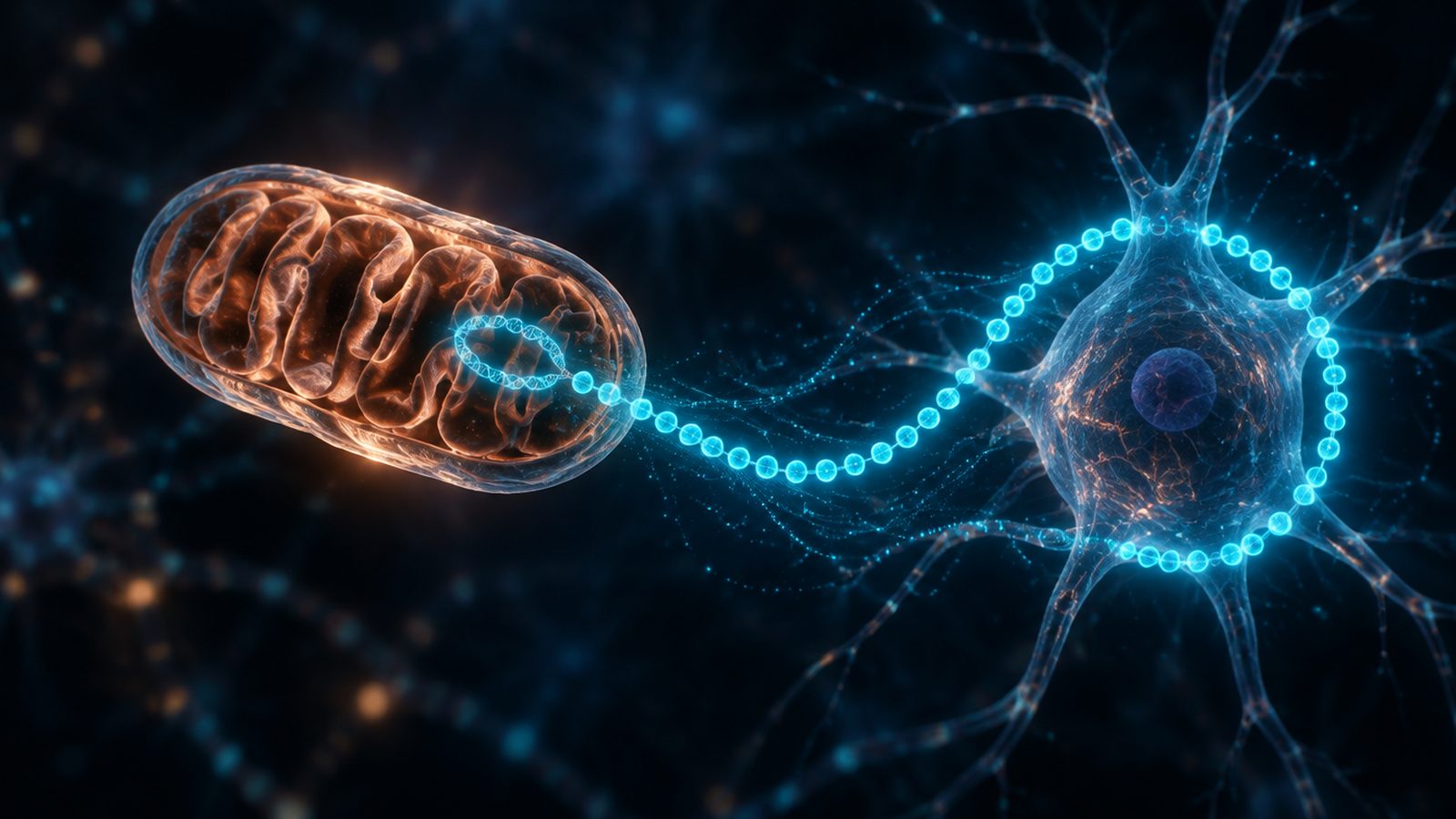
The Cell BriefLongevity
Epitalon: A Tiny Peptide and the Tips of Your Chromosomes
A lab-made peptide of just four amino acids, famous for switching on telomerase in human cells in a dish. Here is what cells, animals and people have shown so far.
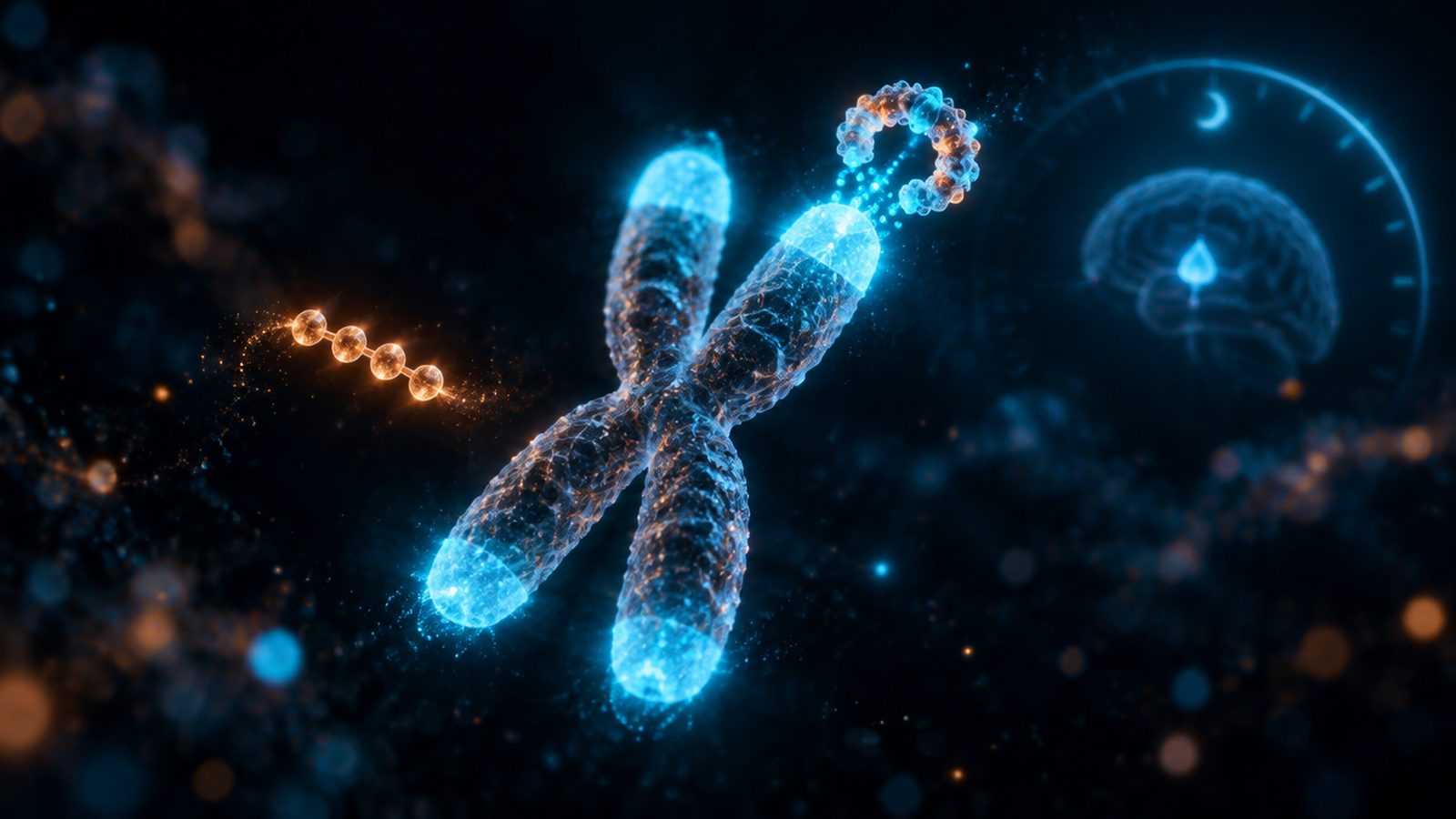
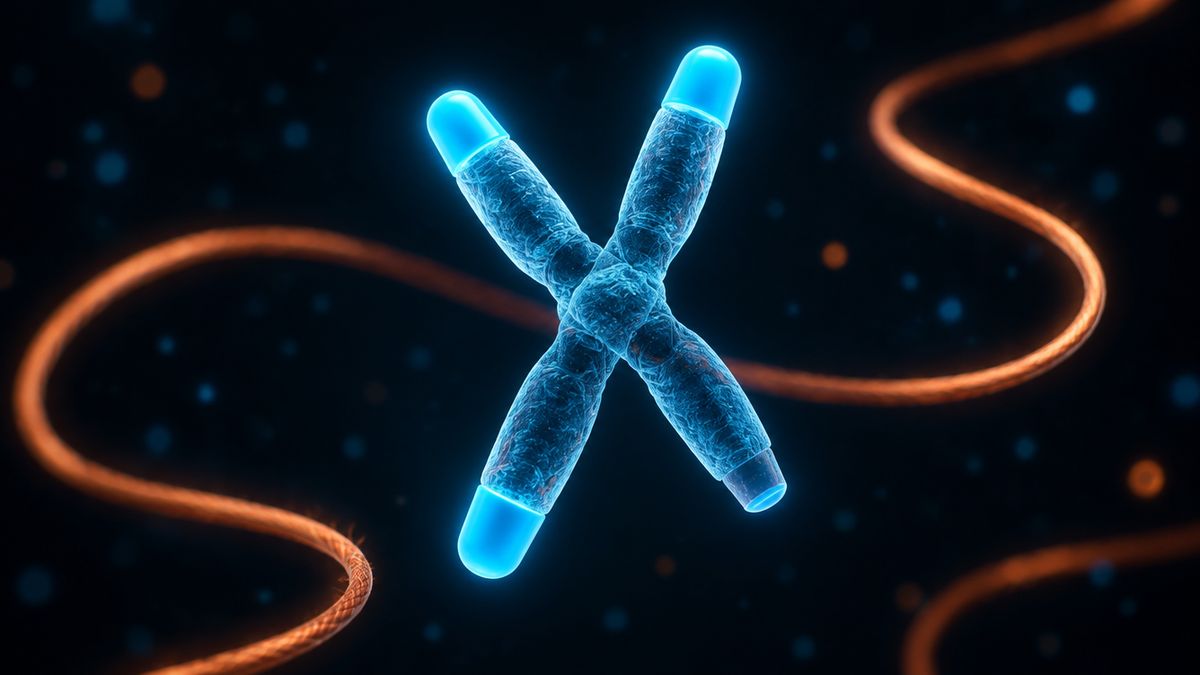
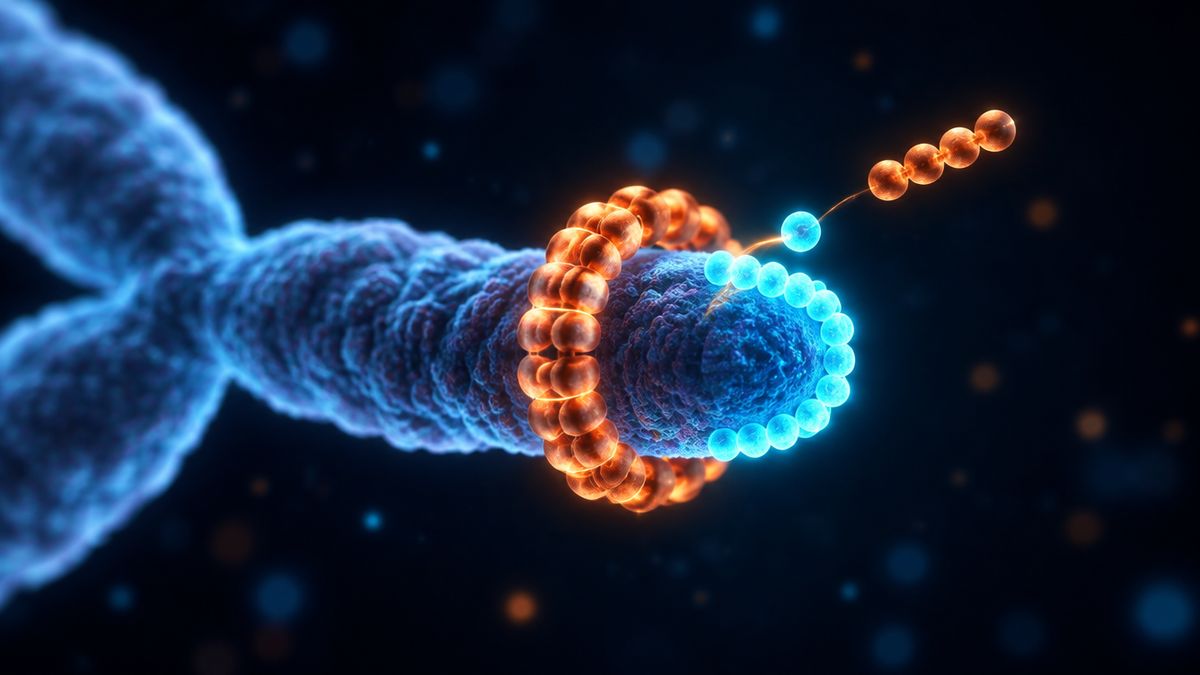
Think of the plastic tips on the ends of your shoelaces. Your chromosomes, the bundles that hold your genes, have tips like that, called telomeres. Each time a cell divides, its tips get a little shorter. When they get too short, the cell stops dividing.
That countdown is one of the oldest ideas in aging research. It is why a peptide of just four amino acids, called Epitalon, has drawn so much attention.
What it is
A peptide is a short chain of amino acids. Think of amino acids as beads and a peptide as a short bead bracelet. New to this? Start with what a peptide is.
Epitalon (also spelled Epithalon) is a bracelet of only four beads. It is made in a lab.
Its story starts with an extract from the pineal glands of cattle, first described in 1973. Scientists in St Petersburg, Russia, built Epitalon to match the most common amino acids in that extract. In 2017, the same group reported finding the exact four-bead chain in the extract itself.
That group has done most of the research on Epitalon. When other labs have weighed in, this brief says so.
What it does in the body
In people, nobody knows the details yet. Scientists see Epitalon as a small signal that may nudge which genes are turned on.
Two ideas run through the research. The first is telomeres and telomerase. Telomerase is a helper that rebuilds the tips, like a repair crew.
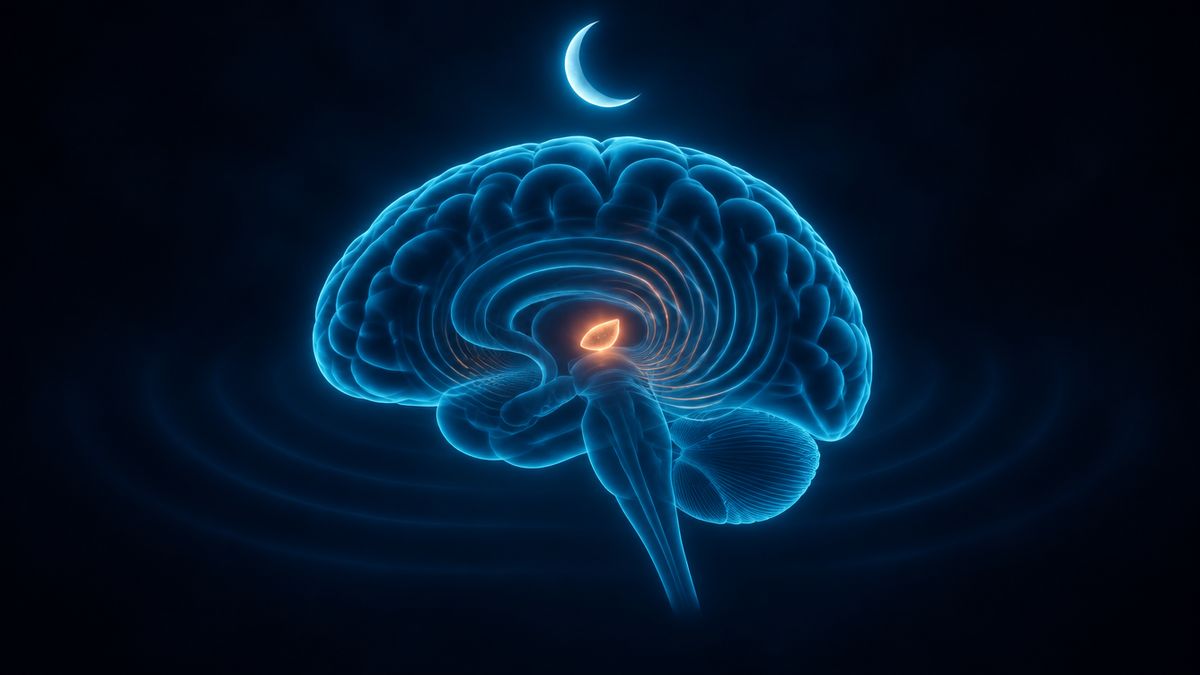
The second is the pineal gland. This pea-sized gland sits deep in the brain. It makes melatonin, a hormone your body releases at night. That nightly rhythm flattens with age in monkeys and in people.
What scientists have found
In cells: In 2003, the St Petersburg team added Epitalon to human cells in a dish. These cells normally have no telomerase at work. Epitalon switched it on, and the tips got longer.
A year later, they checked whether the cells could keep dividing. Normal cells stopped after 34 rounds. Cells given Epitalon did 10 extra rounds and were still going.
For 22 years, nobody outside the group checked the result. Then, in 2025, a lab in London with no ties to the group did. In normal human cells, telomerase switched on and the tips grew longer, confirming the earlier work.
The London team also tested breast cancer cells. There, the tips grew partly through a backup route that cancer cells use. The authors said this is worth weighing for any compound that lengthens telomeres.
In animals: In a 2003 study, female mice got Epitalon or salt water for life. The average mouse did not live longer. But the longest-lived tenth of the group lived about 13 percent longer than the longest-lived controls. Leukemia was six times less common.
In old female monkeys, a 2001 study found evening melatonin rose after Epitalon. Their daily rhythm of cortisol, a stress hormone, moved back toward the young pattern.
Yet in a 2003 Paris study, rat pineal glands kept alive in a chamber made no extra melatonin. So in a living animal, Epitalon may work further up the line, through the brain.
In people: Human research is small. It comes from the same group, mostly in Russian journals. One 2020 report included 75 women with low melatonin, plus a placebo group. After Epitalon, a melatonin breakdown product in urine was about 1.7 times higher in those who started low. Clock genes in their blood cells shifted too.
It is one report that no outside group has repeated yet.
Where it stands
Epitalon is not approved by the FDA. It has not been through the large, blinded trials that drug approval needs.
Almost all of the research comes from one Russian group. The 2025 London study is the clearest outside check.
What to watch: whether other labs see the extra cell divisions, whether the clock-gene results hold up in blinded trials, and what Epitalon does to telomerase in a living animal. Human studies at that standard are the exciting next step.
For another small peptide on the aging radar, see MOTS-c.
The bottom line
- Epitalon is a lab-made chain of four amino acids, modeled on an extract from the pineal gland.
- In human cells in a dish, two labs saw it switch on telomerase and lengthen telomeres.
- Animal results are one to watch, and studies in people are early days.
FAQ
Questions people ask
- What is Epitalon?
- Epitalon is a lab-made peptide, a chain of just four amino acids. It was modeled on an extract from the pineal gland, a pea-sized gland deep in the brain.
- Does Epitalon lengthen telomeres?
- In human cells in a dish, a 2003 Russian study and a 2025 London study both saw telomerase switch on and telomeres grow longer. Whether this happens inside a living person has not been tested in a published trial.
- Does Epitalon affect melatonin?
- In old monkeys, evening melatonin rose after Epitalon, but rat pineal glands kept in a chamber made no extra. One small Russian report in people with low melatonin found more of a melatonin breakdown product in urine.
- Is Epitalon approved by the FDA?
- No. Epitalon is not approved by the FDA, and it has not been through the large, blinded trials that drug approval needs.
Sources8
- Epithalon peptide induces telomerase activity and telomere elongation in human somatic cells · Bulletin of Experimental Biology and Medicine, 2003 · DOI 10.1023/a:1025493705728
- Peptide promotes overcoming of the division limit in human somatic cell · Bulletin of Experimental Biology and Medicine, 2004 · DOI 10.1023/b:bebm.0000038164.49947.8c
- Epitalon increases telomere length in human cell lines through telomerase upregulation or ALT activity · Biogerontology, 2025 · DOI 10.1007/s10522-025-10315-x
- Effect of Epitalon on biomarkers of aging, life span and spontaneous tumor incidence in female Swiss-derived SHR mice · Biogerontology, 2003 · DOI 10.1023/a:1025114230714
- Synthetic tetrapeptide epitalon restores disturbed neuroendocrine regulation in senescent monkeys · Neuro Endocrinology Letters, 2001
- Effect of a synthetic pineal tetrapeptide (Ala-Glu-Asp-Gly) on melatonin secretion by the pineal gland of young and old rats · Journal of Endocrinological Investigation, 2003 · DOI 10.1007/BF03345159
- AEDG peptide regulates human circadian rhythms genes expression during pineal gland accelerated aging · Advances in Gerontology (Uspekhi Gerontologii), 2020
- Overview of Epitalon: Highly Bioactive Pineal Tetrapeptide with Promising Properties · International Journal of Molecular Sciences, 2025 · DOI 10.3390/ijms26062691
Education only. Not medical advice. The Cell Brief summarises published research for general education. It is not medical advice, and nothing here is a recommendation to use any compound.
One brief a week
One brief per compound. Unsubscribe anytime.