The Cell BriefBrain
Semax: The Peptide Built From a Piece of a Stress Hormone
Semax is a tiny peptide built from a piece of a stress hormone. Here is what scientists have found in cells, animals and people, explained simply.
Your body sends messages with hormones. One of them, called ACTH, tells the body to make the stress hormone cortisol. Semax is built from a tiny piece of that hormone. But the piece leaves the stress job behind.
Scientists in Moscow turned that piece into a small peptide. They have studied it for years, mostly in stroke, attention and memory research.
What it is
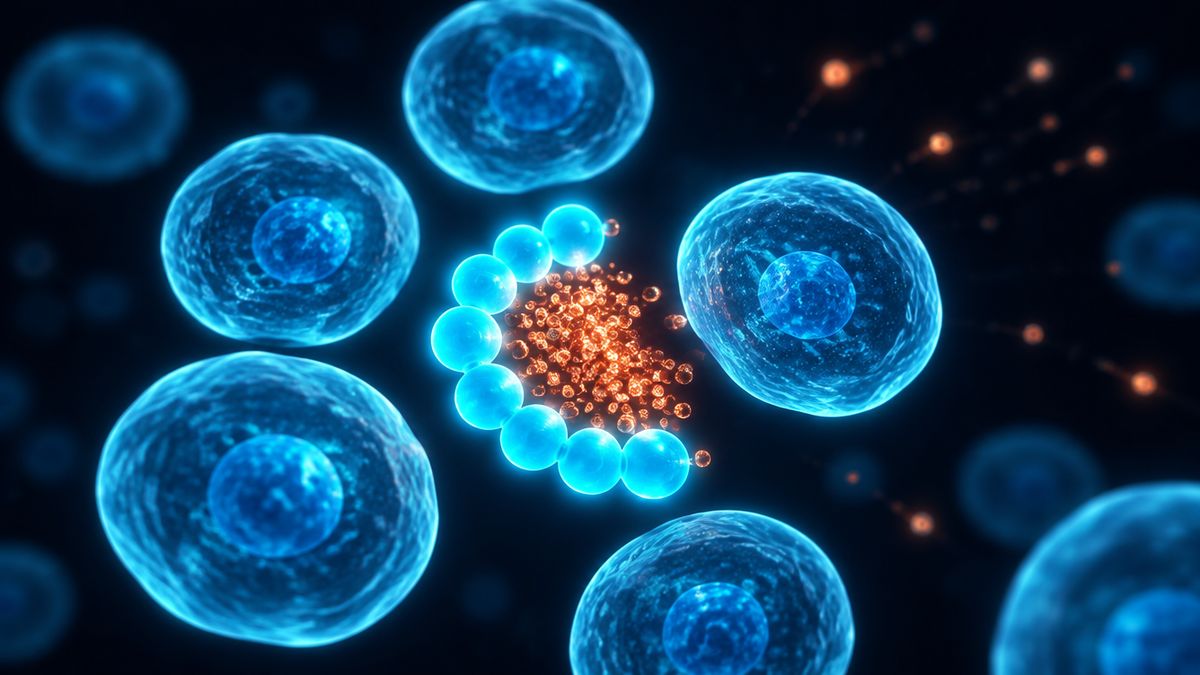
Amino acids are the building blocks of proteins. Think of them as beads. A peptide is a short string of beads, like a small bracelet. New here? See what a peptide is.
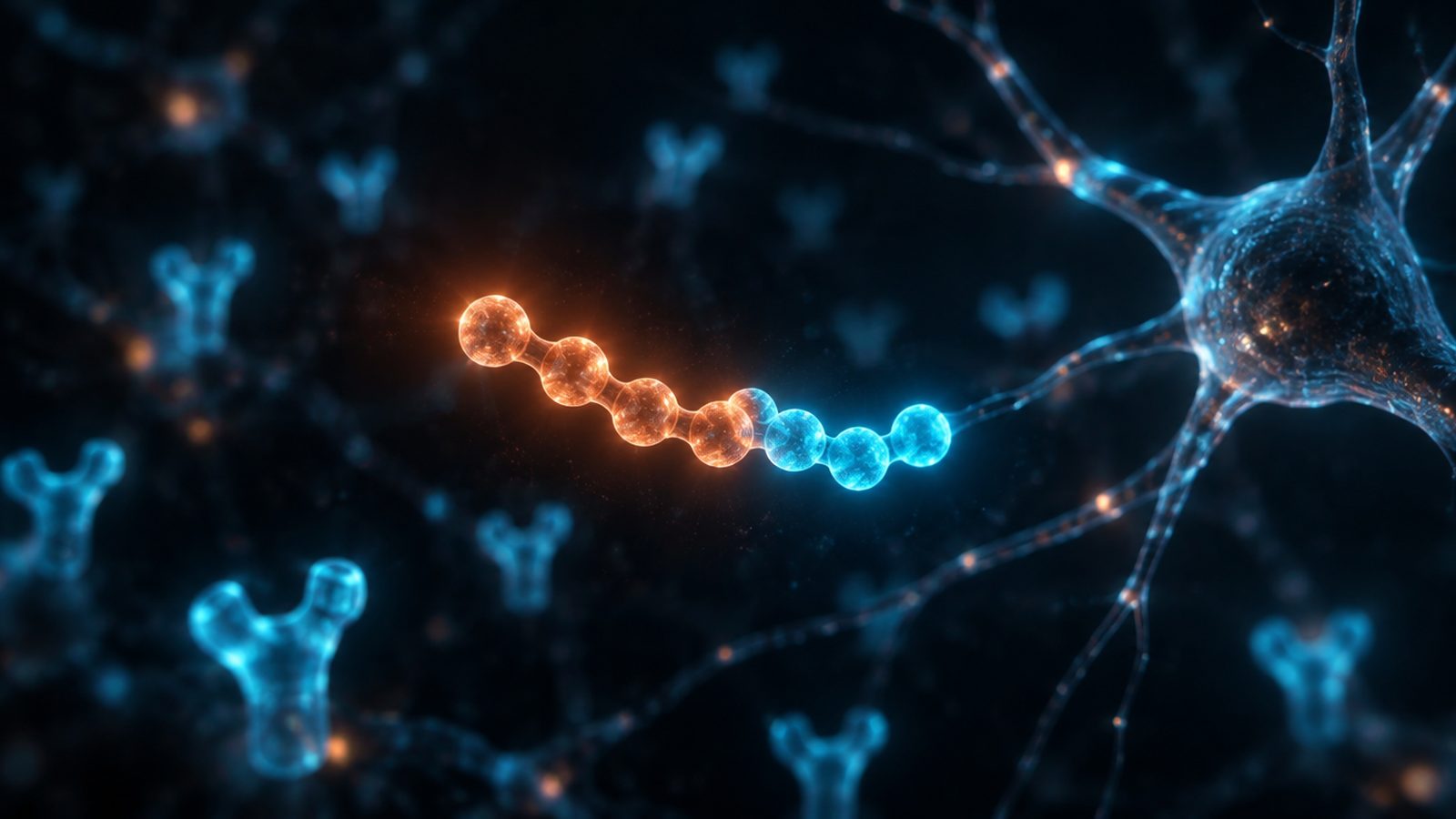
Semax is a lab-made chain of just seven beads. The first four are copied from ACTH. Even so, researchers say Semax has no hormone activity of its own.
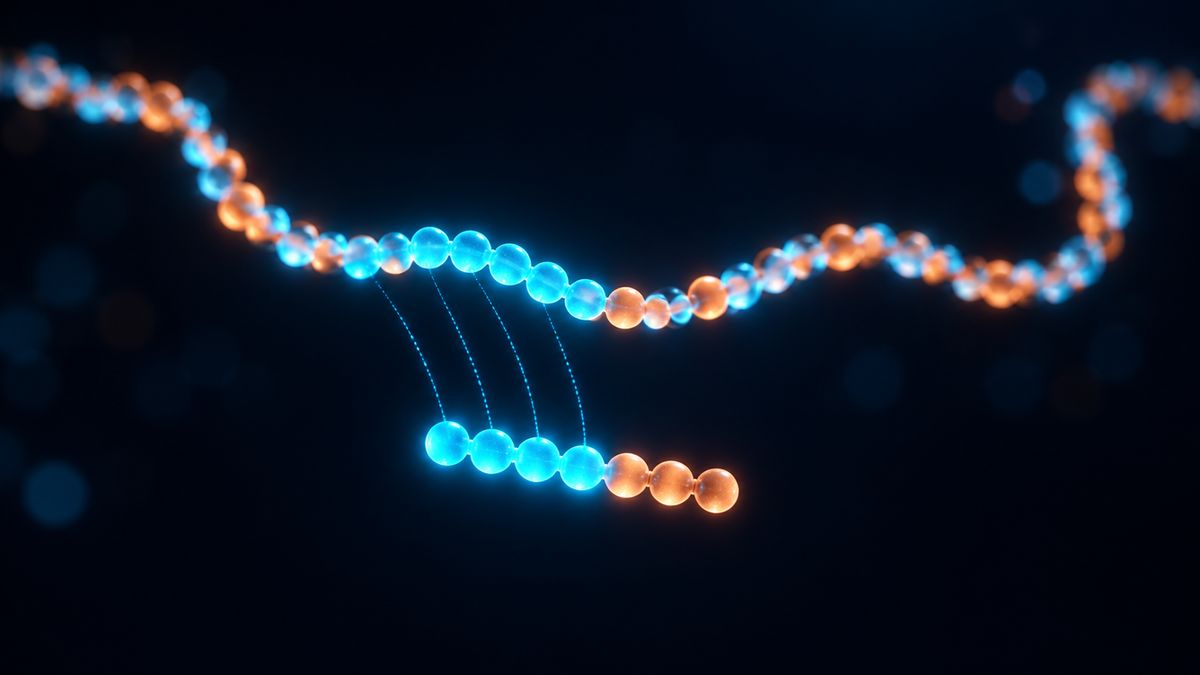
The last three beads are an added tail. Enzymes are the body's tiny scissors that cut peptides apart. The tail helps Semax resist those scissors.
Semax has a close sibling called Selank. Both are seven beads long with the same tail. Selank just starts from a different piece.
What it does in the body
Russian researchers call Semax a nootropic. That means it is studied for effects on learning, attention and memory.
Much of the research looks at BDNF. BDNF is a protein that helps nerve cells survive, grow and make new links. Think of it as plant food for brain cells.
In rats, Semax also changed which genes were switched on after a lab-made stroke. Genes are like recipe cards inside each cell. And Semax grabs onto copper, a metal the brain must keep in balance.
What scientists have found
In cells: Scientists grew rat nerve cells in a dish. These cells use a messenger called acetylcholine. They are among the cells that wear down in Alzheimer's disease. With Semax, about 1.5 to 1.7 times more of them survived. What this means for Alzheimer's is still unclear.
A team in Italy found that Semax holds on to copper tightly. In two kinds of lab-grown cells, it cut the damage copper caused.
In animals: In rats, one treatment with Semax raised BDNF by up to 1.4 times in the hippocampus. That is the brain's memory center, shaped a bit like a seahorse. BDNF's receptor, the lock it fits into, was also switched on more. The rats also did better on a learning task.
In a rat model of stroke, blood flow to part of the brain was blocked and then let back in. A day later, 394 genes differed between rats given Semax and rats given salt water. Genes tied to swelling, called inflammation, were turned down. Genes tied to nerve signals were turned up. The team noted they measured gene messages, not proteins.
In 2025, a study used mice bred to grow plaques, the sticky protein clumps seen in Alzheimer's disease. Mice given Semax did better on memory and exploring tests. At the first check, they had about 2.6 to 2.8 times fewer plaques in two brain areas than untreated mice.
In people: Semax is used in Russia, so some human studies exist. Most are small and published in Russian.
One study followed 110 people recovering from a stroke for about five months. Some got Semax and some did not. With Semax, BDNF in the blood went up and stayed up. Semax was also linked to faster, bigger gains on a score of daily tasks, like eating and dressing. The effect on muscle weakness was smaller.
A second study scanned the brains of 24 healthy people. Fourteen got Semax and ten got a placebo, a dummy treatment. The Semax group showed changes in a brain network that is busiest at rest. It measured brain activity, not thinking skills.
Where it stands
Semax is an approved medicine in Russia, where it is used in stroke care. It is not approved by the FDA.
Most of the research still comes from Moscow labs. Scientists want to know exactly where Semax acts in the brain.
The exciting next step is large, blinded trials in people, where no one knows who got the real thing until the end. It is early days, and Semax is one to watch.
The bottom line
- Semax is a chain of seven amino acids: four copied from the hormone ACTH, plus a three-bead tail.
- In rats, it raised BDNF, a growth signal for brain cells, and shifted gene activity after a lab-made stroke.
- In a small Russian stroke study, it was linked to higher blood BDNF and faster gains in daily tasks.
FAQ
Questions people ask
- What is Semax made of?
- Semax is a lab-made chain of seven amino acids. The first four are copied from the hormone ACTH, and the last three are a tail that helps it resist the enzymes that cut peptides apart.
- What is the difference between Semax and Selank?
- Both are seven-amino-acid peptides from Russian research with the same three-part tail. Semax starts from a piece of the hormone ACTH and is studied mostly for stroke, attention and memory, while Selank starts from an immune piece called tuftsin and is studied mostly for anxiety.
- Is Semax approved by the FDA?
- No. Semax is an approved medicine in Russia, but it is not approved by the FDA.
- What does Semax have to do with BDNF?
- BDNF is a protein that helps nerve cells survive, grow and connect. In rats, Semax raised BDNF in a memory area of the brain, and in a Russian stroke study, blood BDNF was higher in patients who got Semax.
Sources8
- Semax, an analog of ACTH(4-10) with cognitive effects, regulates BDNF and trkB expression in the rat hippocampus · Brain Research, 2006 · DOI 10.1016/j.brainres.2006.07.108
- Effects of behaviorally active ACTH (4-10) analogue - Semax on rat basal forebrain cholinergic neurons · Restorative Neurology and Neuroscience, 2008
- Semax, an ACTH4-10 peptide analog with high affinity for copper(II) ion and protective ability against metal induced cell toxicity · Journal of Inorganic Biochemistry, 2015 · DOI 10.1016/j.jinorgbio.2014.09.008
- Novel Insights into the Protective Properties of ACTH(4-7)PGP (Semax) Peptide at the Transcriptome Level Following Cerebral Ischaemia-Reperfusion in Rats · Genes (Basel), 2020 · DOI 10.3390/genes11060681
- The Potential of the Peptide Drug Semax and Its Derivative for Correcting Pathological Impairments in the Animal Model of Alzheimer's Disease · Acta Naturae, 2025 · DOI 10.32607/actanaturae.27808
- Development of Peptide Biopharmaceuticals in Russia · Pharmaceutics, 2022 · DOI 10.3390/pharmaceutics14040716
- The efficacy of semax in the treatment of patients at different stages of ischemic stroke · Zhurnal Nevrologii i Psikhiatrii imeni S.S. Korsakova, 2018 · DOI 10.17116/jnevro20181183261-68
- Effects of Semax on the Default Mode Network of the Brain · Bulletin of Experimental Biology and Medicine, 2018 · DOI 10.1007/s10517-018-4234-3
Education only. Not medical advice. The Cell Brief summarises published research for general education. It is not medical advice, and nothing here is a recommendation to use any compound.
One brief a week
One brief per compound. Unsubscribe anytime.