The Cell BriefHormones
Kisspeptin: The Puberty Switch Named After a Chocolate
Named after a chocolate candy, kisspeptin turned out to be the switch that starts puberty. Then brain scans made it even more interesting.
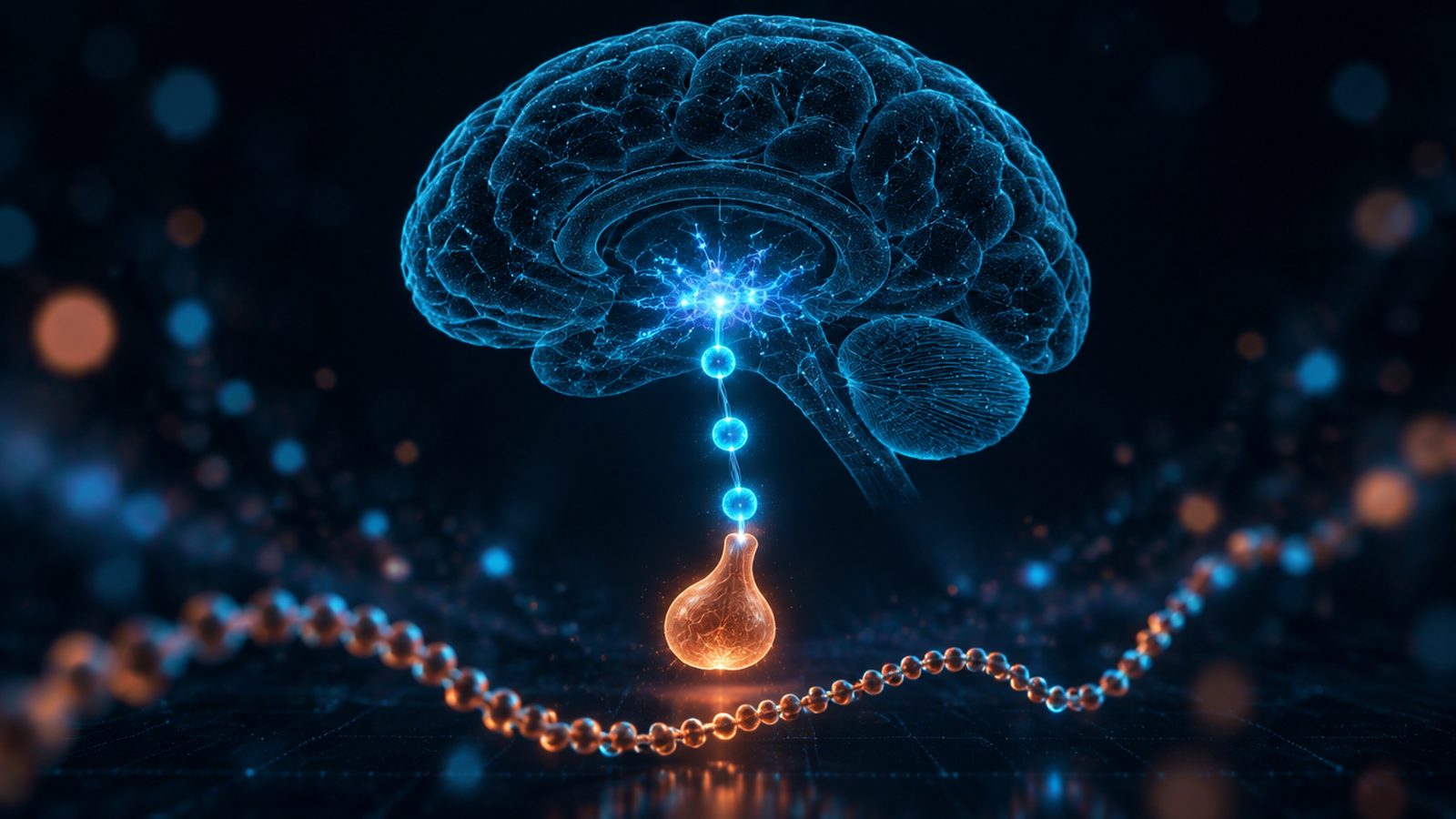
Most hormones have dull names. Kisspeptin does not. Its gene was found in 1996 by cancer researchers in Hershey, Pennsylvania, home of Hershey's Kisses. They named it KiSS-1 as a nod to the candy.
At first, nobody knew it was a hormone at all. It took years to learn that this small peptide is the switch that starts puberty. Then brain scans made it even more interesting.
What it is
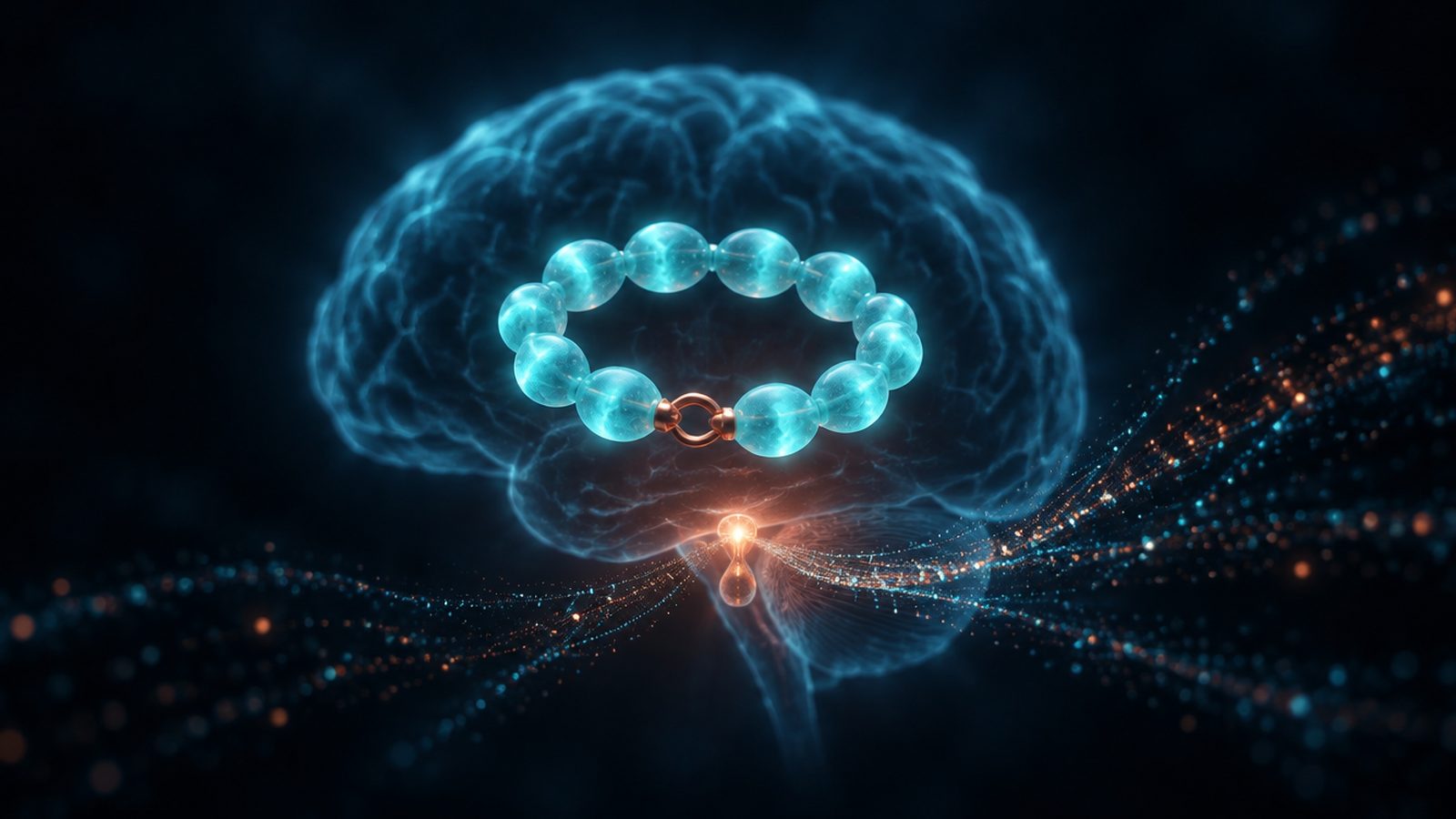
Kisspeptin is a peptide hormone. A peptide is a short chain of amino acids. Think of amino acids as beads, and a peptide as a short string of beads. New to peptides? Start with what a peptide is.
Your body first makes a long chain of 145 beads. Then it snips that chain into shorter working pieces. The longest has 54 beads. Shorter pieces, down to just 10 beads, work too.
Kisspeptin works by fitting into a receptor on a cell. A receptor is like a lock, and kisspeptin is the key. When the key turns, a message passes into the cell.
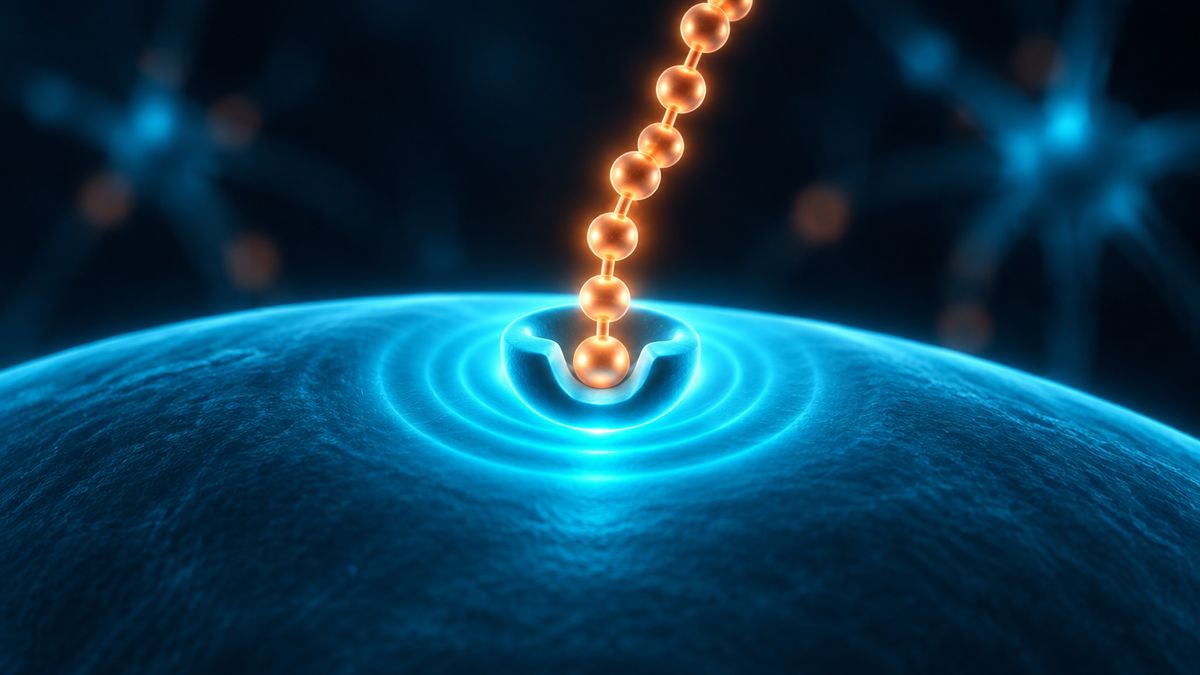
For years, this lock had no known key. In 2001, three research groups showed that kisspeptin was the missing key.
For reproduction, the main source is a group of nerve cells in the hypothalamus. That is a small spot at the base of the brain. It works like a control room for many hormones. The placenta also makes a lot of kisspeptin, and blood levels climb sharply in pregnancy.
What it does in the body
Kisspeptin starts a chain of hormone messages, like the first domino in a row.
- Kisspeptin tells nearby nerve cells to release a hormone called GnRH.
- GnRH tells the pituitary gland to release two more hormones, LH and FSH.
- LH and FSH tell the ovaries and testes to make estrogen and testosterone.
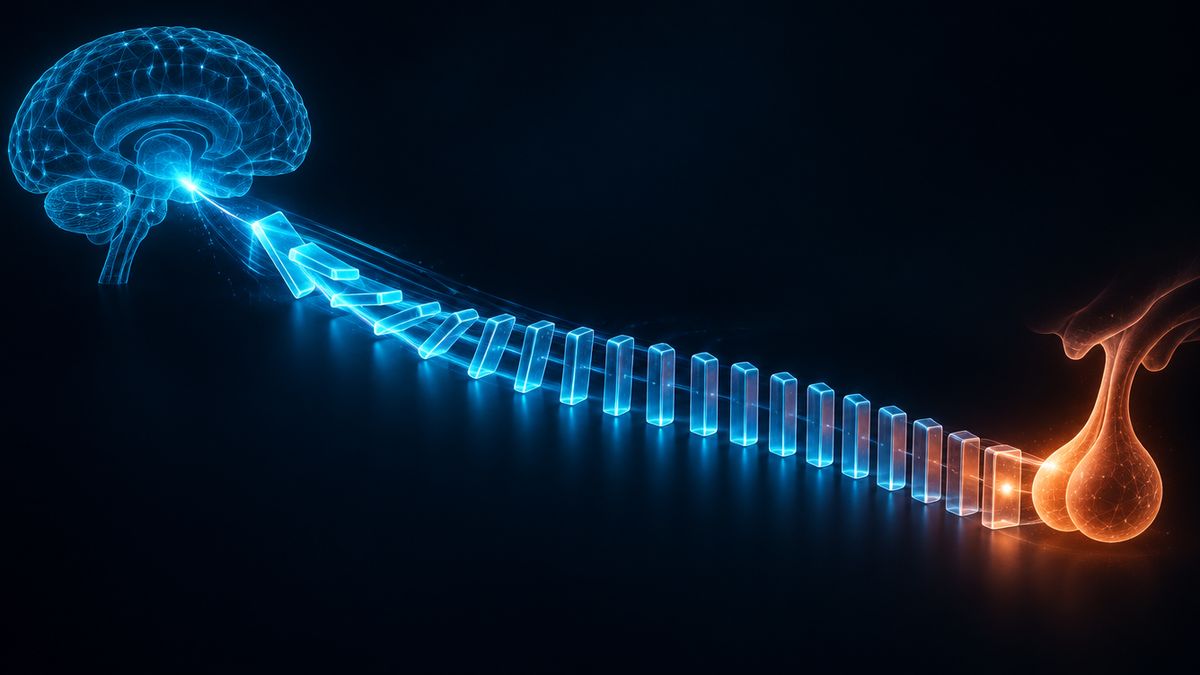
Before 2003, scientists knew the chain started with GnRH. They did not know what woke it up at puberty. Kisspeptin turned out to be the alarm clock.
Kisspeptin and its lock also show up in parts of the brain that handle emotion.
What scientists have found
In cells: The story began with melanoma, a type of skin cancer. The Hershey team found the new gene was active only in melanoma cells that did not spread. Adding it to a fast-spreading line held back its spread. That is why "SS" stood for "suppressor sequence."
In animals: In 2003, scientists bred mice without the kisspeptin lock. Their reproductive organs did not mature normally. Yet their brains held normal amounts of GnRH, and they still responded when given GnRH. The machinery worked. The go signal was missing.
Studies in rodents and monkeys showed that giving kisspeptin strongly switches on the reproductive hormone chain.
In people: In 2003, two groups studied families in France and Boston. People born with a broken kisspeptin lock did not go through puberty on their own. Yet their bodies still answered when GnRH was given.
In 2005, six men in London got kisspeptin on one visit and salt water on another. With kisspeptin, the hormone LH was more than twice as high, and testosterone rose.
Then came brain scans. In 2017, 29 healthy young men had two brain scans. One visit was with kisspeptin and one with a placebo, a look-alike with nothing active in it. While they looked at sexual images and images of couples, kisspeptin boosted activity in the brain's emotion areas.
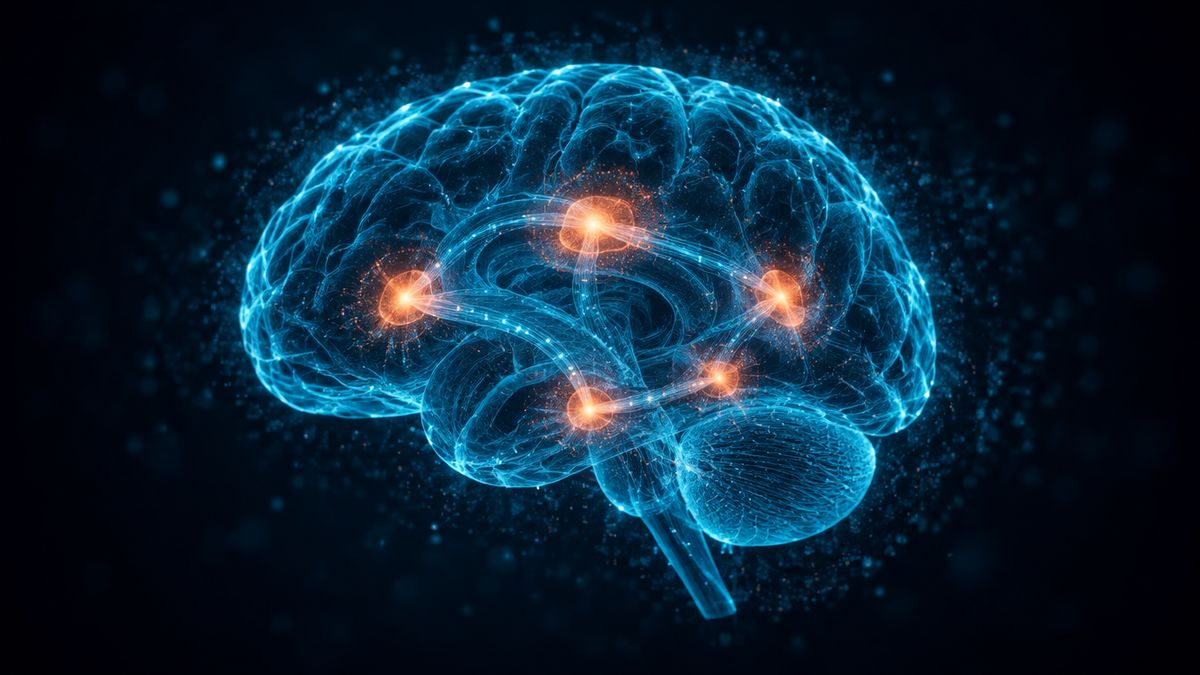
Two later trials studied adults with low sexual desire that causes them distress. In 2022, 32 women took part. In 2023, 32 men took part. Each person had one visit with kisspeptin and one with placebo.
In both trials, kisspeptin changed activity in brain areas linked to sex and attraction. In the men, it also raised a score for happiness about sex. No side effects were reported in the women's trial.
These brain-scan studies were small, and each looked at just one visit.
Where it stands
Kisspeptin is not approved by the FDA as a treatment for any condition. The human studies so far were small research studies in hospitals and universities.
The London team says its findings matter for developing kisspeptin for common problems with reproduction. Longer studies that follow people for weeks are the exciting next step.
The bottom line
- Kisspeptin is a natural peptide hormone, named after Hershey's Kisses.
- It is the switch that starts the hormone chain at puberty.
- In small human studies, it raised reproductive hormones and changed activity in brain areas tied to sex and emotion. One to watch.
FAQ
Questions people ask
- What is kisspeptin?
- Kisspeptin is a natural peptide hormone. Nerve cells at the base of the brain use it to start the chain of reproductive hormones.
- Why is it called kisspeptin?
- Its gene was found in 1996 by cancer researchers in Hershey, Pennsylvania, home of Hershey's Kisses. They named it KiSS-1 as a nod to the candy.
- What does kisspeptin have to do with puberty?
- Kisspeptin is the signal that wakes up the hormone chain at puberty. People born with a broken kisspeptin receptor do not go through puberty on their own.
- Is kisspeptin FDA approved?
- No. Kisspeptin is not approved by the FDA as a treatment for any condition. Human studies so far have been small research studies.
Sources8
- KiSS-1, a novel human malignant melanoma metastasis-suppressor gene · Journal of the National Cancer Institute, 1996 · DOI 10.1093/jnci/88.23.1731
- International Union of Basic and Clinical Pharmacology. LXXVII. Kisspeptin receptor nomenclature, distribution, and function · Pharmacological Reviews, 2010 · DOI 10.1124/pr.110.002774
- Hypogonadotropic hypogonadism due to loss of function of the KiSS1-derived peptide receptor GPR54 · Proceedings of the National Academy of Sciences, 2003 · DOI 10.1073/pnas.1834399100
- The GPR54 gene as a regulator of puberty · New England Journal of Medicine, 2003 · DOI 10.1056/NEJMoa035322
- Kisspeptin-54 stimulates the hypothalamic-pituitary gonadal axis in human males · Journal of Clinical Endocrinology and Metabolism, 2005 · DOI 10.1210/jc.2005-1468
- Kisspeptin modulates sexual and emotional brain processing in humans · Journal of Clinical Investigation, 2017 · DOI 10.1172/JCI89519
- Effects of Kisspeptin Administration in Women With Hypoactive Sexual Desire Disorder: A Randomized Clinical Trial · JAMA Network Open, 2022 · DOI 10.1001/jamanetworkopen.2022.36131
- Effects of Kisspeptin on Sexual Brain Processing and Penile Tumescence in Men With Hypoactive Sexual Desire Disorder: A Randomized Clinical Trial · JAMA Network Open, 2023 · DOI 10.1001/jamanetworkopen.2022.54313
Education only. Not medical advice. The Cell Brief summarises published research for general education. It is not medical advice, and nothing here is a recommendation to use any compound.
One brief a week
One brief per compound. Unsubscribe anytime.