The Cell BriefHormones
Meet CJC-1295: The Clever Peptide That Rings for Days
A lab-made copy of the brain's "release growth hormone" signal, given a tiny chemical hook so a message that lasts minutes could ring for days.

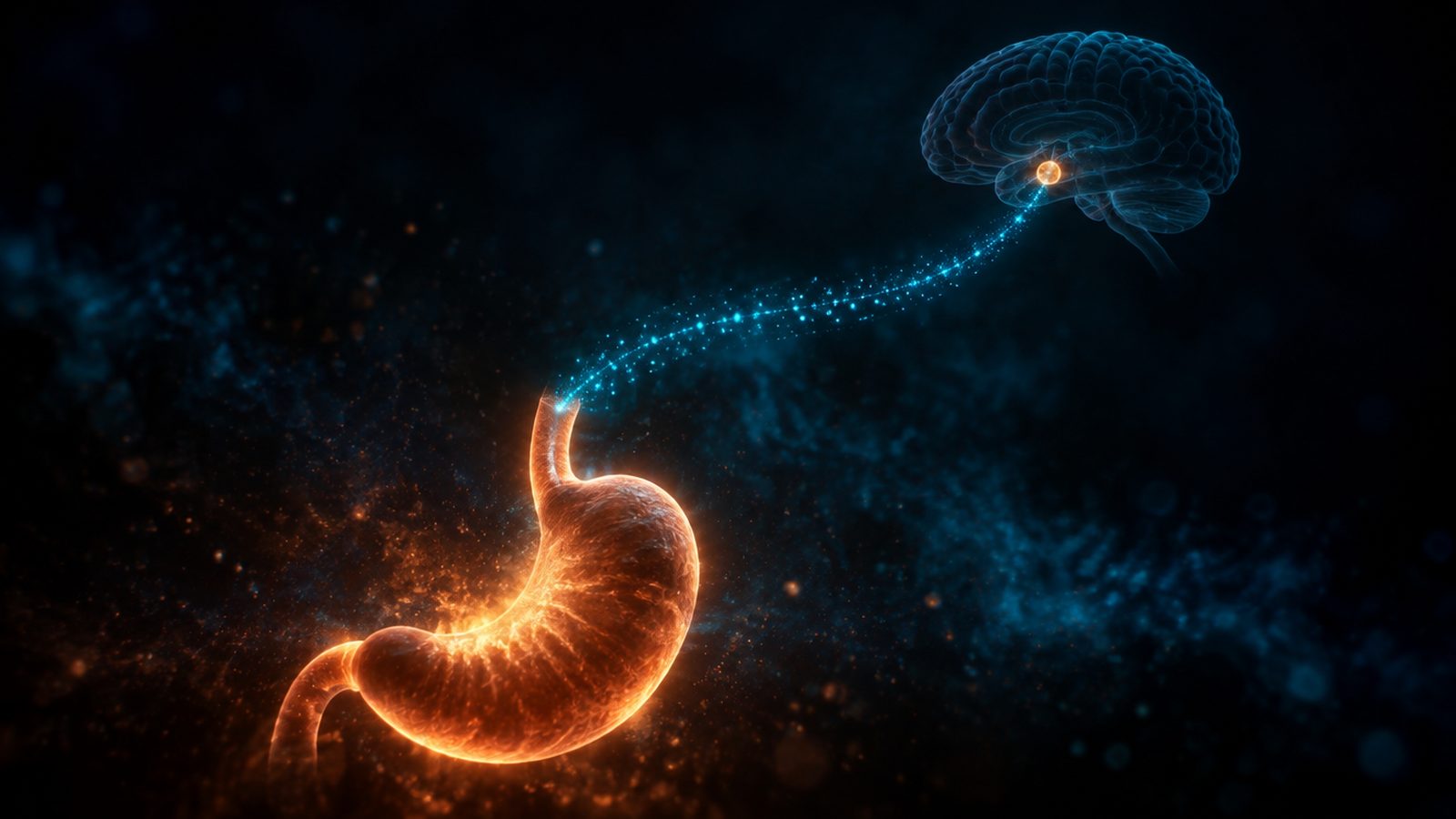
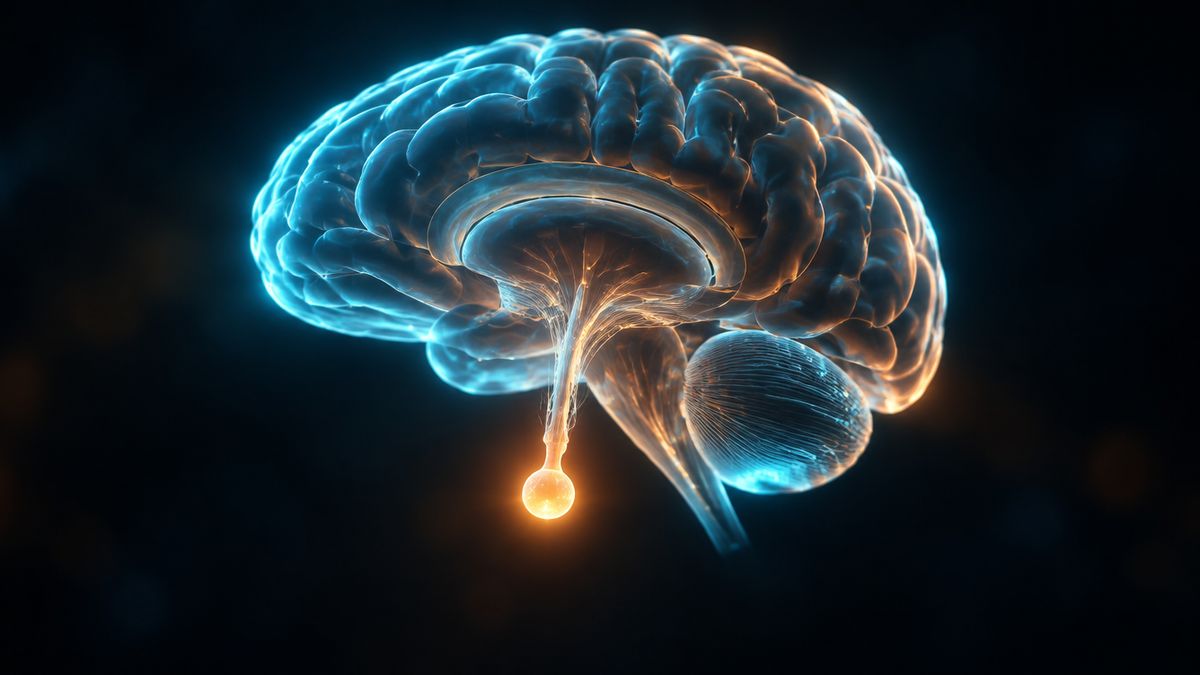
Tucked under your brain is a small gland called the pituitary. When it gets the right signal, it lets out growth hormone in bursts.
That signal is a tiny peptide called GHRH, and it fades within minutes. So chemists at a Canadian biotech company tried something clever. They gave a copy of it a tiny chemical hook, so it could last for days. They called it CJC-1295.
Even better, in a 2006 study in healthy men, the body's own growth hormone bursts kept right on going.
What it is
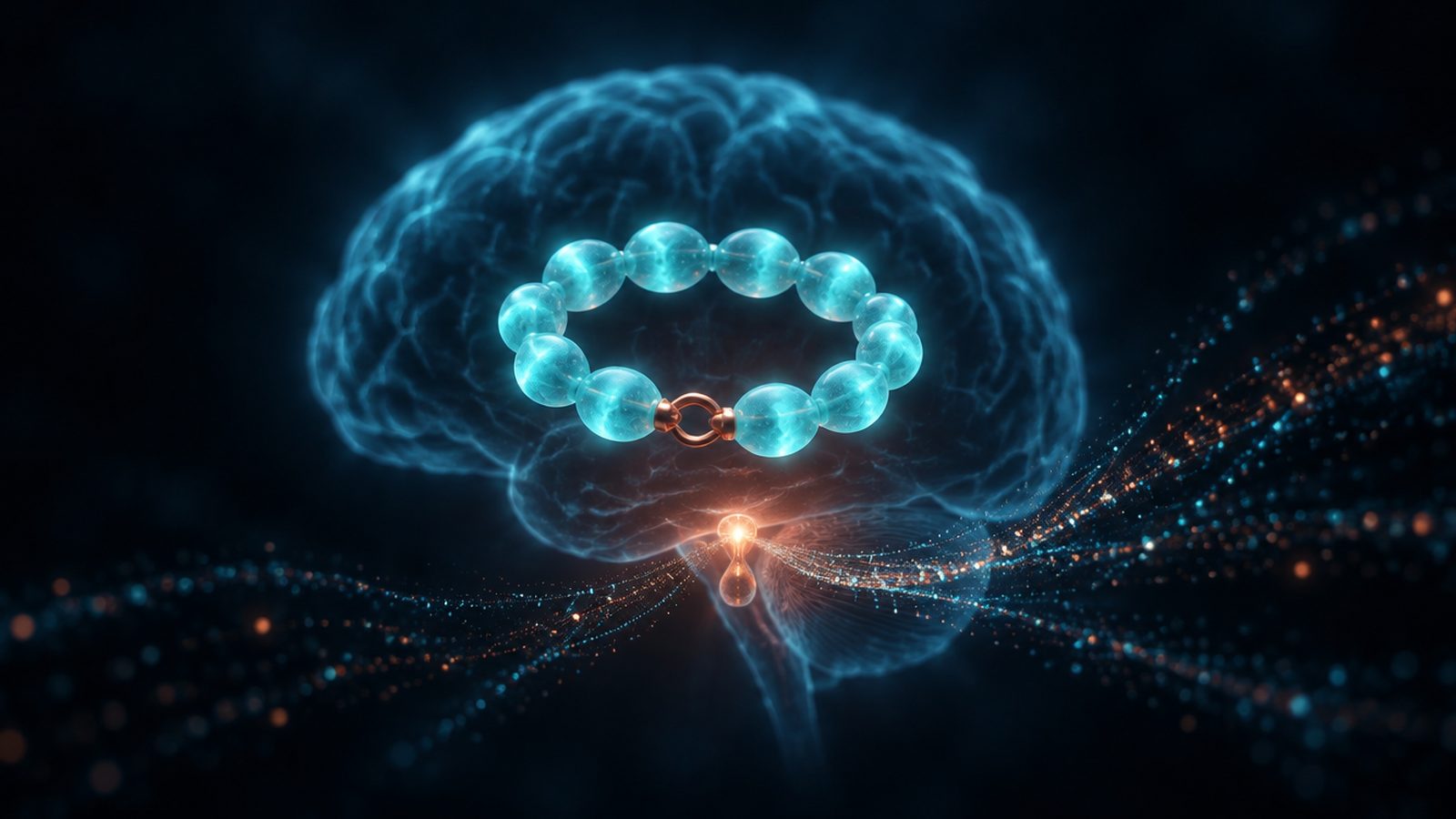
A peptide is a short chain of amino acids. Think of amino acids as beads and a peptide as a short bead bracelet. New to this? Start with what a peptide is.
Your body's own GHRH is a chain of 44 beads. Its first 29 beads are enough to do the job.
CJC-1295 copies those 29 beads, with four swapped to make it tougher. At the end, it adds a tiny chemical hook.
That hook is called DAC, short for drug affinity complex.
Today the name gets used two ways. "CJC-1295 with DAC" has the hook. "CJC-1295 without DAC," also called mod GRF 1-29, is the chain with no hook.
Almost all the research below used the hooked version. The no-hook version is still waiting for careful studies in people.
What it does in the body
A receptor is like a lock on a cell, and a peptide is the key. GHRH's lock sits on cells in the pituitary.
Think of GHRH as a finger on a doorbell. Each press tells the pituitary, "Let out growth hormone now."
Natural GHRH is a quick press. In a 1986 study in people, half of it was gone in about seven minutes. An enzyme in the blood snips off its first two beads, which switches it off.
Here is the clever part. CJC-1295's hook grabs albumin, a big protein that drifts through the blood. Picture a short bead chain clipped onto a big raft floating down a river. The raft carries it along for days.
Growth hormone then tells the body to make IGF-1. That is a helper hormone that carries out many of growth hormone's jobs.
What scientists have found
In cells: In rat pituitary cells in a dish, GHRH chains joined to albumin still made the cells let out growth hormone. They also held up better against the snipping enzyme.
In animals: In rats, CJC-1295 raised about four times as much growth hormone as the plain 29-bead chain over two hours. It was still in the blood after three days.
In 2006, scientists studied mice born without their own GHRH. Young mice given CJC-1295 once a day grew to normal weight and length. Mice given it every two or three days also grew more than untreated mice, though not fully normal.
In people: A 2006 report described two trials in healthy adults, ages 21 to 61. After one injection, growth hormone rose 2 to 10 times and stayed up for six days or more. IGF-1 rose 1.5 to 3 times for 9 to 11 days.
Half of the drug was still in the blood after about six to eight days. No serious side effects were reported.
A second 2006 study in healthy men checked something exciting: the body's natural rhythm. Growth hormone normally comes in bursts.
One week after one dose, the bursts came just as often and just as big. Meanwhile, the low points between bursts were 7.5 times higher. Average growth hormone rose 46%, and IGF-1 rose 45%.
A trial in people with HIV was stopped in July 2006 after one person died, while the cause was looked into.
Where it stands
CJC-1295 is not approved by the FDA. It is on the World Anti-Doping Agency's prohibited list.
What does the no-hook version do in people? How does the body adapt to a signal that rings for days? Careful new studies in people would be the exciting next step.
For another brain signal that starts a hormone chain, see our brief on kisspeptin.
The bottom line
- CJC-1295 is a clever lab-made copy of GHRH, the brain's growth hormone signal, with a hook that grabs albumin.
- Natural GHRH fades in minutes. In healthy adults, CJC-1295 kept growth hormone and IGF-1 up for days, while natural bursts kept going.
- The no-hook version is still waiting for careful studies in people. CJC-1295 is one to watch.
FAQ
Questions people ask
- What is CJC-1295?
- CJC-1295 is a clever lab-made copy of GHRH, the body's signal that tells the pituitary to let out growth hormone. A chemical hook grabs albumin in the blood, so it lasts days instead of minutes.
- What is the difference between CJC-1295 with DAC and without DAC?
- "With DAC" has the hook that grabs albumin, and it is the version used in the 2006 studies in people. "Without DAC," also called mod GRF 1-29, has no hook and is still waiting for careful studies in people.
- Is CJC-1295 approved by the FDA?
- CJC-1295 has been tested in healthy adults, but it is not approved by the FDA.
- How long does CJC-1295 last in the body?
- In 2006 studies in healthy adults, half of it was still around after about six to eight days. That is remarkable next to natural GHRH, which was half gone in about seven minutes.
Sources8
- Human growth hormone-releasing factor (hGRF)1-29-albumin bioconjugates activate the GRF receptor on the anterior pituitary in rats: identification of CJC-1295 as a long-lasting GRF analog · Endocrinology, 2005 · DOI 10.1210/en.2004-1286
- Rapid enzymatic degradation of growth hormone-releasing hormone by plasma in vitro and in vivo to a biologically inactive product cleaved at the NH2 terminus · The Journal of Clinical Investigation, 1986 · DOI 10.1172/JCI112679
- Prolonged stimulation of growth hormone (GH) and insulin-like growth factor I secretion by CJC-1295, a long-acting analog of GH-releasing hormone, in healthy adults · The Journal of Clinical Endocrinology & Metabolism, 2006 · DOI 10.1210/jc.2005-1536
- Pulsatile secretion of growth hormone (GH) persists during continuous stimulation by CJC-1295, a long-acting GH-releasing hormone analog · The Journal of Clinical Endocrinology & Metabolism, 2006 · DOI 10.1210/jc.2006-1702
- Once-daily administration of CJC-1295, a long-acting growth hormone-releasing hormone (GHRH) analog, normalizes growth in the GHRH knockout mouse · American Journal of Physiology - Endocrinology and Metabolism, 2006 · DOI 10.1152/ajpendo.00201.2006
- Lipodystrophy study halted after patient death · aidsmap (NAM), 2006
- The emerging landscape of performance-enhancing peptides modulating GH-IGF1 axis: bridging the gap between clinical evidence and patient self-administration · Frontiers in Endocrinology, 2026 · DOI 10.3389/fendo.2026.1822475
- The Prohibited List (2026) · World Anti-Doping Agency (WADA), 2026
Education only. Not medical advice. The Cell Brief summarises published research for general education. It is not medical advice, and nothing here is a recommendation to use any compound.
One brief a week
One brief per compound. Unsubscribe anytime.