The Cell BriefBrain
Cerebrolysin: The Pig-Brain Peptide Mix Used for Decades
Hundreds of tiny peptides from pig brain protein, used for decades in over 50 countries. Here is what studies in cells, rats and people have found.

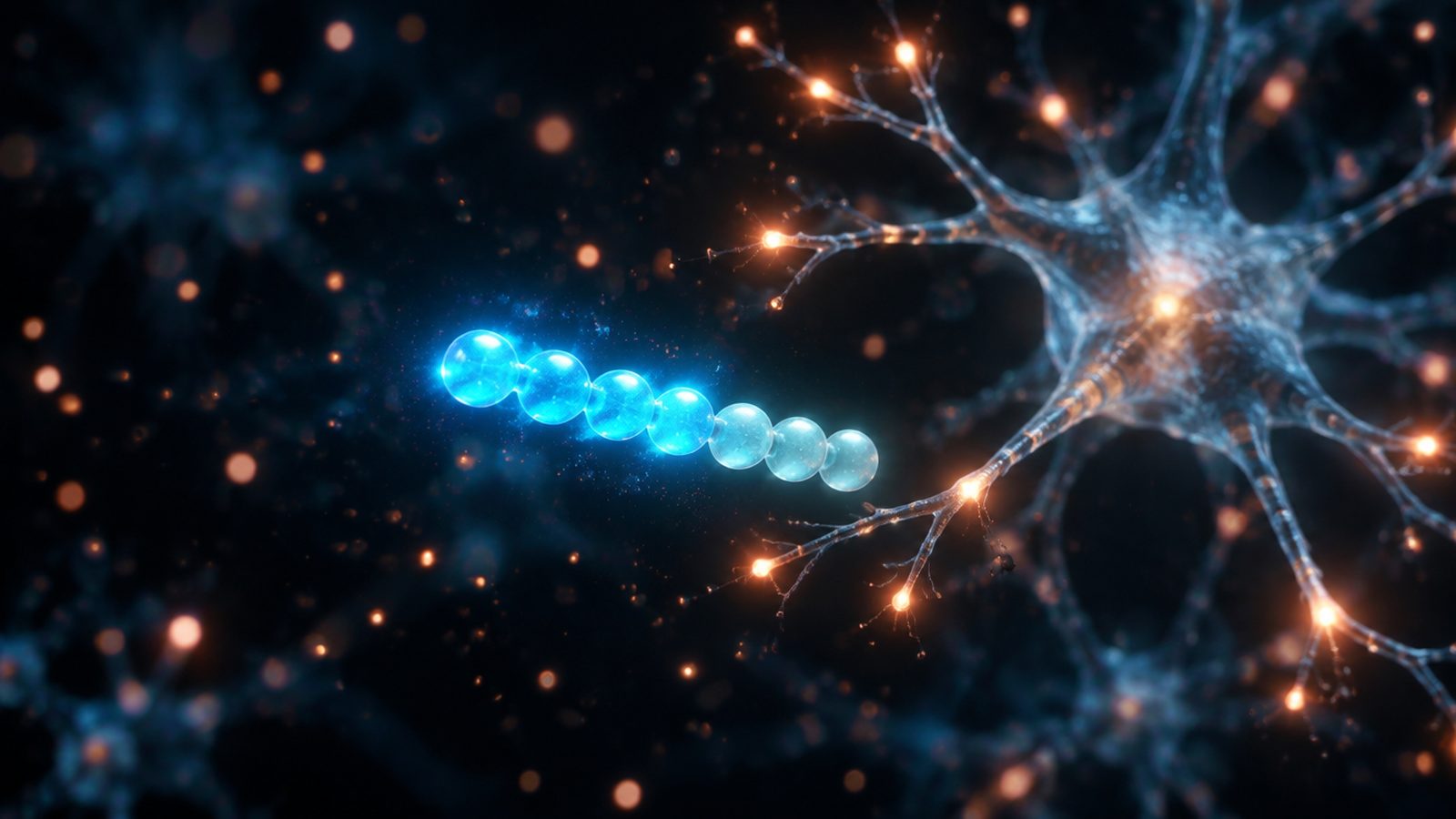
Most peptides are one single chain. Cerebrolysin is a whole crowd of tiny pieces mixed together.
It also comes from a surprising place: pig brains. Doctors have used it for decades, and it is used in over 50 countries, often after strokes and brain injuries. The big idea is that its peptides act a bit like the brain's own growth signals. So what is in it, and what do the studies say?
What it is
A peptide is a short chain of amino acids. Think of amino acids as beads and a peptide as a short bead bracelet. New to this? Start with what a peptide is.
Cerebrolysin starts as protein from pig brains. Enzymes, which work like tiny scissors, cut that protein into small bits.

What is left is a mix of loose beads and very short bracelets. In other words, free amino acids and small peptides.
How many bracelets? In 2015, one lab took a sample apart. They counted 638 different peptides.
The medicine is made by a drug company in Austria. Scientists have studied it since at least the 1990s.
What it does in the body
Your brain makes its own growth factors. These are signals that help nerve cells grow, stay healthy and build new links. Think of them as fertilizer for brain cells.
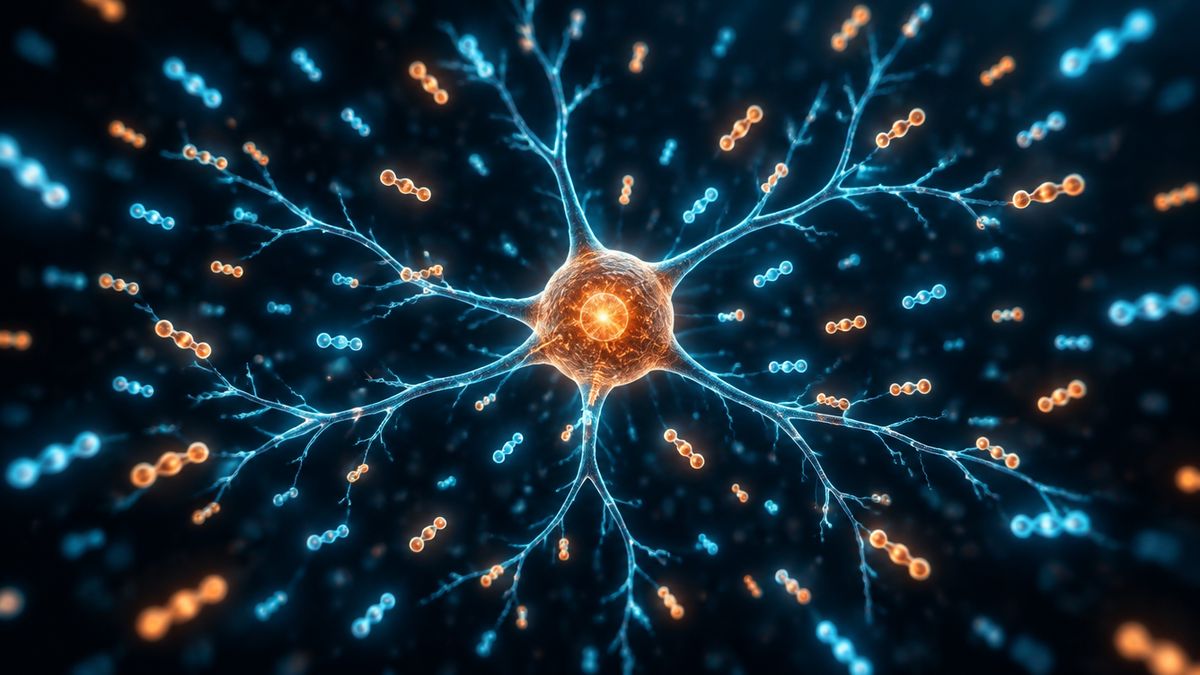
Researchers think the small peptides in Cerebrolysin act a bit like that fertilizer. Big reviews describe it this way too.
Here is a fun twist. The 2015 lab found no pieces of the brain's best-known growth factors in the mix. So the team thinks other, still-hidden peptides may do the work. That treasure hunt is still on.
What scientists have found
In cells:
In a 1996 study, nerve cells from chick embryos grew in a dish. Then the scientists added glutamate. It is a messenger chemical, but too much of it can kill nerve cells.
Cells grown with Cerebrolysin held up much better. At the highest amount tested, more than twice as many cells were alive as in untreated cells.
In animals:
In a 2010 study, rats had a lab model of stroke. A stroke happens when blood stops reaching part of the brain.
Some rats got Cerebrolysin, starting one or two days later. They made more young nerve cells near the hurt area. About half as many cells were dying at its edge.
The treated rats also did better on a set of behavior tests, even though the hurt area itself was not smaller.
In people:
In a 2016 trial, 208 people did rehab after a stroke. Those who also got Cerebrolysin got back more arm and hand use by day 90 than those on a placebo, a dummy look-alike. The Austrian maker paid for the trial, and its authors said a bigger trial should check the result.
A 2023 Cochrane review, a careful summary of the best trials, pooled about 1,700 people treated soon after a stroke. Cerebrolysin and one similar mix made little or no difference to the risk of dying. Serious side effects that were not deadly came up in about 30 in 1,000 people on Cerebrolysin, compared with 12 in 1,000 without it.
For brain injury, two trials were run as one series. Together they had 185 people with moderate to severe injuries. People on Cerebrolysin had a small to medium edge on recovery and thinking tests at 90 days. Side effects were alike in both groups.
Vascular dementia is memory loss linked to poor blood flow in the brain. A 2019 Cochrane review pooled 6 trials of 597 people with it. Thinking test scores were a little better with Cerebrolysin. The reviewers said the evidence is not yet firm and asked for bigger, sturdier trials.
Where it stands
Cerebrolysin is approved in many countries in Europe and Asia, but not by the FDA.
The exciting next steps are large, careful trials in people. Researchers also want to find out which of its hundreds of peptides matter most.
It is a fascinating one to watch. For a brain peptide that is a single short chain, see Semax.
The bottom line
- Cerebrolysin is a mix of hundreds of small peptides from pig brain protein, used for decades in many countries.
- In cells, it helped nerve cells survive stress. In rats, it helped recovery after a stroke.
- In people, results are mixed so far, with promising signs in some trials. Finding which peptides do the work is the next big puzzle.
FAQ
Questions people ask
- What is Cerebrolysin made of?
- It is a mix of small peptides and free amino acids, made by cutting pig brain protein into tiny pieces with enzymes. One lab counted 638 different peptides in it.
- How is Cerebrolysin thought to work?
- Researchers think its small peptides act a bit like the brain's own growth factors, a kind of fertilizer for nerve cells. Exactly which peptides do the work is still a fun open question.
- Is Cerebrolysin approved by the FDA?
- Not by the FDA. It is approved in many countries in Europe and Asia, and doctors have used it for decades.
- What do stroke studies show?
- A 2016 trial of 208 people in rehab saw better arm and hand recovery with it. A 2023 Cochrane review of about 1,700 people found little or no difference in the risk of dying, and more non-deadly serious side effects.
Sources10
- Peptide profiling of Internet-obtained Cerebrolysin using high performance liquid chromatography - electrospray ionization ion trap and ultra high performance liquid chromatography - ion mobility - quadrupole time of flight mass spectrometry · Drug Testing and Analysis, 2015 · DOI 10.1002/dta.1817
- Death of cultured telencephalon neurons induced by glutamate is reduced by the peptide derivative Cerebrolysin · Journal of Neural Transmission Supplementum, 1996 · DOI 10.1007/978-3-7091-6892-9_19
- Cerebrolysin enhances neurogenesis in the ischemic brain and improves functional outcome after stroke · Journal of Neuroscience Research, 2010 · DOI 10.1002/jnr.22495
- Cerebrolysin and Recovery After Stroke (CARS): A Randomized, Placebo-Controlled, Double-Blind, Multicenter Trial · Stroke, 2016 · DOI 10.1161/STROKEAHA.115.009416
- Cerebrolysin for acute ischaemic stroke · Cochrane Database of Systematic Reviews, 2023 · DOI 10.1002/14651858.CD007026.pub7
- Cerebrolysin after moderate to severe traumatic brain injury: prospective meta-analysis of the CAPTAIN trial series · Neurological Sciences, 2021 · DOI 10.1007/s10072-020-04974-6
- Cerebrolysin for vascular dementia · Cochrane Database of Systematic Reviews, 2019 · DOI 10.1002/14651858.CD008900.pub3
- Cerebrolysin (Cognitive Vitality rating) · Alzheimer's Drug Discovery Foundation, 2016
- Cerebrolysin in the therapy of mild cognitive impairment and dementia due to Alzheimer's disease: 30 years of clinical use · Medicinal Research Reviews, 2021 · DOI 10.1002/med.21722
- Cerebrolysin for stroke, neurodegeneration, and traumatic brain injury: review of the literature and outcomes · Neurological Sciences, 2021 · DOI 10.1007/s10072-021-05089-2
Education only. Not medical advice. The Cell Brief summarises published research for general education. It is not medical advice, and nothing here is a recommendation to use any compound.
One brief a week
One brief per compound. Unsubscribe anytime.