The Cell BriefRecovery
Meet Thymosin Alpha-1, a Coach From Your Immune Training Camp
A 28-bead peptide from the thymus, the gland where immune guards train, and now a medicine in over 30 countries. Here is what research has found.
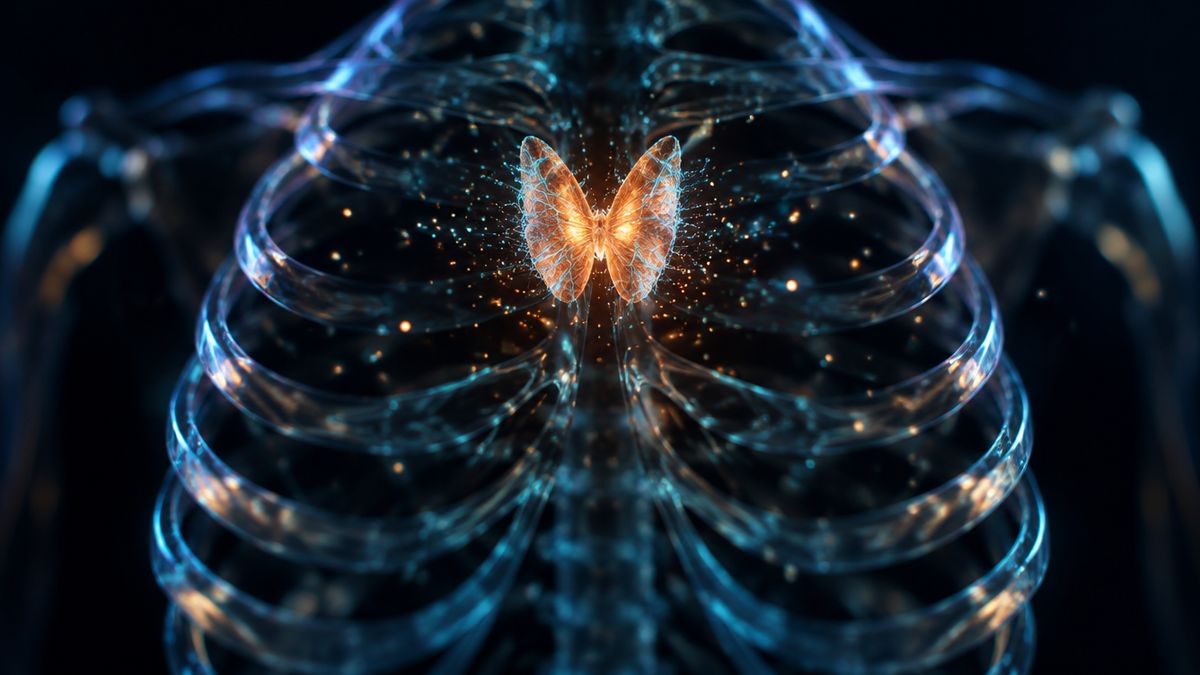
Behind your breastbone sits a small gland that works like a training camp for some of your body's most important immune cells. It is called the thymus.
In the 1970s, scientists went hunting for the signals made at that camp. One of their finds was a tiny peptide named thymosin alpha-1. Today, a lab-made version is a medicine in over 30 countries.
What it is
A peptide is a short chain of amino acids. Think of amino acids as beads and a peptide as a short bead bracelet. New here? Start with what a peptide is.
Thymosin alpha-1 is a bracelet of 28 beads.
Its story starts on the farm. Scientists made an extract from the thymus of calves. It was a soup of many thymus peptides. In 1977, a team pulled one out and read its beads in order.

Later, scientists learned to build the same chain in a lab. That lab-made version, called thymalfasin, is the one used as a medicine.
That soup held other peptides too. Don't mix this one up with thymosin beta-4, the science behind TB-500. That is a different, longer chain. The two share a family name, not a job.
What it does in the body
Your thymus is where young T cells grow up. T cells are the immune system's trained guards. At camp, they learn to spot germs and to leave your own body alone.
After puberty, the thymus slowly shrinks. Bit by bit, fat takes its place.
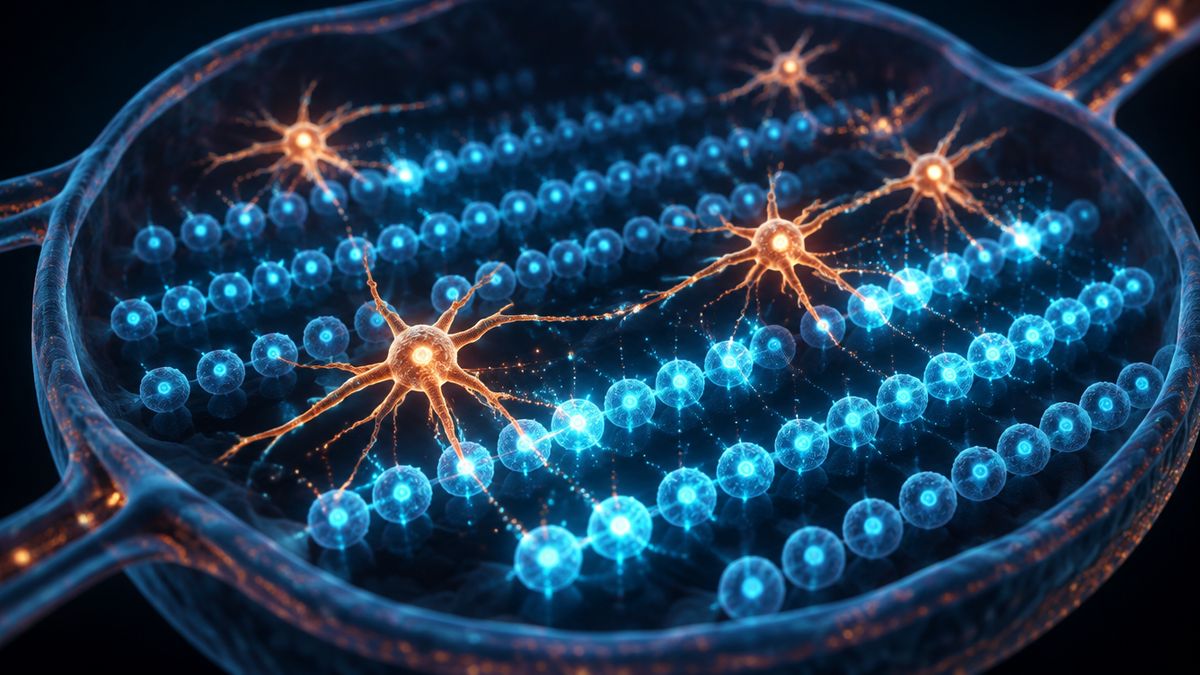
Here is where it gets exciting. Thymosin alpha-1 seems to act like a coach for immune cells. Early work linked it to helping T cells mature.
It also talks to dendritic cells. Think of them as scouts. They find trouble and show it to the T cells.
Scouts carry alarm sensors called toll-like receptors. Thymosin alpha-1 seems to press some of those alarm buttons and wake the scouts up.
What scientists have found
In cells: In immune cells in a dish, thymosin alpha-1 helped scout cells grow up. They made more of a signal that calls T cells into action. It worked through those alarm sensors.
In animals: In the same study, mice with very weak immune systems got the lab-made peptide. They had just had a bone marrow transplant. It helped protect them from a lung infection caused by a common mold.
In other rodent studies, it slowed tumor growth and helped fight viruses. In mice, it also raised the antibodies made after some vaccines. Antibodies are the body's germ-tagging tools.
In people: Thymosin alpha-1 has a long track record, tested in many groups of people over the years.
Its best-known story is hepatitis B, a long-lasting liver virus. One review pooled 8 small trials with 583 people, mostly in China. Adding thymosin alpha-1 to an antiviral drug was linked to more people clearing signs of the virus. Trials of the peptide alone had mixed results.
In a small pilot trial of 94 people on kidney dialysis, adding it to a flu shot led to more antibodies. The team called for bigger studies to build on that.
Sepsis is when the body's fight against an infection spins out of control. In a big 2025 trial, 1,106 adults with sepsis in China got thymosin alpha-1 or a placebo, a dummy look-alike. About the same share in each group died within 28 days.
For COVID-19, researchers pooled early hospital studies. One of four pooled reviews found fewer deaths, and three found no change.
Where it stands
Thymosin alpha-1 is approved as a medicine in over 30 countries. Most are in Asia, Latin America, Eastern Europe and the Middle East, plus Italy. It is not approved by the FDA.
Researchers are eager for bigger, carefully run trials, and to learn who might gain the most. The sepsis team saw a possible hint in people 60 and older, a promising lead that needs its own trial.
With nearly 50 years of story behind it, thymosin alpha-1 is still one to watch.
The bottom line
- Thymosin alpha-1 is a 28-amino-acid peptide from the thymus, your immune training camp, and a medicine in over 30 countries.
- In cells and mice, it woke up immune scouts and helped fight a mold infection.
- Results in people are mixed so far. Bigger trials to learn who might gain most are the exciting next step.
FAQ
Questions people ask
- What is thymosin alpha-1?
- It is a peptide, a short chain of 28 amino acids, from the thymus, the gland where immune cells train. It was first pulled from calf thymus in 1977, and it is linked to how immune cells called T cells mature.
- Is thymosin alpha-1 approved by the FDA?
- A lab-made version called thymalfasin is approved as a medicine in over 30 countries, mostly in Asia, Latin America, Eastern Europe and the Middle East. It is not approved by the FDA.
- Is thymosin alpha-1 the same as TB-500?
- No. TB-500 comes from thymosin beta-4, a different and longer peptide. The two share a family name, not a job.
- What has thymosin alpha-1 been studied for?
- It has a long research history in people, including hepatitis B, flu shots, sepsis and COVID-19. Results so far are mixed, and researchers are eager for bigger, carefully run trials.
Sources8
- Thymosin alpha1: isolation and sequence analysis of an immunologically active thymic polypeptide · Proceedings of the National Academy of Sciences (PNAS), 1977 · DOI 10.1073/pnas.74.2.725
- Thymus · Cleveland Clinic, 2022
- Thymosin alpha 1 activates dendritic cells for antifungal Th1 resistance through toll-like receptor signaling · Blood, 2004 · DOI 10.1182/blood-2003-11-4036
- Treatment with lamivudine versus lamivudine and thymosin alpha-1 for e antigen-positive chronic hepatitis B patients: a meta-analysis · Virology Journal, 2009 · DOI 10.1186/1743-422X-6-63
- Thymosin-alpha 1 (Zadaxin) enhances the immunogenicity of an adjuvated pandemic H1N1v influenza vaccine (Focetria) in hemodialyzed patients: a pilot study · Vaccine, 2012 · DOI 10.1016/j.vaccine.2011.12.014
- The efficacy and safety of thymosin α1 for sepsis (TESTS): multicentre, double blinded, randomised, placebo controlled, phase 3 trial · The BMJ, 2025 · DOI 10.1136/bmj-2024-082583
- Pharmacy Compounding Advisory Committee meeting transcript, Topic 3: Thymosin alpha-1-related bulk drug substances (December 4, 2024) · U.S. Food and Drug Administration, 2024
- SciClone Pharmaceuticals, Inc. Annual Report (Form 10-K) for fiscal year 2016 · U.S. Securities and Exchange Commission (EDGAR), 2017
Education only. Not medical advice. The Cell Brief summarises published research for general education. It is not medical advice, and nothing here is a recommendation to use any compound.
One brief a week
One brief per compound. Unsubscribe anytime.