The Cell BriefSkin & Hair
AHK-Cu: The Copper Peptide One Letter Away From GHK-Cu
AHK-Cu is GHK-Cu's lab-made cousin, studied for hair. Here is what its one published lab study found, told simply.

Most people know copper peptides through GHK-Cu, the one found in human blood. AHK-Cu is its quieter cousin. Swap one bead in the chain, and researchers point it at hair instead of skin.
The two look almost alike. But GHK-Cu has more than 50 years of studies behind it. AHK-Cu has one published lab study and a 1990s patent. It is early days, and one to watch.
What it is
Amino acids are like beads. String a few together and you get a peptide, a short bead bracelet. (New to peptides? Start with what a peptide is.)
AHK-Cu is a bracelet of three beads holding one copper atom. "Cu" is the science symbol for copper.
Its cousin GHK-Cu is the same, except for the first bead. GHK starts with glycine, the smallest amino acid. AHK starts with alanine, which is just a little bigger. The other two beads match.
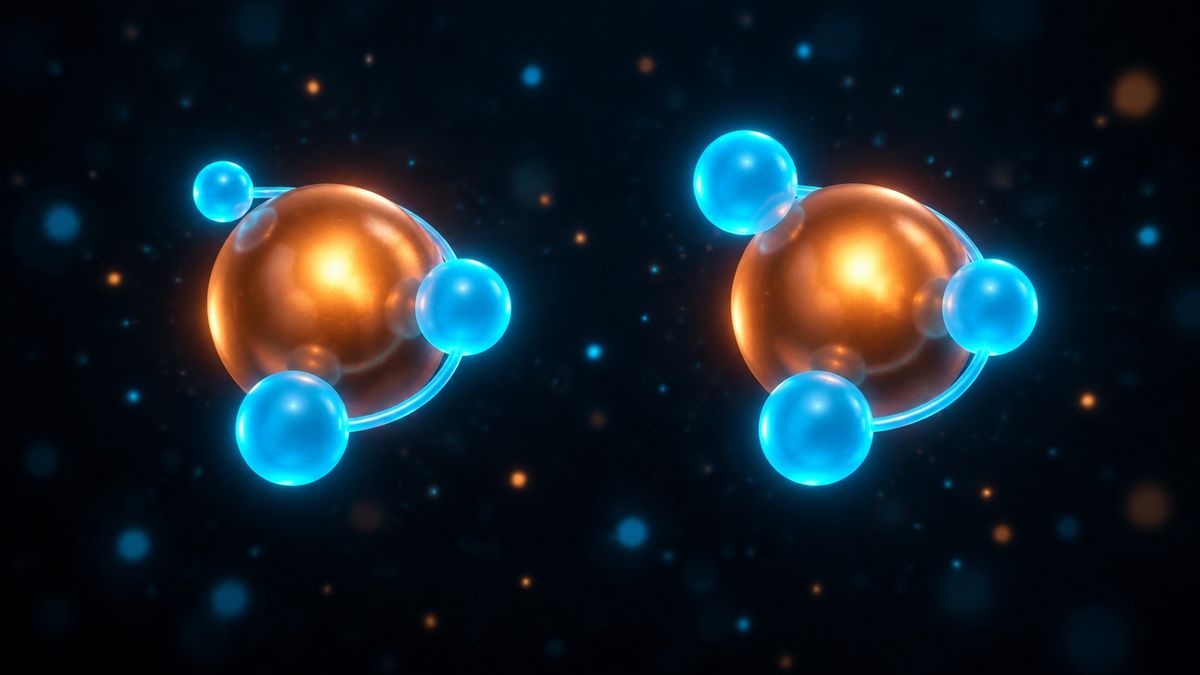
The parts that grab copper are the same in both. So scientists expect them to hold copper in a similar way.
AHK-Cu has not been reported as something the body makes. It began as a lab-made cousin of GHK.
What it does in the body
It helps to look at its two parts: the copper, and the hair cells it was tested on.
First, copper. Collagen and elastin are fibers that give skin its strength and stretch. A helper protein called an enzyme stitches these fibers into a strong mesh. That enzyme cannot work without copper.
Copper peptides may act like delivery trucks, bringing copper to cells. That idea comes from GHK-Cu research.
Next, the hair follicle. A follicle is the tiny pocket in the skin that grows a hair. Each one cycles through growing, shrinking and resting.
At the base of the follicle sits the dermal papilla, a small cluster of cells. Think of it as the follicle's control room.
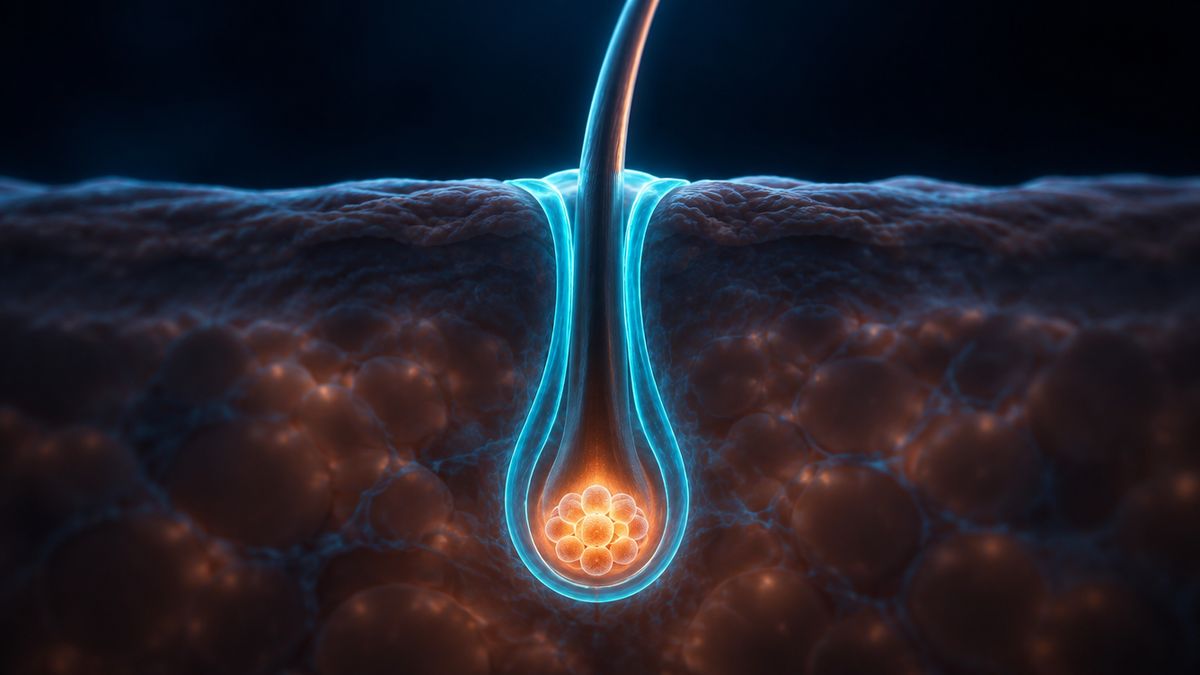
A 2013 study in mice showed why it matters. The number of papilla cells set the size and shape of the hair. When the count fell too low, the follicles in those mice stopped making new hairs.
That is why AHK-Cu researchers focused on these cells. Keep those cells alive and multiplying, the thinking goes, and the follicle has a better chance of staying in its growing phase.
What scientists have found
In cells: The only study checked by outside scientists came out in 2007, from a team in Seoul. They kept whole human hair follicles alive in a dish. They also grew papilla cells on their own.
At very low amounts, AHK-Cu made the follicles in the dish grow longer. It also raised the number of papilla cells.
Cells have a built-in self-destruct program for when they are worn out or damaged. In this study, signs of that program went down in the papilla cells with AHK-Cu.
A direct count of dying cells was lower too, but that gap could have been chance.
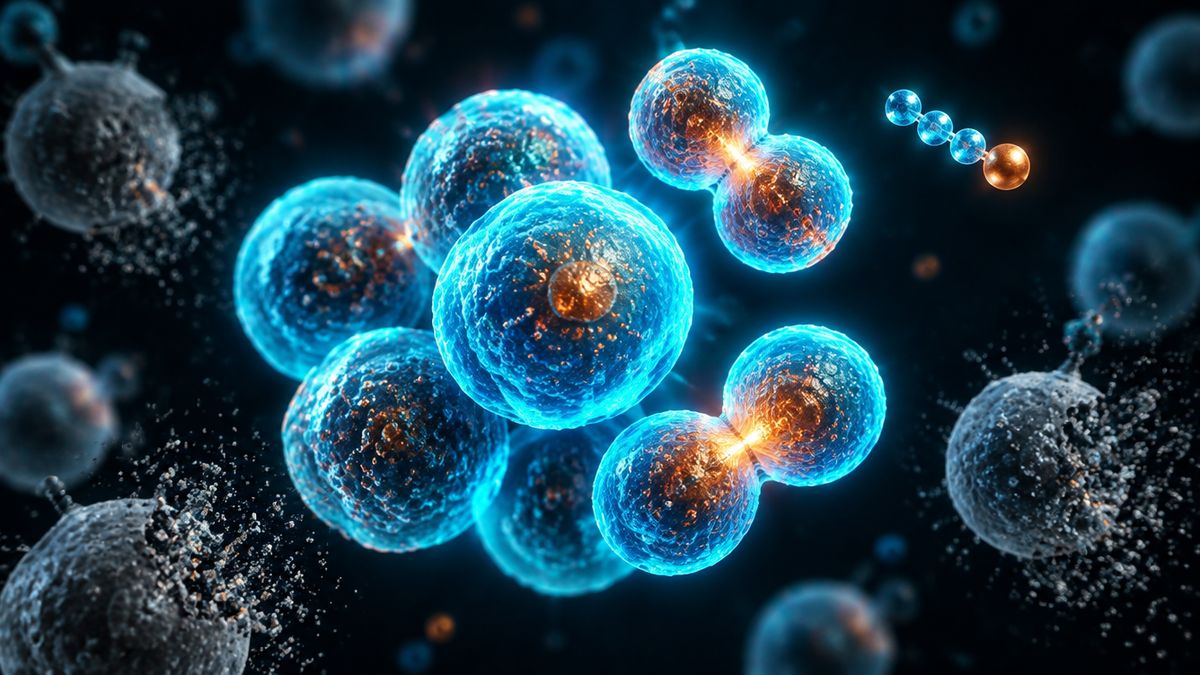
It is still one study from one team. A 2026 review called it a landmark for copper peptide research on follicles kept alive outside the body. As of October 2026, no second journal study of AHK-Cu in hair follicles has turned up.
In animals: The only animal data sit in a patent, not a science journal. Filed in 1994 and granted in 1996, it describes hair growth in mice treated with several copper peptides, including AHK-Cu.
Patents are not checked by outside scientists, so this is an early lead. No journal study of AHK-Cu in animals has been published.
In people: No human studies of AHK-Cu have been published yet.
Where it stands
AHK-Cu is not an approved drug. It is used as a skincare ingredient, and in the US, cosmetic ingredients other than color additives do not need FDA approval before sale.
The 2007 study used real human follicles, and its cell-survival signs all pointed the same way. That is a solid first chapter.
The exciting next step is another lab repeating the follicle study. Researchers also want a journal-checked animal study, a map of how AHK holds copper, and the first studies in people.
The bottom line
- AHK-Cu is a lab-made copper peptide, just one amino acid away from GHK-Cu.
- In one 2007 study, it made human hair follicles in a dish grow longer and raised the number of control-room cells.
- Mouse data exist only in a patent, and there are no human studies yet. It is one to watch.
FAQ
Questions people ask
- Is AHK-Cu the same as GHK-Cu?
- No. They differ by one amino acid at the start of the chain. GHK-Cu was found in human blood, while AHK-Cu is a lab-made cousin studied mainly in hair follicles.
- Has AHK-Cu been tested in people?
- Not yet. So far there is one 2007 study on human hair follicles kept alive in a dish, plus mouse data in a 1996 patent.
- What did the 2007 AHK-Cu hair study find?
- In human hair follicles kept alive in a dish, AHK-Cu made the follicles grow longer and raised the number of dermal papilla cells. Signs of cell self-destruct in those cells went down.
- Is AHK-Cu approved by the FDA?
- It is not an approved drug. It is used as a cosmetic ingredient, and US law does not require FDA approval for cosmetic ingredients other than color additives.
Sources6
- The effect of tripeptide-copper complex on human hair growth in vitro · Archives of Pharmacal Research, 2007
- Overview of Short Peptides for Hair Loss · Biomedicines, 2026 · DOI 10.3390/biomedicines14040864
- Stimulation of hair growth by peptide copper complexes (US Patent 5,538,945) · United States Patent and Trademark Office (via Google Patents), 1996
- Lysyl oxidase: properties, specificity, and biological roles inside and outside of the cell · Journal of Cellular Biochemistry, 2003
- Dermal papilla cell number specifies hair size, shape and cycling and its reduction causes follicular decline · Development, 2013
- FDA Authority Over Cosmetics: How Cosmetics Are Not FDA-Approved, but Are FDA-Regulated · U.S. Food and Drug Administration, 2025
Education only. Not medical advice. The Cell Brief summarises published research for general education. It is not medical advice, and nothing here is a recommendation to use any compound.
One brief a week
One brief per compound. Unsubscribe anytime.