The Cell BriefBrain
Methylene Blue: From an 1876 Cloth Dye to Brain Science
A blue cloth dye from 1876 became one of the first lab-made medicines. Here is what it does in the cell's power plants, and what brain studies have found.

In 1876, a chemist at a German dye company made a bright new blue for cotton cloth. It was called methylene blue. As a cloth dye, it never became a star.
As a science tool, it was a hit. In the 150 years since, it has stained nerve cells, treated malaria and become an FDA-approved medicine. Now brain scientists are curious about it.
What it is
Methylene blue is not a peptide. It is a small dye molecule. It belongs here because of what it does inside cells.
A peptide is a short chain of amino acids, like a short bead bracelet. New to this? Start with what a peptide is.
In 1886, a German scientist gave it to a living animal. Its nerve cells soaked up the dye and turned blue.
In 1891, he used it to treat malaria. That made it one of the first lab-made medicines.

Today it is a medicine for methemoglobinemia, a blood problem. Hemoglobin is the protein in red blood cells that carries oxygen. In this problem, too much of it gets changed into a form that can't drop oxygen off well.
Methylene blue turns it back into the normal kind.
What it does in the body
Methylene blue has a neat trick. It can grab electrons, tiny bits of charge, and pass them on.
When it holds them, it loses its color. When it hands them off, it turns blue again.
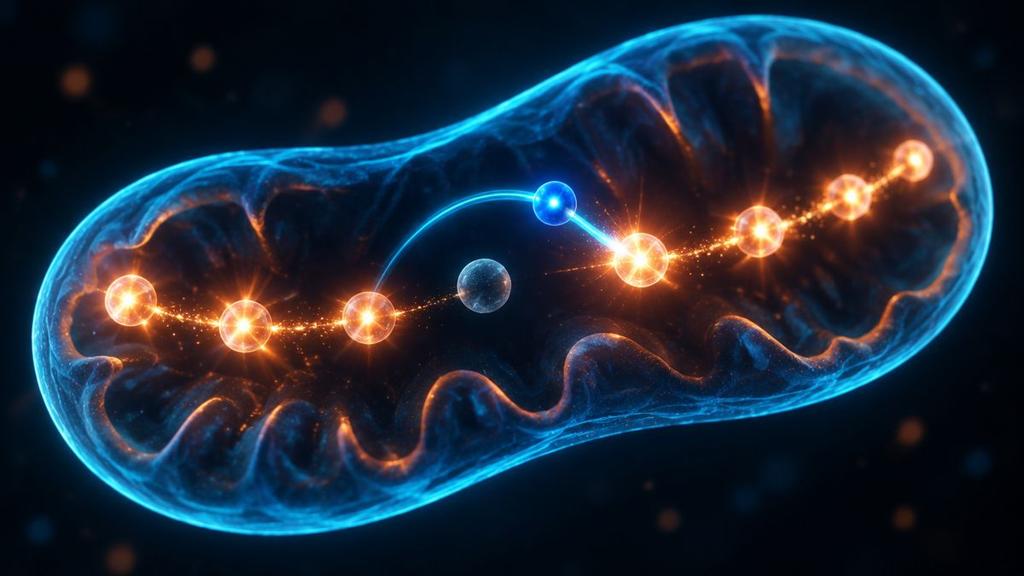
This trick matters in mitochondria, the cell's power plants. Inside them, electrons get passed down a line of helpers.
It works like passing a baton in a relay race. That race is how cells make energy from food and oxygen.
If one runner gets stuck, the race slows down. In lab studies, methylene blue can grab the baton and run it past the stuck runner.
In rodents, it gets into the brain with ease. Levels there were 10 to 20 times higher than in the blood an hour later.
Scientists have spotted something curious, too. In lab studies, low and high amounts can have opposite effects.
What scientists have found
In cells: In lab tests, methylene blue acted as a spare carrier for electrons. It got around a jam in the power-plant line. A copy with its electron trick turned off could not do this.
In nerve cells in a dish, it raised oxygen use. It also shielded them from several kinds of harm.
In animals: In a 2004 study, rats learned where food was hidden on a board full of holes. Rats given a low dose after each lesson remembered better a day later.
Of their visits, 66% went to the right holes. For rats without it, it was 31%. The same low dose also made a key power-plant protein in rat brains more active.
In another study, rats got a toxin that jams the power-plant line. Methylene blue protected their brain cells that make dopamine, a chemical messenger.

In people: In a 2016 study, 26 healthy adults got one low dose or a placebo, a dummy look-alike. An hour later, brain scans lit up more during tasks of focus and short-term memory. The methylene blue group got about 7% more answers right on a memory test.
A close cousin of methylene blue was tested in 891 people with Alzheimer's disease. They took it for 15 months. It did not beat the other group on the main tests.
For the blood problem, its FDA label sums up studies in adults. In 26 of 28 checked, the changed form fell by at least half.
Where it stands
Methylene blue has been an FDA-approved medicine for methemoglobinemia since 2016, as ProvayBlue. It is not approved for memory or brain health. Its label notes that it can clash with some antidepressants and other drugs.
Brain researchers want bigger, longer studies in people. They also want to learn why low and high amounts can do opposite things. It is early days, and methylene blue is one to watch.
Curious about power-plant research? Meet SS-31, a tiny peptide that heads straight there.
The bottom line
- Methylene blue is not a peptide. It is a 150-year-old blue dye that became one of the first lab-made medicines.
- In cells, it can carry electrons past a jam in the power plants. In one rat study, it helped memory.
- It has been FDA-approved since 2016 for a blood problem. For the brain, bigger studies in people are the exciting next step.
FAQ
Questions people ask
- What is methylene blue?
- Methylene blue is a blue dye first made in 1876 for cotton cloth. It is not a peptide, and today it is an FDA-approved medicine for methemoglobinemia, a blood condition.
- Is methylene blue FDA approved?
- Yes, for one use. Since 2016, the FDA has approved methylene blue (ProvayBlue) to treat acquired methemoglobinemia in adults and children; it is not approved for memory or brain health.
- What are the side effects of methylene blue?
- Its FDA label lists headache, nausea, diarrhea and low potassium among common side effects, and it can turn urine and skin blue. The label says it may cause serious or fatal serotonin syndrome with serotonin-affecting drugs, such as SSRI, SNRI and MAOI antidepressants, or with opioids.
- How does methylene blue work?
- In lab studies, it picks up electrons and passes them along inside the cell's power plants, helping energy flow get around a jam. In its approved use, it turns an altered form of hemoglobin back into the normal, oxygen-carrying form.
Sources7
- Cellular and molecular actions of Methylene Blue in the nervous system · Medicinal Research Reviews, 2011 · DOI 10.1002/med.20177
- Neurometabolic mechanisms for memory enhancement and neuroprotection of methylene blue · Progress in Neurobiology, 2012 · DOI 10.1016/j.pneurobio.2011.10.007
- Alternative mitochondrial electron transfer as a novel strategy for neuroprotection · Journal of Biological Chemistry, 2011 · DOI 10.1074/jbc.M110.208447
- Methylene blue improves brain oxidative metabolism and memory retention in rats · Pharmacology, Biochemistry and Behavior, 2004 · DOI 10.1016/j.pbb.2003.10.007
- Multimodal Randomized Functional MR Imaging of the Effects of Methylene Blue in the Human Brain · Radiology, 2016 · DOI 10.1148/radiol.2016152893
- Efficacy and safety of tau-aggregation inhibitor therapy in patients with mild or moderate Alzheimer's disease: a randomised, controlled, double-blind, parallel-arm, phase 3 trial · The Lancet, 2016 · DOI 10.1016/S0140-6736(16)31275-2
- PROVAYBLUE (methylene blue) injection: Prescribing Information · DailyMed (U.S. National Library of Medicine), American Regent label, 2025
Education only. Not medical advice. The Cell Brief summarises published research for general education. It is not medical advice, and nothing here is a recommendation to use any compound.
Which peptide family should you explore first?
Answer a few questions about your everyday life. Get your peptide family, the briefs to read first, and the full list in your inbox.
Take the quiz