The Cell BriefBasics
Why Peptides Aren't Pills, and the Clever Science Changing That
Your gut is built to take peptides apart. Here is how scientists outsmart it with rings, clasps and helper molecules, and why the push for peptide pills is so exciting.
Many medicines come as pills. So why do so many peptide medicines come as shots instead?
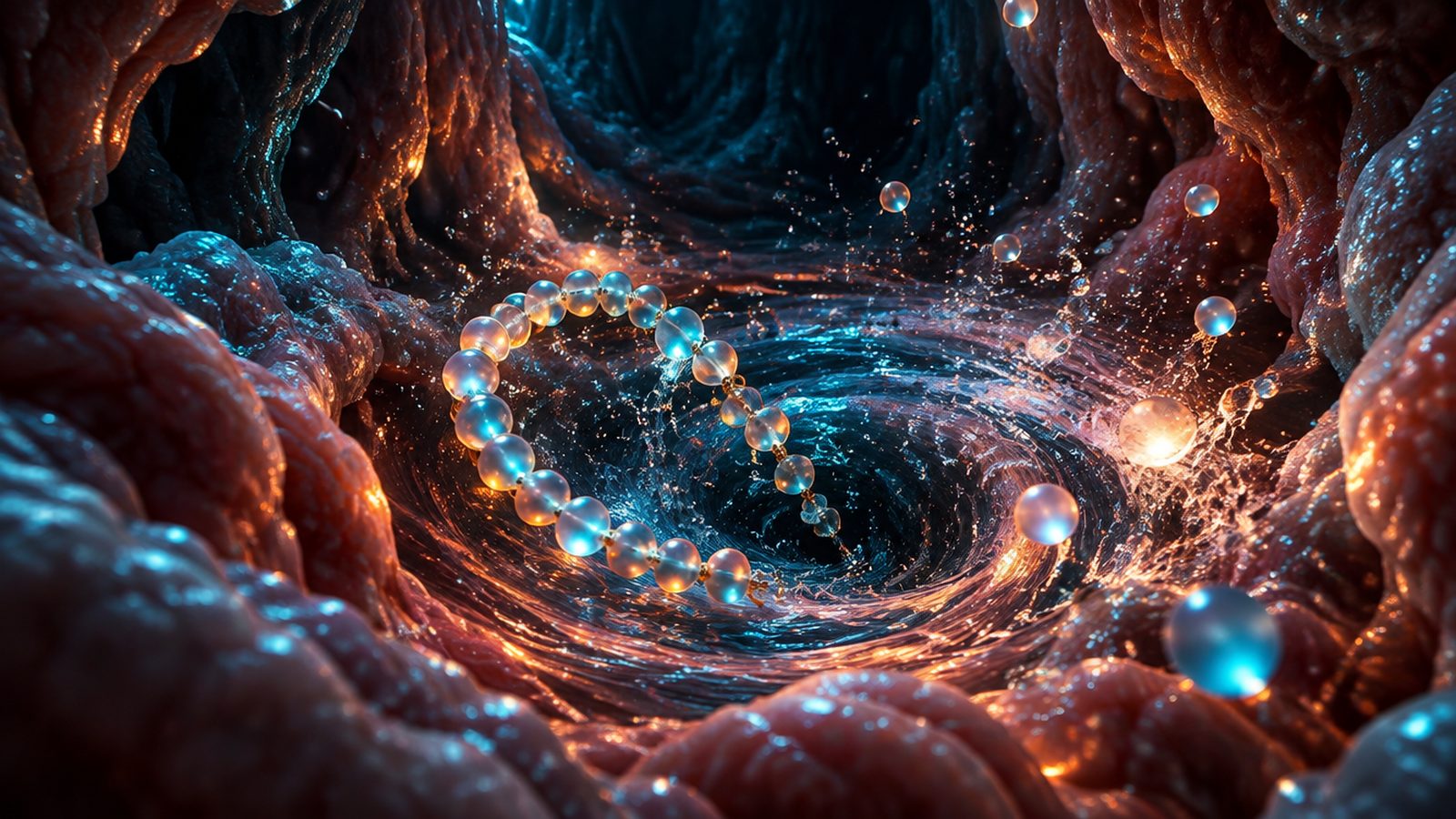
The answer starts in your stomach. Your gut is very good at its job, and its job is to take peptides apart. Getting a peptide past it is a tricky puzzle. Scientists have found some clever ways to solve it.
What it is
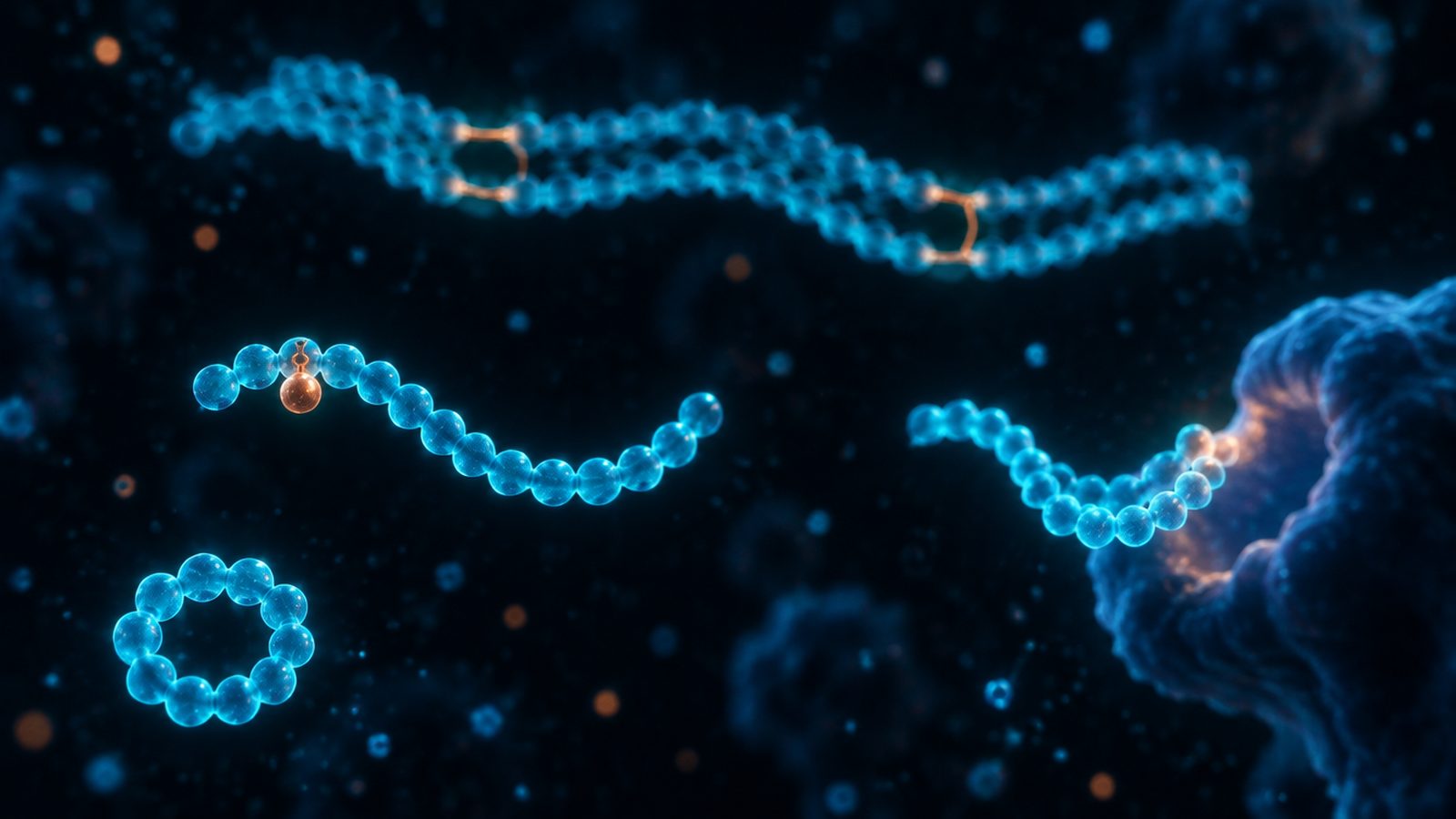
A peptide is a short chain of amino acids. Think of amino acids as beads and a peptide as a short bead bracelet. New to this? Start with what a peptide is.
Food is full of bead chains. Protein in meat, eggs and beans is just a very long one.
Your body wants the beads, not the chains. So digestion works like a shredder. It cuts the chains into single beads, or tiny bits of two or three.
A peptide medicine is a bead chain too. To your gut, it looks a lot like lunch.
What it does in the body
The first stop is the stomach. It is full of strong acid. The acid makes many peptides lose their shape.
Then an enzyme called pepsin starts cutting. An enzyme is a tiny helper that speeds up a job. These ones work like scissors.
Next comes the small intestine. More scissors pour in there, and they cut the chains into smaller and smaller bits.
Any chain that survives meets one more problem: the gut wall. It is a layer of cells packed side by side, like stones in a fortress wall.

Tight seals hold the cells together. The gaps are far too small for most peptides to slip through. A slick layer of mucus lies on top, like a moat.
Together, these defenses keep out most peptide medicines. Reviews of the research say that when one is swallowed, usually less than 1 percent reaches the blood.
That is why most peptide medicines are given other ways.
What scientists have found
In the lab: In one study, scientists put 17 peptide medicines into real stomach and gut fluid from people and pigs.
In stomach fluid, smaller peptides held up better than big ones like insulin. Gut fluid was tougher, and most broke down fast.
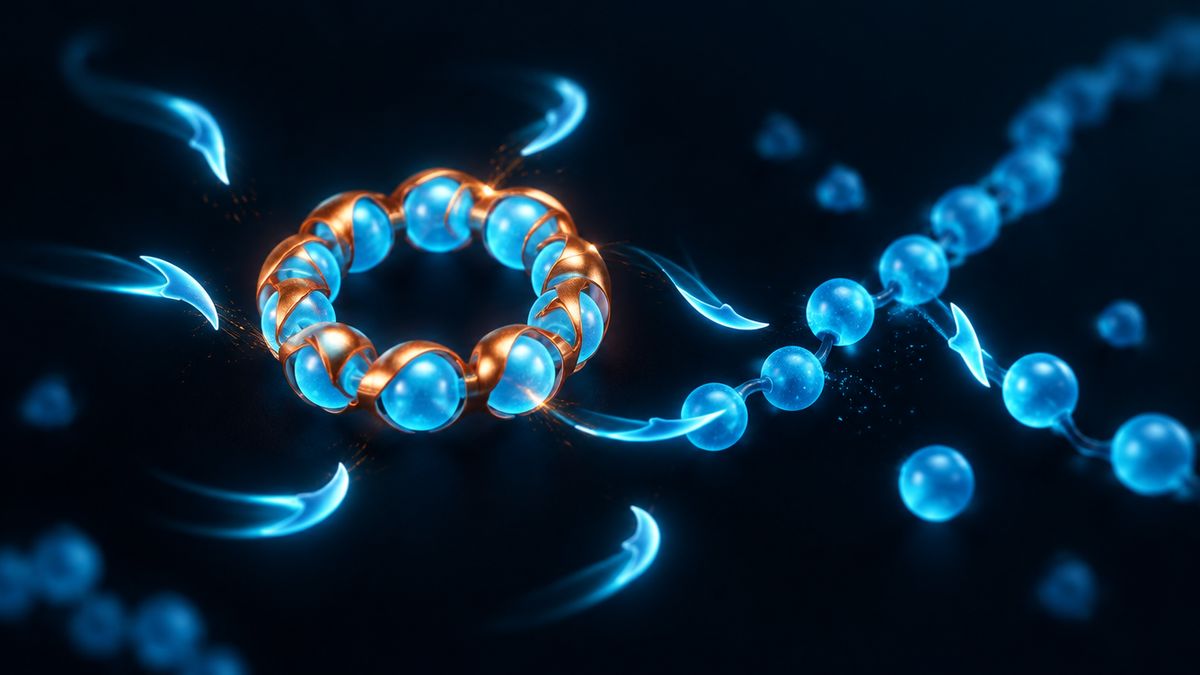
But three held up well. One was cyclosporine, a peptide shaped like a closed ring. The other two, including desmopressin, are held in shape by a built-in clasp.
Here is the clever part. A ring has no loose ends. Closing a chain into a ring makes it stiffer and harder for the scissors to cut.
In animals: Studies in dogs helped crack a big puzzle. Scientists tested a tablet of semaglutide, a lab-made look-alike of the gut hormone GLP-1.
The tablet also held a helper molecule called SNAC. In dogs, the peptide was taken up in the stomach, right next to the tablet. Without SNAC, it was not.
SNAC worked like a small shield. It calmed the acid in a tiny zone around the tablet, so the scissors could not cut as much.
And here is the surprise. The peptide did not squeeze through the gaps in the wall. It passed right through the stomach cells themselves.

In people: The same paper found uptake in the stomach in people, too. In 2019, the FDA approved semaglutide tablets for adults with type 2 diabetes.
The label estimates that about 0.4 to 1 percent of each dose reaches the blood. So there is room to grow.
Nature got there first with cyclosporine. It is a ring of 11 amino acids made by a fungus. It helps keep the body from rejecting a new organ. Its label says about 30 percent of a capsule's dose gets into the blood.
Where it stands
A handful of peptide medicines can already be swallowed. Semaglutide tablets have been FDA-approved since 2019. Desmopressin and cyclosporine also come in forms that are swallowed.
And the push for more is on. Researchers are testing new helpers, new rings and new ways to shield peptides from the gut's scissors. The goal is to get more of each dose into the blood. If they crack it, many more peptide medicines could one day come as pills.
The bottom line
- Your gut is built to take bead chains apart, and its wall keeps big molecules out. That is why most peptide medicines are not pills.
- Clever science is changing that. Rings, built-in clasps and helpers like SNAC already let a few peptides get through.
- Researchers are testing new helpers, rings and shields to get even more peptides past the gut. It is one to watch.
FAQ
Questions people ask
- Why can't most peptides be swallowed like pills?
- The stomach and gut are built to cut peptides into single amino acids, like a shredder, and the gut wall blocks most big molecules. Usually less than 1 percent of a swallowed peptide reaches the blood, which is why scientists are working on clever fixes.
- Is there a tablet form of semaglutide?
- Yes. Thanks to a helper molecule called SNAC, semaglutide comes as a tablet. The FDA approved it for adults with type 2 diabetes in 2019, and the label estimates that about 0.4 to 1 percent of each dose reaches the blood.
- What is SNAC?
- SNAC is a clever helper molecule mixed into semaglutide tablets. In studies in dogs and people, it calmed the acid near the tablet and helped the peptide pass right through stomach cells.
- How does cyclosporine get through the gut?
- Cyclosporine is shaped like a closed ring of 11 amino acids, which helps it resist the gut's scissors. In lab tests with human gut fluid it held up well, and its label says about 30 percent of a capsule's dose reaches the blood.
Sources8
- Physiology of Intestinal Absorption and Secretion · Best Practice & Research Clinical Gastroenterology, 2016 · DOI 10.1016/j.bpg.2016.02.007
- Barriers and Strategies for Oral Peptide and Protein Therapeutics Delivery: Update on Clinical Advances · Pharmaceutics, 2025 · DOI 10.3390/pharmaceutics17040397
- Toward oral delivery of biopharmaceuticals: an assessment of the gastrointestinal stability of 17 peptide drugs · Molecular Pharmaceutics, 2015 · DOI 10.1021/mp500809f
- Transcellular stomach absorption of a derivatized glucagon-like peptide-1 receptor agonist · Science Translational Medicine, 2018 · DOI 10.1126/scitranslmed.aar7047
- RYBELSUS (semaglutide) tablets, prescribing information (revised 01/2024) · U.S. Food and Drug Administration (Novo Nordisk label), 2024
- Drugs@FDA: RYBELSUS, NDA 213051 · U.S. Food and Drug Administration, 2019
- DDAVP (desmopressin acetate) tablets, prescribing information · DailyMed, U.S. National Library of Medicine (Ferring label), 2025
- SANDIMMUNE (cyclosporine) capsules and injection, prescribing information · DailyMed, U.S. National Library of Medicine (Novartis label), 2026
Education only. Not medical advice. The Cell Brief summarises published research for general education. It is not medical advice, and nothing here is a recommendation to use any compound.
One brief a week
One brief per compound. Unsubscribe anytime.